Robotics in Logistics: 25% Warehouse Efficiency Boost for US Retailers
Robotics in Logistics: Achieving a 25% Increase in Warehouse Efficiency for US Retailers in the Next Year
In the fiercely competitive landscape of US retail, the ability to deliver goods quickly, accurately, and cost-effectively is no longer a luxury but a fundamental requirement for survival and growth. As consumer expectations for rapid fulfillment continue to escalate, exacerbated by the relentless pace of e-commerce, traditional warehouse operations are increasingly strained. Manual processes, prone to human error and limited by physical constraints, struggle to keep up with fluctuating demand and the sheer volume of SKUs. This is where the transformative power of robotics in logistics comes into play, offering a compelling solution for US retailers aiming to significantly enhance their operational capabilities. The goal? A tangible, measurable 25% increase in warehouse efficiency within the next year.
The promise of robotics in logistics is not merely about replacing human labor; it’s about augmenting human capabilities, streamlining workflows, and unlocking unprecedented levels of productivity and precision. From automating mundane and repetitive tasks to optimizing inventory management and accelerating order fulfillment, robotic solutions are reshaping the very fabric of modern warehousing. For US retailers, embracing this technological revolution is paramount to staying competitive, reducing operational costs, and ultimately, delivering a superior customer experience.
This comprehensive guide will delve deep into the various facets of integrating robotics in logistics. We will explore the specific types of robotic technologies available, the quantifiable benefits they bring, and practical strategies for successful implementation. Our focus will remain firmly on how US retailers can leverage these innovations to achieve that ambitious 25% efficiency gain, setting a new benchmark for operational excellence in the retail supply chain.
The Imperative for Enhanced Warehouse Efficiency in US Retail
The retail sector in the United States faces a unique set of challenges that underscore the urgent need for improved warehouse efficiency. The ‘Amazon effect’ has set a new standard for delivery speed and convenience, compelling all retailers, regardless of size, to re-evaluate their supply chain strategies. Consumers now expect same-day or next-day delivery as a standard offering, placing immense pressure on fulfillment centers to process orders with unprecedented speed and accuracy. This shift has exposed the limitations of traditional, labor-intensive warehouse models.
Furthermore, the explosion of e-commerce has led to a significant increase in the volume and complexity of orders. Warehouses are no longer just storage facilities; they are dynamic hubs of activity, handling a diverse range of products, managing returns, and fulfilling orders for multiple channels (online, in-store pickup, direct-to-consumer). The labor market also presents its own set of hurdles, with increasing labor costs and a persistent shortage of skilled warehouse workers making it difficult for retailers to scale operations effectively.
Against this backdrop, achieving a 25% increase in warehouse efficiency is not just an aspirational goal; it’s a strategic imperative. Such an improvement translates directly into reduced operational costs, faster order fulfillment, fewer errors, and ultimately, higher customer satisfaction. It allows retailers to reallocate human resources to more complex, value-added tasks, fostering a more engaging and productive work environment. The question then becomes not if retailers should adopt robotics in logistics, but how quickly and effectively they can do so.
Understanding Key Robotic Technologies for Logistics
The landscape of robotics in logistics is diverse, encompassing a range of technologies each designed to address specific operational challenges within a warehouse. Understanding these different types of robots is crucial for US retailers looking to make informed investment decisions.
Autonomous Mobile Robots (AMRs)
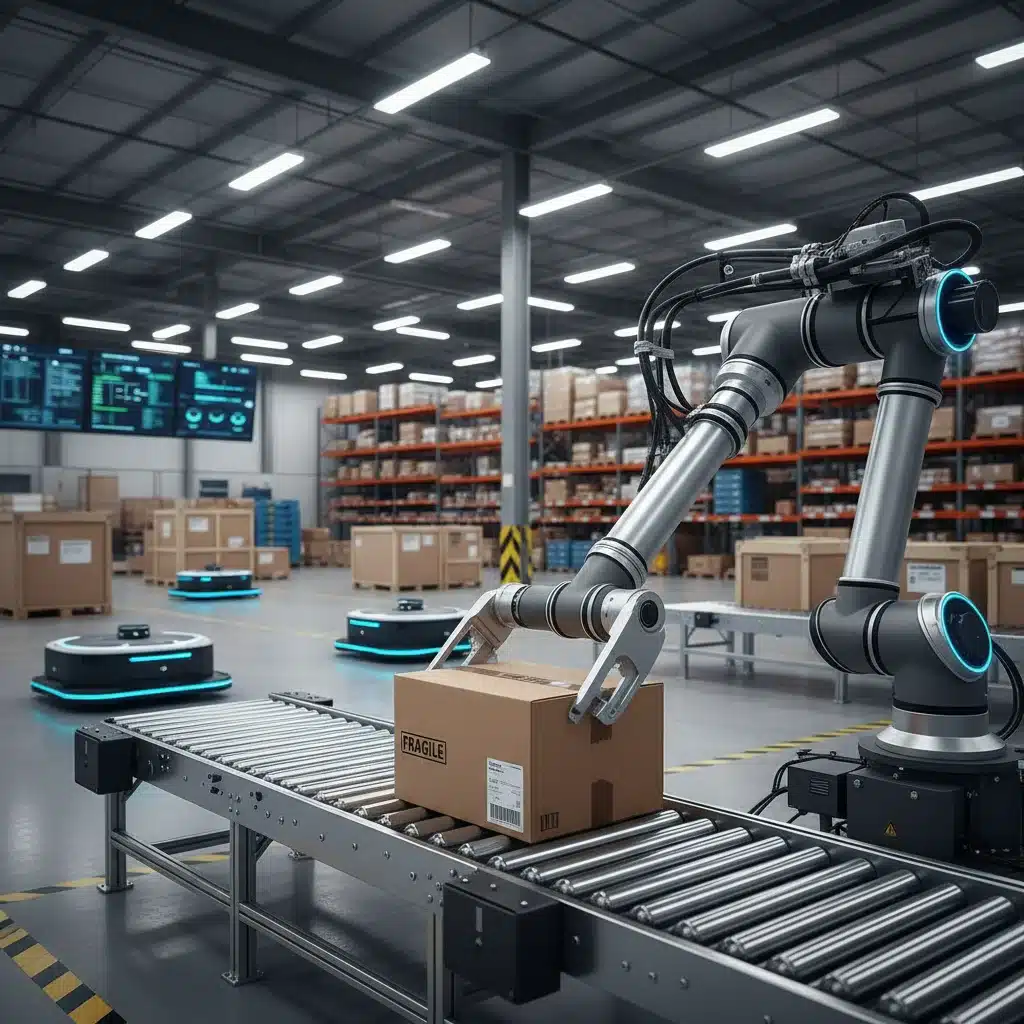
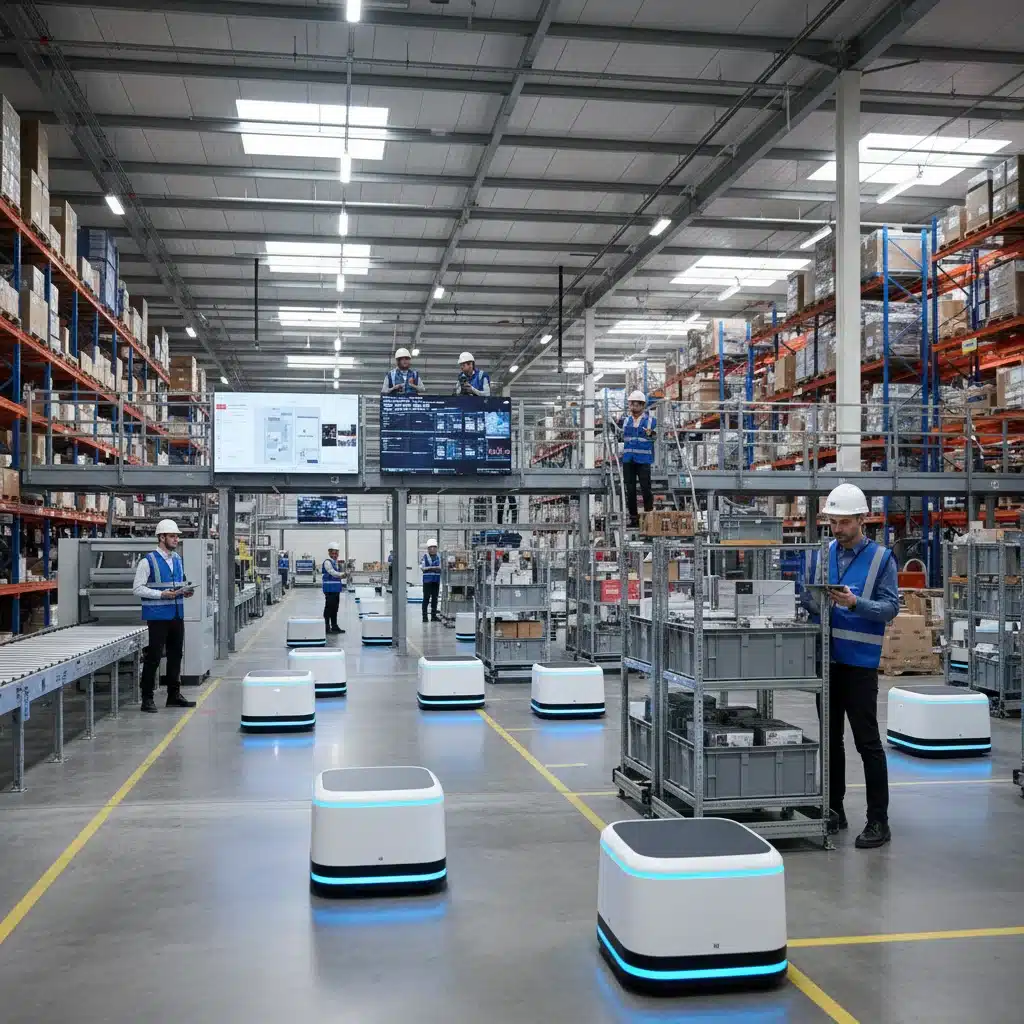
AMRs are perhaps the most recognizable form of modern warehouse robotics. Unlike their predecessors, Automated Guided Vehicles (AGVs), AMRs navigate autonomously using onboard sensors, cameras, and sophisticated software. They don’t require fixed paths or magnetic strips, allowing for greater flexibility and adaptability in dynamic warehouse environments. AMRs are primarily used for transporting goods, moving shelves, and supporting picking operations. They can work collaboratively with human workers, safely navigating around obstacles and optimizing routes in real-time. This flexibility makes them ideal for optimizing material flow and reducing the need for manual transport, directly contributing to improved robotics logistics efficiency.
Robotic Arms and Articulated Robots
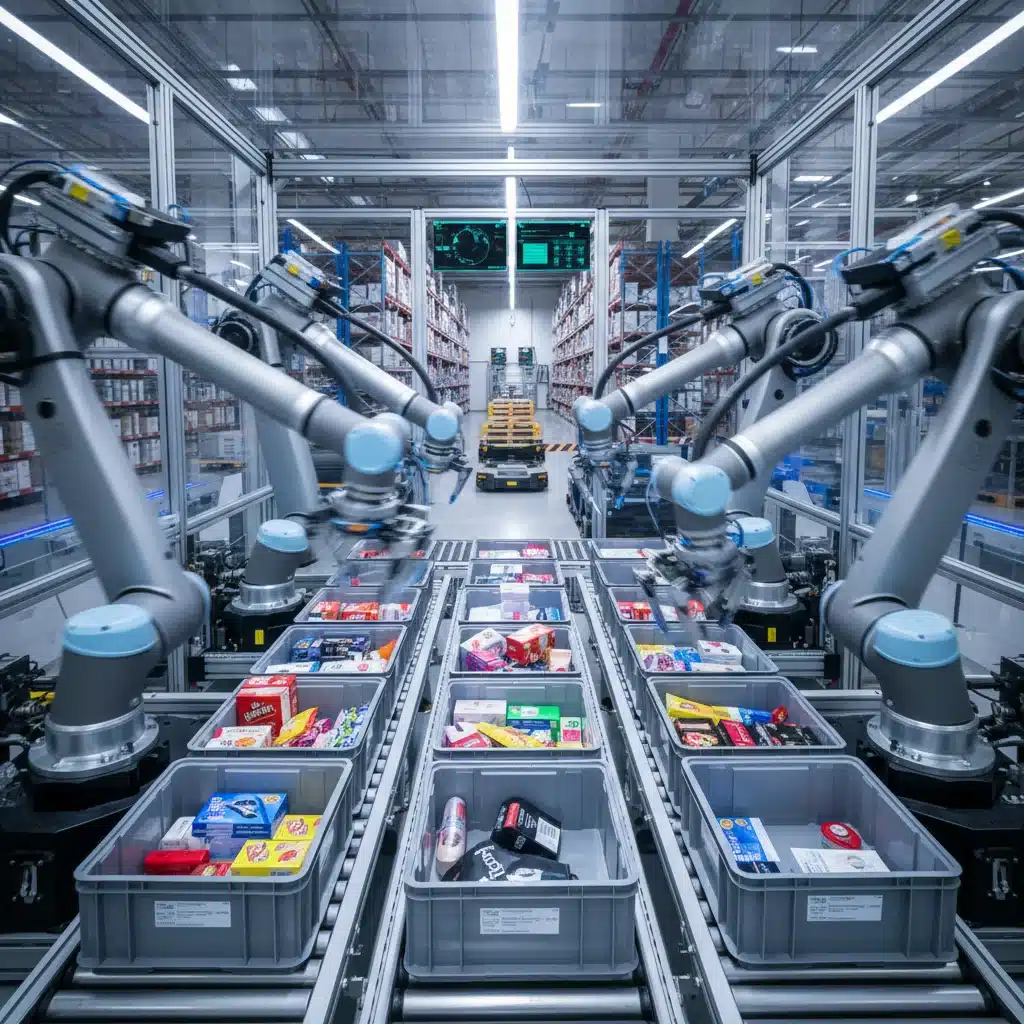
These robots excel at precise manipulation tasks. Often found in picking, packing, and sorting stations, robotic arms can handle a variety of items, from small components to heavier packages. Equipped with advanced vision systems and grippers, they can identify, pick, and place items with remarkable accuracy and speed. This capability is particularly valuable in e-commerce fulfillment, where high-volume, piece-picking operations are common. Integrating robotic arms can significantly reduce the time spent on these repetitive tasks, minimizing errors and accelerating throughput.
Automated Storage and Retrieval Systems (AS/RS)
While not robots in the traditional sense, AS/RS systems often incorporate robotic elements to automate the storage and retrieval of inventory. These systems typically consist of racks, aisles, and robotic cranes or shuttles that move items in and out of storage locations. AS/RS maximizes vertical space utilization, reduces the need for manual handling, and provides incredibly fast access to inventory. They are crucial for high-density storage and rapid order fulfillment, directly impacting overall warehouse efficiency and space utilization â key components of effective robotics in logistics.
Drones for Inventory Management
Although less common for physical handling, drones are emerging as valuable tools for inventory management. Equipped with cameras and RFID readers, drones can quickly scan and count inventory in tall racks, providing real-time accuracy without the need for human climbers or lifts. This significantly reduces the time and labor involved in traditional inventory audits, improving data accuracy and ultimately contributing to better planning and operational efficiency.
Quantifiable Benefits: How Robotics Drives 25% Efficiency Gains
The integration of robotics in logistics offers a multitude of benefits that collectively contribute to significant efficiency gains, making the 25% target a realistic and achievable goal for US retailers. Let’s break down how these improvements manifest:
Increased Throughput and Speed
Robots operate continuously, 24/7, without requiring breaks, experiencing fatigue, or making human errors due to monotony. This constant operation directly translates to a substantial increase in throughput, allowing warehouses to process more orders in less time. Robotic picking systems, for instance, can pick items at speeds far exceeding human capabilities, drastically cutting down order fulfillment cycles. AMRs can transport goods across the warehouse floor at consistent speeds, eliminating bottlenecks caused by manual transport and reducing overall travel times. This enhanced speed is a direct driver of improved robotics logistics efficiency.
Reduced Operational Costs
While the initial investment in robotics can be substantial, the long-term cost savings are compelling. Robotics helps mitigate rising labor costs and addresses labor shortages by automating repetitive tasks. Energy costs can also be optimized through intelligent routing and efficient operation of robotic systems. Furthermore, the reduction in errorsâsuch as mispicks or damaged goodsâleads to fewer returns, less rework, and lower associated costs. By optimizing space utilization through AS/RS, retailers can also reduce their need for expanding physical warehouse footprints, leading to further savings.
Improved Accuracy and Reduced Errors
Human error is an inevitable part of manual operations. Mis-picks, incorrect packing, and inventory discrepancies can lead to costly returns, customer dissatisfaction, and damaged brand reputation. Robotic systems, guided by precise programming and advanced vision systems, perform tasks with remarkable accuracy. This drastically reduces order fulfillment errors, leading to higher customer satisfaction, fewer returns, and a more efficient reverse logistics process. The precision offered by robotics in logistics directly contributes to a leaner, more accurate supply chain.
Enhanced Safety and Ergonomics
Warehouses can be hazardous environments, with heavy lifting, repetitive motions, and fast-moving equipment posing risks to human workers. Robotics can take over these dangerous and ergonomically challenging tasks, reducing the incidence of workplace injuries. This not only improves employee well-being but also reduces workers’ compensation claims and lost productivity due to injury. By creating a safer work environment, retailers can foster a more positive culture and potentially attract and retain talent more effectively.
Optimized Space Utilization
Automated Storage and Retrieval Systems (AS/RS) are masters of vertical space optimization. By storing goods in high-density configurations and retrieving them precisely when needed, AS/RS can significantly increase a warehouse’s storage capacity without requiring additional physical space. This is a critical advantage for US retailers operating in urban areas where real estate is expensive and expansion options are limited. Better space utilization means more inventory can be stored and processed within the existing footprint, enhancing overall efficiency.
Scalability and Flexibility
Robotic systems offer inherent scalability. As demand fluctuates, retailers can easily add or reconfigure robots to meet changing operational needs without the challenges associated with hiring and training a new human workforce. This flexibility is particularly valuable during peak seasons like holidays, allowing retailers to scale up operations rapidly and efficiently. This adaptability ensures that the benefits of robotics in logistics can be sustained even as market conditions evolve.
Strategic Implementation: A Roadmap for US Retailers
Achieving a 25% increase in warehouse efficiency through robotics in logistics requires a strategic, phased approach. US retailers cannot simply deploy robots and expect instant results. Careful planning, pilot programs, and continuous optimization are essential.
1. Assess Current Operations and Identify Pain Points
Before investing in any technology, a thorough audit of current warehouse operations is crucial. Identify bottlenecks, areas of high labor cost, frequent errors, and processes that are repetitive, dangerous, or time-consuming. Data analysis of existing throughput, order fulfillment times, inventory accuracy, and labor utilization will provide a baseline against which future improvements can be measured. This initial assessment helps pinpoint where robotics in logistics can have the most significant impact.
2. Define Clear Objectives and KPIs
What does a 25% efficiency increase look like for your specific operation? Is it a 25% reduction in pick times, a 25% increase in orders processed per hour, or a 25% decrease in labor costs per unit? Establish clear, measurable Key Performance Indicators (KPIs) that align with your overall business goals. These KPIs will serve as benchmarks for evaluating the success of your robotic implementation.
3. Choose the Right Robotic Solutions
Based on your pain points and objectives, select the robotic technologies that best fit your needs. Consider the type of goods you handle, order volume, warehouse layout, and budget. Start with small-scale implementations or pilot programs to test the chosen solutions in a real-world environment. For instance, if your primary challenge is material transport, AMRs might be the ideal starting point. If high-volume piece-picking is hindering efficiency, robotic arms could be the answer. This targeted approach maximizes the impact of robotics in logistics.
4. Integrate with Existing Systems
Seamless integration with existing Warehouse Management Systems (WMS), Enterprise Resource Planning (ERP) software, and other operational platforms is critical. Robots need to communicate effectively with these systems to receive instructions, report status, and provide real-time data. A robust integration strategy ensures that robotic operations are synchronized with the broader supply chain, preventing data silos and optimizing overall workflow.
5. Prioritize Workforce Training and Change Management
The introduction of robots will inevitably change job roles and responsibilities. It’s crucial to involve employees early in the process, addressing concerns about job displacement and highlighting opportunities for upskilling. Training programs should focus on teaching employees how to work alongside robots, monitor their performance, and handle maintenance tasks. A strong change management strategy helps foster acceptance and collaboration, ensuring a smooth transition and maximizing the benefits of robotics in logistics.
6. Phased Rollout and Continuous Optimization
Instead of a ‘big bang’ approach, implement robotics in phases. Start with a specific area or process, gather data, analyze performance, and make adjustments before scaling up. Continuous monitoring of KPIs, along with regular maintenance and software updates, will ensure that your robotic systems operate at peak efficiency. The journey to a 25% efficiency gain is not a one-time event but an ongoing process of optimization and adaptation.
Overcoming Challenges in Robotics Implementation
While the benefits of robotics in logistics are undeniable, implementing these advanced systems is not without its challenges. US retailers must be prepared to address several key hurdles to ensure a successful transition.
Initial Investment Costs
The upfront capital expenditure for robotic systems can be significant, posing a barrier for some retailers, especially smaller businesses. However, it’s crucial to view this as a long-term investment with substantial ROI. Retailers should explore various financing options, consider leasing models, and conduct thorough cost-benefit analyses to justify the investment. The long-term savings in labor, error reduction, and increased throughput often far outweigh the initial costs.
Complexity of Integration
Integrating new robotic systems with existing legacy infrastructure can be complex. Ensuring seamless data flow between robots, WMS, ERP, and other operational software requires expertise in IT and system integration. Retailers should partner with experienced integrators and technology providers who can navigate these complexities and ensure compatibility across all systems. A fragmented system can negate the efficiency gains offered by robotics in logistics.
Workforce Adaptation and Skill Gaps
As mentioned earlier, the introduction of robots can create anxieties among the workforce. Beyond addressing these concerns, there’s a need to bridge potential skill gaps. Employees will require training in operating, monitoring, and maintaining robotic systems. Retailers should invest in comprehensive training programs to upskill their existing workforce, transforming them into ‘robot wranglers’ and technicians rather than replacing them. This human-robot collaboration is key to maximizing overall efficiency.
Maintenance and Support
Robotic systems, like any advanced machinery, require regular maintenance and technical support to ensure continuous operation. Retailers need to establish robust maintenance schedules, train internal teams, or secure reliable support contracts with vendors. Downtime due to technical issues can quickly erode efficiency gains, so a proactive approach to maintenance is essential for sustained robotics logistics efficiency.
Cybersecurity Concerns
As warehouses become more automated and interconnected, they also become more vulnerable to cyber threats. Robotic systems and their underlying networks must be secured against potential breaches that could disrupt operations, compromise data, or even lead to physical damage. Implementing strong cybersecurity protocols and regularly auditing systems are critical steps to protect these valuable assets.
The Future of Robotics in US Retail Logistics
The journey towards achieving a 25% increase in warehouse efficiency through robotics in logistics is just the beginning. The future promises even more sophisticated and integrated robotic solutions that will further revolutionize the retail supply chain.
Increased AI and Machine Learning Integration
Future robotic systems will be even smarter, leveraging advanced AI and machine learning algorithms to continuously learn and optimize their operations. This will lead to more intelligent route planning, predictive maintenance, and adaptive picking strategies that respond in real-time to changing demand patterns and inventory levels. AI-powered robots will be able to make more autonomous decisions, further enhancing their efficiency and problem-solving capabilities.
Human-Robot Collaboration (Cobots)
The trend towards collaborative robots (cobots) will intensify. These robots are designed to work safely and seamlessly alongside human employees, augmenting their capabilities rather than replacing them. Cobots can handle the heavy lifting, repetitive tasks, or precision work, allowing human workers to focus on more complex, decision-making, and customer-facing roles. This synergy will unlock new levels of productivity and job satisfaction within the warehouse.
Greater Standardization and Interoperability
As the robotics market matures, there will likely be greater standardization of interfaces and communication protocols, making it easier for retailers to integrate different robotic systems from various vendors. This interoperability will reduce integration complexities and allow for more flexible and scalable robotic deployments, further accelerating the adoption of robotics in logistics.
Micro-Fulfillment Centers and Edge Logistics
Robotics will play a crucial role in the expansion of micro-fulfillment centers located closer to urban consumers. These smaller, highly automated facilities will enable ultra-fast delivery times by bringing inventory closer to the end-customer. Robots will be essential for the high-density storage and rapid processing required in these compact environments, pushing the boundaries of what’s possible in last-mile delivery.
Conclusion: Embracing the Robotic Revolution for Retail Success
For US retailers, the path to achieving a 25% increase in warehouse efficiency within the next year is clear: strategically embrace robotics in logistics. This isn’t just about adopting new technology; it’s about fundamentally rethinking and optimizing your entire supply chain operation. From the increased throughput and accuracy offered by AMRs and robotic arms to the space optimization provided by AS/RS, the benefits are compelling and directly impact the bottom line.
While challenges such as initial investment, integration complexities, and workforce adaptation exist, they are surmountable with careful planning, strategic partnerships, and a commitment to continuous improvement. By prioritizing a phased implementation, investing in employee training, and leveraging the power of data, US retailers can unlock the full potential of robotics. The future of retail logistics is automated, intelligent, and highly efficient. Those who seize this opportunity will not only meet the escalating demands of today’s consumers but also position themselves for sustained success in the evolving retail landscape. The 25% efficiency gain is not just a target; it’s a stepping stone to a more resilient, responsive, and profitable future.