AI Automation: Reshaping 30% of US Jobs by 2030
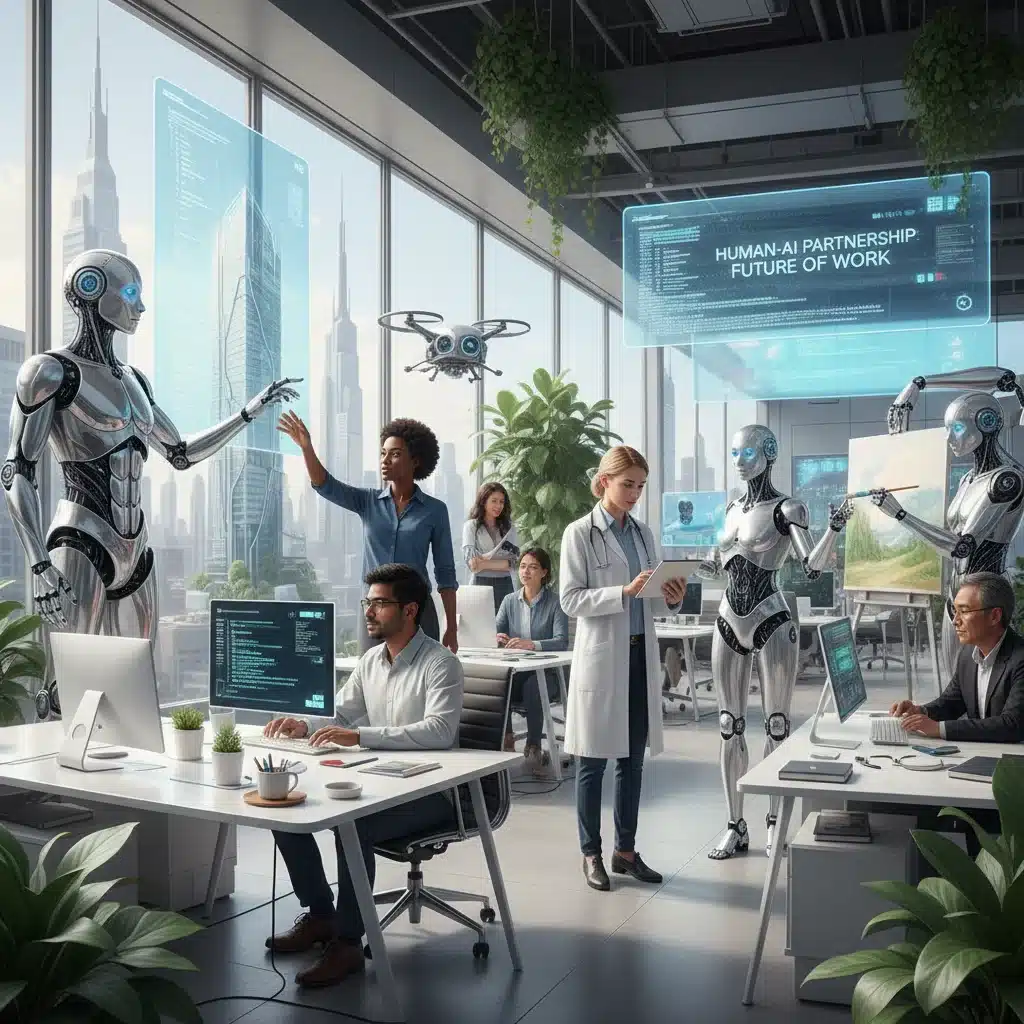
The Future of Work: How AI-Powered Automation Will Reshape 30% of US Job Roles by 2030
The dawn of the 21st century has been marked by unprecedented technological advancements, with Artificial Intelligence (AI) standing at the forefront of this revolution. Far from being a mere buzzword, AI is rapidly integrating into the fabric of our daily lives and, more profoundly, into the global economy and workforce. Recent projections indicate a seismic shift: AI-powered automation is expected to reshape a staggering 30% of US job roles by the year 2030. This isn’t just about job displacement; it’s about a fundamental transformation of how we work, what skills are valued, and the very structure of industries. Understanding this impending change is crucial for individuals, businesses, and policymakers alike.
The concept of machines performing tasks traditionally done by humans is not new. From the Industrial Revolution to the advent of computers, technology has consistently altered the employment landscape. However, the current wave of AI and automation differs significantly. Previous technological shifts primarily automated routine, manual tasks. AI, with its capacity for learning, problem-solving, and decision-making, is now encroaching upon cognitive tasks, leading to a much broader and deeper impact on the job market. This article delves into the multifaceted implications of this AI Job Reshaping, exploring the sectors most affected, the opportunities it presents, and the strategies necessary to navigate this transformative era.
Understanding the Scope of AI Job Reshaping
When we talk about 30% of US job roles being reshaped, it’s important to clarify what ‘reshaped’ truly means. It doesn’t necessarily imply that 30% of jobs will disappear entirely. Instead, it suggests a spectrum of changes: some roles will be augmented, with AI handling repetitive or data-intensive tasks, allowing humans to focus on higher-value, creative, or interpersonal aspects. Other roles might be significantly altered, requiring new skill sets and responsibilities. And yes, some roles, particularly those highly susceptible to automation, may indeed be made redundant, leading to job displacement.
Sectors Most Susceptible to AI Automation
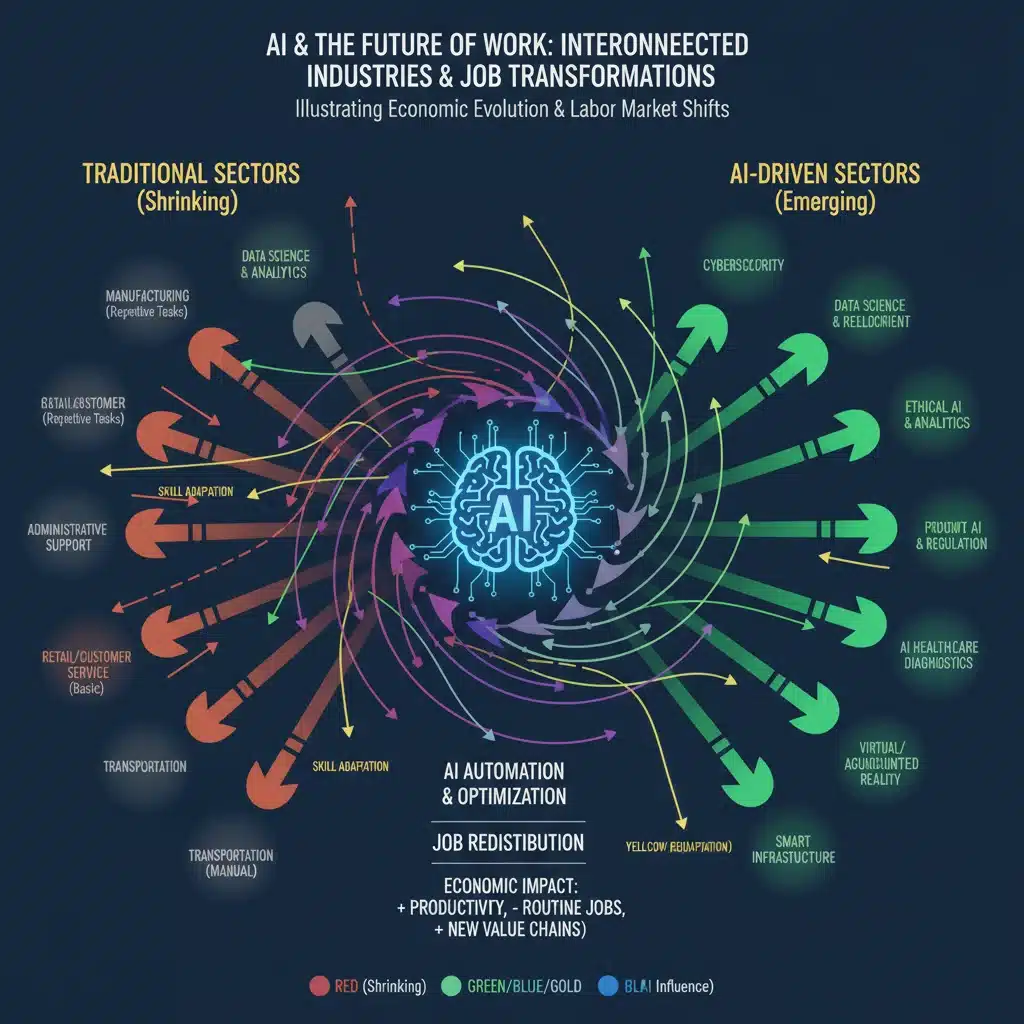
Certain sectors are inherently more vulnerable to the profound AI Job Reshaping due to the nature of their tasks. These often involve repetitive processes, data analysis, or predictable environments. Let’s explore some key areas:
- Manufacturing and Logistics: This sector has long been at the forefront of automation. AI further enhances this by optimizing supply chains, predicting maintenance needs, and enabling more sophisticated robotic assembly lines. While some manual labor roles may decrease, new jobs in AI programming, maintenance, and oversight will emerge.
- Customer Service: Chatbots and AI-powered virtual assistants are already handling a significant portion of customer inquiries. As AI improves in natural language processing and sentiment analysis, it will take on more complex interactions, augmenting or replacing human agents in many instances.
- Administrative and Office Support: Tasks like scheduling, data entry, report generation, and email management are highly amenable to AI automation. AI tools can streamline these processes, freeing up administrative staff for more strategic roles or reducing the need for extensive support teams.
- Finance and Accounting: AI excels at processing large datasets, identifying patterns, and performing calculations with high accuracy. This makes it ideal for tasks such as auditing, fraud detection, financial analysis, and bookkeeping. While complex financial advisory roles will likely remain human-centric, the analytical groundwork will increasingly be AI-driven.
- Transportation: The development of autonomous vehicles, from self-driving cars to delivery drones, promises to revolutionize transportation. This will have a significant impact on professional drivers, pilots, and logistics coordinators, though it will also create demand for AI engineers, sensor specialists, and remote operators.
- Healthcare (Diagnostic and Administrative): AI is proving invaluable in medical imaging analysis, disease diagnosis, and personalized treatment plans. On the administrative side, AI can manage patient records, appointment scheduling, and billing, optimizing hospital operations. Direct patient care, however, will remain largely human-led.
The Nuance of Job Augmentation vs. Displacement
It’s crucial to differentiate between job augmentation and outright displacement. Many roles will not vanish but will evolve. For instance, a data analyst might spend less time manually collecting and cleaning data and more time interpreting AI-generated insights and formulating strategies. A marketing professional might use AI to automate campaign optimization, focusing their efforts on creative content generation and brand storytelling. This augmentation model is where much of the 30% reshaping will occur, demanding a workforce equipped with new skills to collaborate effectively with AI.
Challenges and Opportunities in the AI-Driven Workforce
The AI Job Reshaping presents a dual challenge and opportunity. While concerns about job losses are valid, the potential for increased productivity, innovation, and the creation of entirely new industries is immense.
Addressing Job Displacement and Economic Inequality
One of the most pressing challenges is managing the social and economic impact of job displacement. Workers whose roles are automated may face significant disruption, requiring retraining and support to transition into new careers. Without proactive measures, this could exacerbate economic inequality and societal unrest. Governments, educational institutions, and businesses must collaborate to establish robust safety nets, retraining programs, and job placement initiatives.
The creation of Universal Basic Income (UBI) is often discussed as a potential solution to mitigate the economic fallout of widespread automation. While controversial, the concept aims to provide a baseline income, allowing individuals to pursue education, entrepreneurship, or caregiving roles without immediate financial pressure. However, careful consideration of its economic feasibility and societal impact is paramount.
The Rise of New Job Categories
History shows that technological revolutions, while displacing old jobs, also create new ones. The internet, for example, gave rise to web developers, SEO specialists, social media managers, and countless other roles that didn’t exist a few decades ago. Similarly, AI will foster new job categories:
- AI Trainers and Data Annotators: Humans are needed to train AI models, label data, and fine-tune algorithms to ensure accuracy and ethical behavior.
- AI Ethicists and Governance Specialists: As AI systems become more powerful, ensuring their ethical deployment, fairness, and accountability will be critical.
- Robot Maintenance and Repair Technicians: A growing fleet of robots and automated systems will require skilled technicians for upkeep, troubleshooting, and repair.
- Human-AI Collaboration Specialists: These roles will focus on designing workflows and interfaces that optimize collaboration between human workers and AI tools.
- Creative and Interpersonal Roles: Jobs requiring high levels of creativity, critical thinking, emotional intelligence, and complex problem-solving are less susceptible to automation and will likely become even more valuable. This includes artists, therapists, strategic consultants, and educators.
Enhancing Productivity and Innovation
AI’s ability to process vast amounts of data, identify patterns, and perform complex calculations at speeds impossible for humans will unlock unprecedented levels of productivity. This can lead to:
- Faster Innovation Cycles: AI can accelerate research and development in fields like medicine, materials science, and engineering.
- Optimized Resource Allocation: AI can help businesses make more informed decisions about resource management, supply chains, and market strategies.
- Personalized Services: From education to healthcare, AI can tailor experiences to individual needs, leading to more effective outcomes.
Strategies for Navigating the AI Transformation
Successfully navigating the AI Job Reshaping requires a multi-pronged approach involving individuals, businesses, and governments.
For Individuals: Upskilling and Reskilling
The most critical strategy for individuals is to embrace lifelong learning. The skills valued in an AI-driven economy will be different, emphasizing uniquely human capabilities and the ability to work alongside AI:
- Develop AI Literacy: Understand how AI works, its capabilities, and its limitations. This doesn’t mean becoming an AI engineer, but rather being comfortable using AI tools and interpreting their outputs.
- Focus on "Human Skills": Cultivate creativity, critical thinking, complex problem-solving, emotional intelligence, communication, and collaboration. These are skills AI struggles to replicate.
- Acquire Digital Skills: Proficiency in data analysis, coding (even basic scripting), and specialized software relevant to one’s industry will be increasingly important.
- Embrace Continuous Learning: The pace of technological change demands a commitment to ongoing education, whether through formal courses, online platforms, or on-the-job training.

Educational institutions have a vital role to play in preparing the future workforce. Curricula need to be updated to include AI literacy, data science, and critical thinking from an early age. Vocational training programs must adapt quickly to equip workers with the specific technical skills required for new AI-adjacent roles.
For Businesses: Strategic Adoption and Workforce Development
Businesses that strategically adopt AI will gain a competitive edge, but they must also invest in their workforce:
- Integrate AI Thoughtfully: Identify areas where AI can genuinely enhance productivity and innovation, rather than simply automating for automation’s sake.
- Invest in Workforce Training: Provide employees with opportunities to upskill and reskill, helping them transition to augmented roles or new positions created by AI. This can involve internal training programs, partnerships with educational providers, or tuition reimbursement.
- Foster a Culture of Adaptability: Encourage employees to embrace change, experiment with new technologies, and contribute to the company’s AI strategy.
- Re-evaluate Organizational Structures: AI may necessitate flatter hierarchies, more cross-functional teams, and new departments focused on AI ethics, data governance, and human-AI collaboration.
- Prioritize Human-Centric AI Design: Ensure that AI tools are designed to augment human capabilities, improve job satisfaction, and enhance overall well-being, rather than simply replacing workers.
For Governments and Policymakers: Proactive Regulation and Support Systems
Governments have a crucial role in shaping a future where AI benefits society broadly and mitigates negative impacts:
- Invest in Education and Training Infrastructure: Fund programs that support lifelong learning, vocational training, and digital literacy for all citizens.
- Develop Social Safety Nets: Explore policies like UBI, expanded unemployment benefits, and re-employment services to support workers during transitions.
- Foster Innovation while Regulating Responsibly: Create a regulatory environment that encourages AI development and adoption while addressing ethical concerns, data privacy, and potential biases.
- Promote "Good AI": Incentivize companies to adopt AI in ways that create higher-value jobs, improve working conditions, and contribute to societal well-being.
- International Collaboration: Work with other nations to establish global standards and best practices for AI development and deployment, recognizing the transnational nature of this technology.
The Ethical Imperatives of AI Job Reshaping
Beyond economic considerations, the AI Job Reshaping also brings significant ethical questions to the forefront. As AI becomes more integrated into hiring processes, performance evaluations, and even creative endeavors, ensuring fairness, transparency, and accountability is paramount.
Bias in AI Algorithms
AI systems are only as unbiased as the data they are trained on. If historical data reflects societal biases (e.g., gender, race, socioeconomic status), AI algorithms can perpetuate and even amplify these biases, leading to discriminatory outcomes in hiring, lending, or even criminal justice. Addressing this requires diverse training datasets, rigorous auditing of algorithms, and the active involvement of ethicists in AI development teams.
Data Privacy and Surveillance
The extensive data collection required for AI systems raises concerns about individual privacy. As workplaces become more automated and data-rich, the potential for employee surveillance also increases. Striking a balance between leveraging data for efficiency and protecting individual privacy rights will be a continuous challenge that requires clear policies and robust legal frameworks.
The "Black Box" Problem
Many advanced AI models operate as "black boxes," meaning their decision-making processes are opaque and difficult for humans to understand. In critical applications, such as medical diagnosis or legal judgments, this lack of transparency can be problematic. The development of explainable AI (XAI) is an ongoing area of research aimed at making AI decisions more interpretable and trustworthy.
Case Studies and Emerging Trends
To illustrate the practical implications of AI Job Reshaping, let’s look at some real-world examples and emerging trends:
- Healthcare Diagnostics: Companies like Google Health are developing AI tools that can detect diseases like diabetic retinopathy or certain cancers from medical images with accuracy comparable to, or even exceeding, human experts. This augments radiologists and ophthalmologists, allowing them to focus on complex cases and patient interaction.
- Legal Services: AI platforms are automating document review, legal research, and contract analysis. This frees up paralegals and junior lawyers from tedious tasks, enabling them to engage in more strategic legal work.
- Agriculture: AI-powered drones and sensors are optimizing crop yield, detecting diseases, and managing irrigation. While this changes the nature of farming jobs, it also creates demand for precision agriculture specialists and drone operators.
- Creative Industries: AI-generated art, music, and writing are emerging, raising questions about authorship and intellectual property. However, AI is also becoming a powerful tool for artists and designers, accelerating creative processes and opening new avenues for expression.
The trend is clear: AI is not just about replacing manual labor; it’s about transforming cognitive tasks, challenging our understanding of intelligence, and redefining human-machine collaboration.
Conclusion: A Call to Action for an AI-Driven Future
The prognosis that AI-powered automation will reshape 30% of US job roles by 2030 is not a prophecy of doom, but rather a powerful call to action. It signals an era of profound change that, if managed thoughtfully, can lead to a more productive, innovative, and prosperous society. The key lies in proactive adaptation rather than reactive panic.
For individuals, this means embracing a mindset of continuous learning, focusing on uniquely human skills that complement AI, and actively seeking opportunities for upskilling and reskilling. For businesses, it entails strategic AI adoption coupled with significant investment in their human capital and a commitment to ethical deployment. For governments and policymakers, the challenge is to create supportive frameworks – in education, social welfare, and regulation – that ensure the benefits of AI are widely shared and its potential harms are mitigated.
The future of work is not a predetermined path but a landscape we are collectively shaping. By understanding the forces at play and collaborating across sectors, we can ensure that the AI Job Reshaping leads to a future where technology serves humanity, creating new opportunities and enhancing the quality of life for all.