Bridging the Gap: 2 Practical Solutions for Income Inequality in the US by 2026
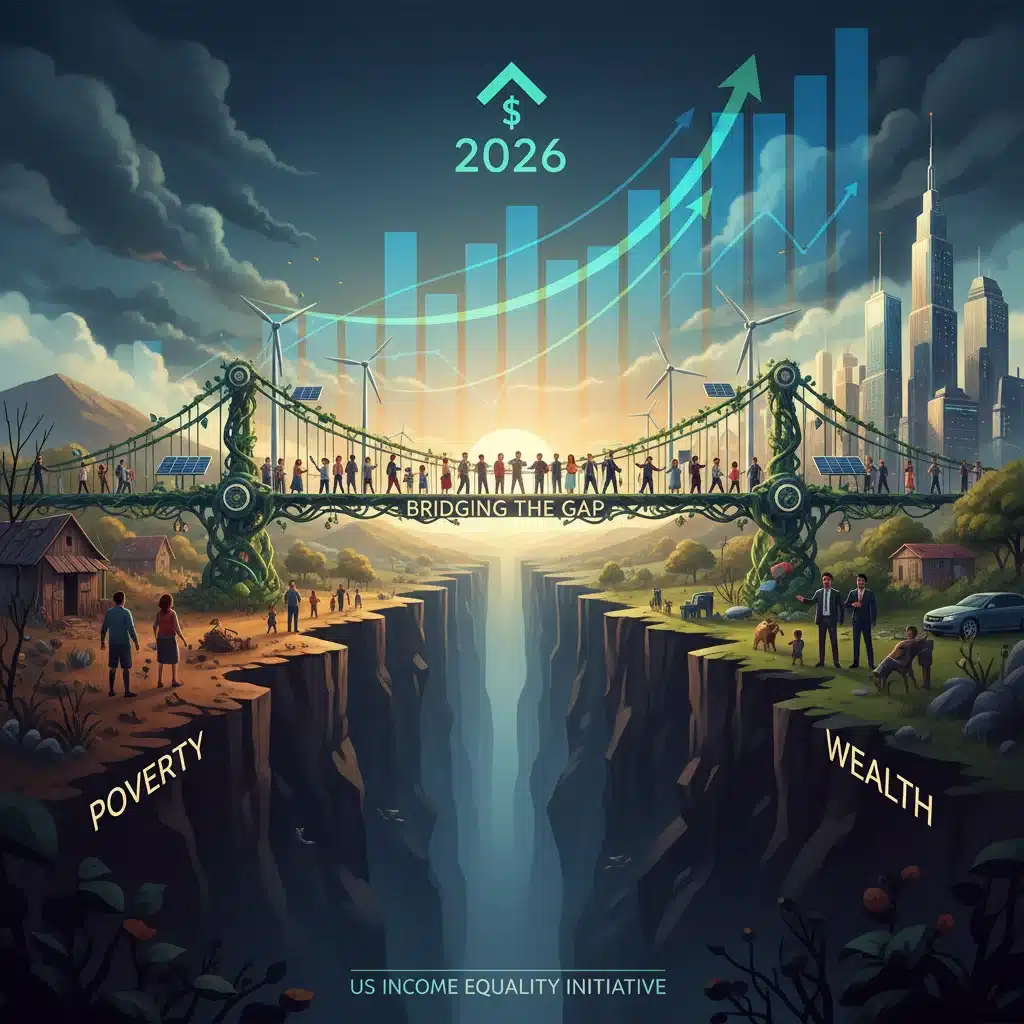
Bridging the Gap: 2 Practical Solutions for Income Inequality in the US by 2026
Income inequality in the United States has been a persistent and growing concern for decades. The widening chasm between the wealthiest and the rest of the population not only strains social cohesion but also impedes overall economic growth and stability. While the problem is complex and multifaceted, requiring a holistic approach, this article focuses on two practical, actionable solutions that, if implemented effectively, could significantly mitigate income inequality in the US by 2026. These income inequality solutions are designed to have a tangible financial impact, fostering a more equitable and prosperous society for all.
The urgency to address income inequality is undeniable. The top 1% of earners in the US continue to capture a disproportionate share of national income, while wages for many at the bottom have stagnated. This disparity affects everything from access to education and healthcare to housing and economic mobility. Our goal here is not to propose utopian ideals, but rather concrete, evidence-based interventions that can be realistically implemented within the next few years, yielding measurable improvements in the distribution of wealth and income.
Understanding the Landscape of Income Inequality in the US
Before diving into the solutions, it’s crucial to briefly understand the current state and drivers of income inequality. Several factors contribute to the widening gap, including:
- Technological Advancements: Automation and artificial intelligence have displaced some low-skilled jobs while simultaneously increasing demand and wages for highly specialized workers.
- Globalization: Increased international competition has put downward pressure on wages in some sectors, particularly manufacturing.
- Declining Union Membership: The weakening of labor unions has reduced the bargaining power of workers, leading to slower wage growth for many.
- Regressive Tax Policies: Some tax policies have benefited the wealthy more than the poor and middle class, exacerbating wealth concentration.
- Stagnant Minimum Wage: The federal minimum wage has not kept pace with inflation or productivity growth, leaving many low-wage workers struggling.
- Unequal Access to Education and Healthcare: Disparities in access to quality education and affordable healthcare perpetuate cycles of poverty and limit upward mobility.
- Financialization of the Economy: The growing importance of the financial sector and capital gains has disproportionately benefited those with significant assets.
These factors create a complex web that reinforces existing inequalities. Addressing them requires a multi-pronged strategy, and the two income inequality solutions we will explore aim to tackle some of these core issues directly, offering pathways to a more equitable economic future by 2026.
Solution 1: A Targeted Universal Basic Income (UBI) with a Focus on Low-Income Households
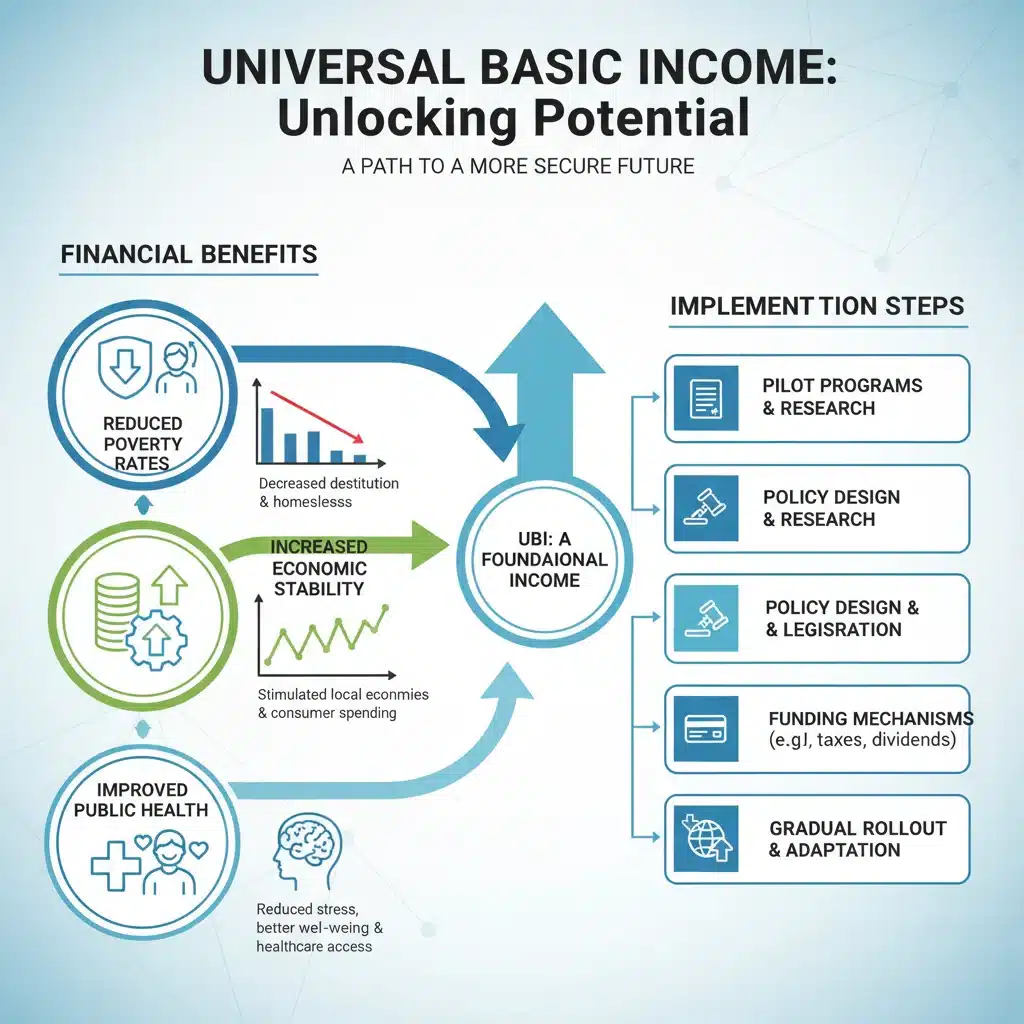
Universal Basic Income (UBI) has gained significant traction in recent years as a potential remedy for economic insecurity and income inequality. While a truly ‘universal’ UBI for every citizen might be fiscally challenging in the short term, a targeted UBI program, specifically designed to uplift low-income households, presents a practical and impactful solution to reduce income inequality by 2026.
How a Targeted UBI Would Work
Instead of providing a basic income to every citizen regardless of their financial status, a targeted UBI would focus on households below a certain income threshold, perhaps 200% of the federal poverty line. This approach would ensure that the financial assistance directly benefits those who need it most, maximizing its impact on income redistribution and poverty reduction. The payments would be regular, unconditional, and sufficient to cover basic living expenses, acting as a safety net and a springboard for economic advancement.
Financial Impact and Benefits
- Poverty Reduction: Direct cash transfers are one of the most effective tools for reducing poverty. A targeted UBI could lift millions out of poverty, significantly closing the income gap at the lower end of the spectrum.
- Increased Economic Stability: For recipients, a steady income stream provides financial stability, allowing them to better manage expenses, save for emergencies, and invest in their future (e.g., education, starting a small business). This stability reduces stress and improves overall well-being.
- Stimulation of Local Economies: Low-income households tend to spend a larger proportion of any additional income on immediate needs, injecting money directly into local economies through increased consumption of goods and services. This can create a positive ripple effect, supporting small businesses and local job creation.
- Improved Health Outcomes: Financial stress is a significant contributor to poor health. By alleviating this stress, a targeted UBI could lead to better physical and mental health outcomes for recipients, reducing healthcare costs in the long run.
- Enhanced Human Capital: With basic needs met, individuals have more capacity to pursue education, vocational training, or better-paying jobs, leading to long-term improvements in human capital and earning potential.
Implementation Considerations by 2026
Implementing a targeted UBI by 2026 would require careful planning and political will. Key considerations include:
- Funding Mechanisms: Potential funding sources could include progressive tax reforms (e.g., higher taxes on capital gains or high earners), a financial transaction tax, or reallocating existing welfare programs that are less efficient.
- Pilot Programs: Expanding existing or launching new pilot programs in diverse communities could provide valuable data on optimal payment amounts, eligibility criteria, and overall impact, allowing for refinement before broader implementation.
- Integration with Existing Programs: Careful consideration must be given to how a targeted UBI would interact with existing social safety net programs to avoid unintended consequences or disincentives.
- Public Acceptance: Building public support through clear communication about the benefits and costs, and addressing common misconceptions about UBI, will be crucial for successful implementation.
The successful implementation of a targeted UBI program could be a cornerstone in addressing income inequality solutions within the next few years, offering a direct and powerful mechanism for wealth redistribution and poverty alleviation.
Solution 2: Massive Investment in Advanced Vocational Training and Skill Reskilling Programs
The second powerful solution to significantly reduce income inequality by 2026 lies in a massive, coordinated investment in advanced vocational training and skill reskilling programs. This addresses the supply side of the labor market, equipping individuals with the high-demand skills necessary for the jobs of today and tomorrow, thereby increasing their earning potential and upward mobility.
The Need for Skill Reskilling
The rapid pace of technological change, particularly in automation, artificial intelligence, and green energy, is transforming the labor market. Many traditional jobs are being automated, while new, higher-paying jobs are emerging that require specialized skills. Without access to relevant training, individuals in declining industries or those with outdated skill sets are left behind, exacerbating income disparities. A robust national initiative focused on skill reskilling can directly combat this trend.
Program Design and Focus Areas
These programs should be:
- Industry-Led: Developed in close collaboration with industries to ensure the skills taught are directly relevant to current and future job market needs. This includes areas like advanced manufacturing, cybersecurity, data analytics, renewable energy technologies, healthcare informatics, and skilled trades.
- Accessible and Affordable: Programs must be widely accessible, ideally low-cost or free for participants, and offered in formats that accommodate diverse learners (e.g., online, evening classes, apprenticeships).
- Comprehensive: Beyond technical skills, programs should also incorporate soft skills such as critical thinking, problem-solving, communication, and adaptability, which are essential for long-term career success.
- Geographically Distributed: Training centers should be established in areas with high unemployment or underemployment, particularly in communities affected by industrial decline.
- Inclusive: Special outreach and support services should target underrepresented groups, including women, minorities, veterans, and individuals with disabilities, to ensure equitable access to these opportunities.
Financial Impact and Benefits
- Increased Earning Potential: Individuals equipped with high-demand skills can command higher wages, directly contributing to a reduction in income inequality. This empowers them to move into middle-class jobs or even higher, creating a stronger economic base.
- Enhanced Productivity and Innovation: A more skilled workforce leads to higher national productivity and fosters innovation, benefiting the economy as a whole. Businesses thrive with access to a skilled talent pool, leading to job creation and economic growth.
- Reduced Unemployment and Underemployment: By matching skills to demand, these programs can significantly lower unemployment rates and ensure that more people are in jobs that utilize their full potential and pay a living wage.
- Economic Resilience: A workforce that can adapt to technological shifts is more resilient to economic downturns and global competition, leading to greater long-term stability for individuals and the nation.
- Reduced Dependence on Public Assistance: As individuals gain higher-paying jobs, their reliance on public assistance programs decreases, freeing up government resources and fostering self-sufficiency.
Implementation Strategies by 2026
Achieving this by 2026 requires:
- Significant Public-Private Partnerships: Government funding (federal, state, and local) must be matched by investments from private industry, educational institutions, and non-profits.
- Revitalized Community Colleges and Vocational Schools: These institutions are perfectly positioned to deliver much of this training and should receive substantial funding and support to modernize their curricula and facilities.
- Apprenticeship Expansion: Expanding and promoting apprenticeship programs, particularly in new and emerging sectors, offers a proven pathway to skilled employment.
- Streamlined Certification and Credentialing: Developing recognized and portable certifications and credentials ensures that skills gained are valued by employers across the country.
- Career Counseling and Job Placement Services: Integrating robust career counseling and job placement services into these programs is essential to ensure participants successfully transition into new employment.
Investing in skill reskilling is not just an educational initiative; it’s a fundamental economic strategy that directly addresses income inequality solutions by empowering individuals with the tools to succeed in the evolving job market.

Synergy and Complementarity of Both Solutions
While both a targeted UBI and massive investment in skill reskilling are powerful income inequality solutions on their own, their combined effect would be even more transformative. They are not mutually exclusive but rather complementary strategies that address different facets of the problem.
- UBI as a Foundation for Training: A targeted UBI can provide the financial stability necessary for individuals to participate in long-term training and reskilling programs. Without the immediate pressure of meeting basic needs, people can dedicate time and effort to learning new skills, rather than being forced to take any available low-wage job.
- Training Maximizing UBI’s Impact: Conversely, skill reskilling programs enhance the long-term impact of UBI. While UBI provides a safety net, training offers a ladder out of poverty, allowing recipients to move into higher-paying jobs and reduce their long-term dependence on basic income. This transition is crucial for sustainable economic improvement.
- Holistic Economic Empowerment: Together, these solutions create a more holistic approach to economic empowerment. UBI addresses immediate financial insecurity and provides a baseline standard of living, while skill reskilling tackles the structural barriers to upward mobility, ensuring that individuals can not only survive but thrive in the modern economy.
- Broader Social Benefits: The combined effect would lead to a more engaged and healthier populace, reduced crime rates, improved educational outcomes for children in recipient households, and a generally more robust and innovative economy.
The synergy between these two approaches significantly amplifies their individual benefits, creating a powerful engine for reducing income inequality solutions and fostering a more inclusive economy by 2026.
Potential Challenges and Mitigation Strategies
No large-scale policy implementation is without its challenges. Addressing these proactively is essential for success.
For Targeted UBI:
- Cost and Funding: The primary challenge will be the significant cost. Mitigation involves careful selection of funding sources (e.g., progressive taxation, carbon tax, reallocating existing subsidies) and rigorous cost-benefit analysis to demonstrate long-term societal savings.
- Inflationary Pressure: Concerns about UBI causing inflation need to be addressed. Targeting the UBI to low-income households, who have a high marginal propensity to consume, is less likely to cause widespread inflation than a truly universal UBI. Careful monitoring and economic modeling are crucial.
- Disincentive to Work: While studies often show minimal impact on work, some concern remains. Mitigation includes setting payment levels appropriately to supplement, not replace, work income for those able to work, and integrating career support services.
- Public Perception and Political Will: Overcoming political opposition and public skepticism requires clear communication, transparent data, and demonstrating successful pilot programs.
For Advanced Vocational Training:
- Keeping Pace with Technology: The rapid evolution of technology means training programs must be agile and constantly updated. Mitigation involves strong industry partnerships, modular curricula, and continuous program evaluation.
- Ensuring Job Placement: Training without subsequent employment is ineffective. Mitigation requires robust job placement services, employer partnerships for guaranteed interviews, and apprenticeships that lead directly to jobs.
- Funding and Scalability: Scaling up these programs nationwide requires substantial, sustained investment. Mitigation strategies include dedicated federal and state funding, tax incentives for companies offering training, and leveraging online learning platforms for broader reach.
- Reaching Disconnected Populations: Ensuring that those most in need of reskilling (e.g., long-term unemployed, individuals with limited educational backgrounds) are reached and supported requires targeted outreach, childcare support, transportation assistance, and flexible learning options.
By anticipating and actively addressing these challenges, the likelihood of successful implementation and significant impact on income inequality solutions by 2026 dramatically increases.
Measuring Success by 2026
To ensure these income inequality solutions are effective, clear metrics and regular evaluation are essential. By 2026, we should aim to see:
- Reduced Gini Coefficient: A lower Gini coefficient, a common measure of income inequality, indicating a more equitable distribution of income.
- Decreased Poverty Rates: A significant reduction in the percentage of the population living below the federal poverty line, particularly among vulnerable groups.
- Increased Median Household Income: Growth in median household income, especially for the bottom 50% of earners, outpacing inflation.
- Improved Economic Mobility: Enhanced intergenerational and intragenerational economic mobility, allowing more individuals to climb the economic ladder.
- Higher Workforce Participation Rates: Increased participation in the labor force, particularly in high-growth sectors, driven by skilled labor.
- Reduced Wage Gap: A narrowing of the wage gap between different skill levels and educational attainment groups.
- Enhanced Health and Education Outcomes: Measurable improvements in health indicators and educational attainment in communities impacted by these programs.
Regular public reporting on these metrics will ensure accountability and allow for adjustments to the programs as needed to maximize their effectiveness in achieving our income inequality solutions goals.
Conclusion: A Path Towards a More Equitable Future
Addressing income inequality is not merely an economic imperative; it’s a moral one. The United States, with its vast resources and innovative spirit, has the capacity to create a society where economic opportunity is more broadly shared. The two practical solutions outlined here – a targeted Universal Basic Income and a massive investment in advanced vocational training and skill reskilling – represent concrete steps that can be taken now to make significant progress by 2026.
These income inequality solutions are not quick fixes but rather strategic investments in human capital and economic stability. They offer a dual approach: providing a crucial safety net for the most vulnerable while simultaneously equipping individuals with the skills needed to thrive in a rapidly changing economy. By embracing these pragmatic and impactful policies, the US can move closer to bridging the gap, fostering a more resilient, prosperous, and equitable future for all its citizens.
The time for incremental adjustments is over. Bold, strategic interventions are required to reverse the trend of widening income disparities. By focusing on these two practical income inequality solutions, policymakers, businesses, and communities can work together to build an economy that truly works for everyone, not just a select few, by the target year of 2026.