Aging US Population: 2026 Social Services Impact & Solutions
The Unfolding Challenge: How the Aging US Population Will Reshape Social Services by 2026
The rhythmic ticking of the demographic clock continues, and in the United States, it’s signaling a monumental shift. By 2026, the landscape of social services will be irrevocably altered by the accelerating trend of an aging US population. This isn’t merely a statistician’s projection; it’s a profound societal transformation that demands immediate attention, innovative thinking, and robust policy solutions. As the baby boomer generation continues its march into retirement and beyond, the implications for healthcare, housing, economic stability, and community support systems are vast and complex. This comprehensive article delves deep into the anticipated impacts, drawing on insider knowledge and proposing practical, actionable solutions to navigate the challenges and harness the opportunities presented by this demographic imperative.
The phenomenon of the aging US population is not new, but its pace and scale are unprecedented. For decades, demographers have warned about the ‘silver tsunami,’ and now, its waves are beginning to crash upon our shores. Understanding the nuances of this shift – from increased life expectancy to declining birth rates – is crucial for anyone involved in social policy, healthcare provision, economic planning, or community development. We will explore the specific areas most affected, from the strain on Medicare and Medicaid to the evolving needs for elder care and the critical role of family caregivers. Moreover, we will move beyond problem identification to offer concrete strategies, drawing inspiration from successful models and advocating for proactive measures that can ensure a resilient and equitable future for all generations.
Understanding the Demographic Shift: The Core of the Aging US Population
To truly grasp the impending challenges and opportunities, we must first understand the underlying demographic forces at play. The aging US population is a result of several interconnected factors: increased life expectancy, declining fertility rates, and the sheer size of the baby boomer generation. Americans are living longer thanks to advances in medicine, public health, and improved living conditions. While this is a testament to progress, it also means a larger proportion of the population will require support for longer periods in their lives.
Simultaneously, fertility rates in the US have been steadily declining, falling below replacement levels. This creates a demographic imbalance, where fewer young people are entering the workforce to support a growing elderly population. The dependency ratio – the number of dependents (children and retirees) per working-age person – is therefore rising, placing greater strain on social security, healthcare systems, and other public services.
The baby boomer generation, born between 1946 and 1964, represents a historically large cohort. As this generation fully transitions into retirement by 2026, their sheer numbers will magnify the demands on existing infrastructure. This generation also carries different expectations regarding retirement and quality of life than previous generations, further complicating planning for the aging US population. Their impact will be felt across every sector, from the housing market, which will see increased demand for age-friendly housing and assisted living facilities, to the labor market, where skills gaps may emerge as experienced workers retire.
Furthermore, the geographic distribution of the aging US population is not uniform. Some states and regions are experiencing more rapid aging than others, leading to localized pressures on resources and services. Rural areas, in particular, face unique challenges due to limited access to healthcare, transportation, and social support networks. Understanding these regional disparities is crucial for developing targeted interventions and ensuring equitable access to services for the entire aging US population.
The Pressure Points: How Social Services Will Be Tested by 2026
Healthcare: The Forefront of the Challenge
The most immediate and significant impact of an aging US population will undoubtedly be felt within the healthcare system. Older adults typically require more medical care, including chronic disease management, specialized geriatric services, and long-term care. By 2026, the demand for these services will surge, placing immense pressure on hospitals, clinics, and care providers. Medicare, the federal health insurance program for seniors, faces significant solvency challenges as the number of beneficiaries grows relative to the number of contributors.
Beyond funding, there’s a critical need for a sufficient workforce. The shortage of geriatricians, nurses specializing in elder care, and direct care workers is already a pressing issue. This workforce deficit will only intensify as the aging US population expands. Furthermore, the nature of care will evolve, with a greater emphasis on managing multiple chronic conditions, mental health support, and palliative care. Technologies like telehealth and remote monitoring offer promising avenues but require significant investment and integration into existing systems.
Preventive care and wellness programs will also become more critical than ever. Investing in initiatives that promote healthy aging can help reduce the burden of chronic diseases and improve the overall quality of life for the aging US population, potentially delaying the need for more intensive and costly interventions.
Social Security and Retirement Security
The Social Security system, a cornerstone of retirement security for millions of Americans, faces increasing fiscal strain due to the aging US population. With fewer workers contributing per retiree, the system’s long-term solvency is a persistent concern. Potential adjustments, such as raising the retirement age, increasing payroll taxes, or altering benefit formulas, are complex and politically sensitive, yet increasingly necessary to ensure the program’s viability for future generations. The debate around these solutions will undoubtedly intensify as 2026 approaches.
Beyond Social Security, many older Americans rely on private pensions and personal savings. The financial stability of the aging US population is not uniform, with significant disparities based on income, race, and gender. A significant portion of seniors, especially single women and minorities, may face economic insecurity, increasing their reliance on other social safety nets. This highlights the need for comprehensive financial planning education and accessible retirement savings options throughout an individual’s working life.
Long-Term Care and Caregiving
The demand for long-term care services, encompassing everything from in-home assistance to nursing facility care, is set to skyrocket. The current system is often fragmented, expensive, and difficult to navigate. Most long-term care is provided informally by family members, primarily women, who often juggle caregiving responsibilities with their own careers and family lives. This informal caregiving network is already stretched thin and will face unprecedented pressure as the aging US population expands.
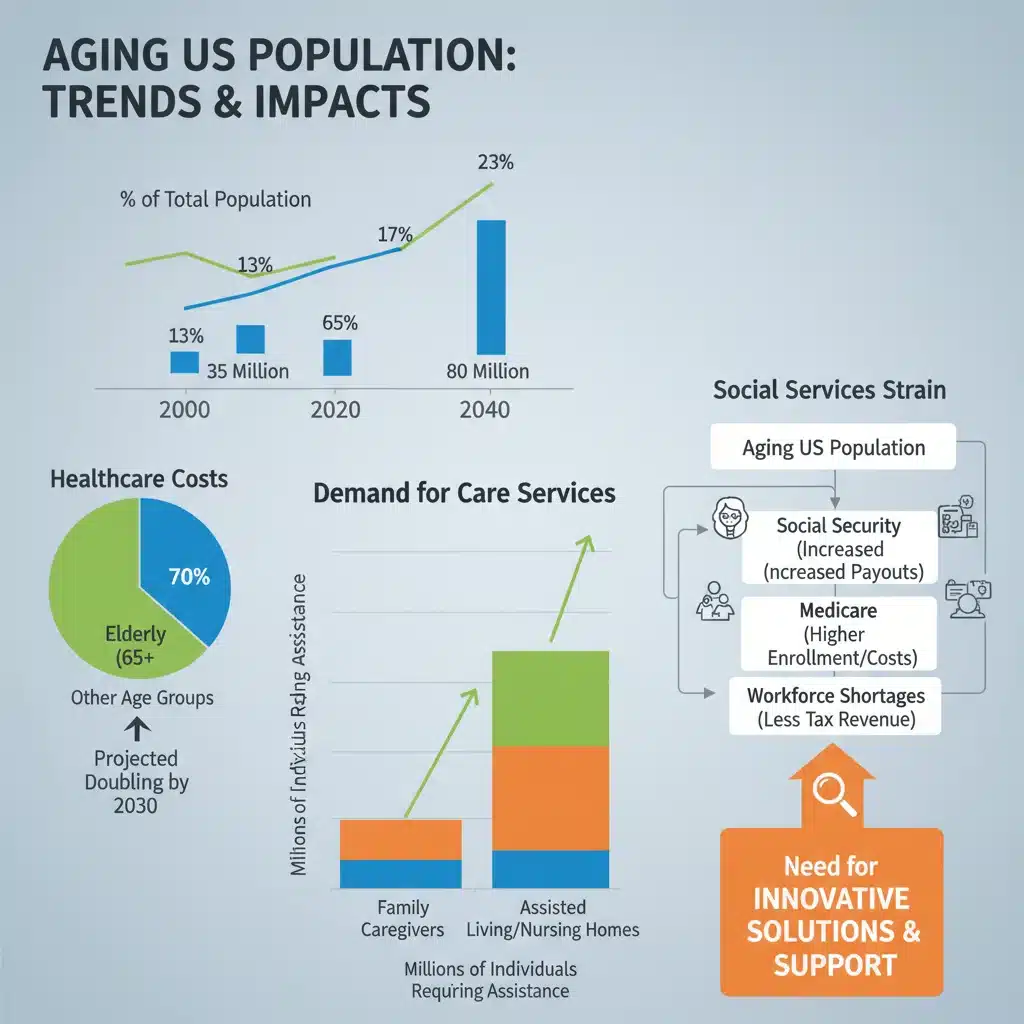
The financial burden of long-term care is astronomical, often depleting life savings. Medicare does not cover most long-term care costs, leaving many to rely on Medicaid after exhausting their assets. This creates a moral hazard and significant financial stress for families. Innovative solutions, such as long-term care insurance reform, expanding home and community-based services, and providing greater support for family caregivers, are urgently needed to address this critical component of an aging US population‘s needs.
Housing and Accessibility
As people age, their housing needs often change. Many desire to ‘age in place,’ remaining in their homes and communities for as long as possible. However, many existing homes are not designed to be age-friendly, lacking features like single-level living, grab bars, or wider doorways. There will be an increased demand for accessible housing modifications, senior-friendly communities, and diverse housing options that cater to varying levels of independence and financial capacity within the aging US population.
Beyond physical accessibility, affordable housing for seniors is a growing concern. Fixed incomes and rising housing costs can force older adults into precarious living situations. Policymakers and urban planners must prioritize the development of diverse, affordable, and age-friendly housing stock to accommodate the burgeoning aging US population. This includes promoting co-housing models, accessory dwelling units (ADUs), and programs that assist with home modifications.
Insider Knowledge & Practical Solutions for the Aging US Population
Addressing the challenges posed by the aging US population requires a multi-faceted approach, blending policy reforms, technological innovation, and community engagement. Here are some key solutions informed by current research and best practices:
1. Reimagining Healthcare Delivery
- Integrated Care Models: Shift from fragmented care to integrated models that coordinate medical, social, and behavioral health services. Programs like PACE (Program of All-Inclusive Care for the Elderly) offer promising blueprints.
- Telehealth Expansion: Capitalize on the lessons learned from the pandemic by permanently expanding telehealth services, especially in rural areas, to improve access to specialists and routine care for the aging US population.
- Geriatric Workforce Development: Invest in training and recruitment programs for geriatric specialists, nurses, and direct care workers. This includes providing incentives and improving working conditions to attract and retain talent.
- Preventive Health & Wellness: Fund and promote evidence-based preventive health programs, including exercise, nutrition, and chronic disease self-management, to keep seniors healthier for longer.
2. Strengthening Social Security and Retirement Planning
- Bipartisan Dialogue: Foster a bipartisan approach to Social Security reform, exploring options such as modest adjustments to the retirement age, benefit formulas, or payroll tax rates to ensure long-term solvency.
- Financial Literacy Campaigns: Implement nationwide campaigns to improve financial literacy and encourage early retirement planning and savings among all age groups.
- Expand Access to Retirement Accounts: Explore policies that expand access to employer-sponsored retirement plans, particularly for small businesses and gig economy workers.
3. Innovating Long-Term Care and Caregiver Support
- Expand Home and Community-Based Services (HCBS): Prioritize funding and expand access to HCBS as a cost-effective and preferred alternative to institutional care. This aligns with the desire of most of the aging US population to age in place.
- Caregiver Support Programs: Implement robust programs that offer financial assistance, respite care, training, and mental health support for informal caregivers. Recognizing and valuing the essential role of family caregivers is paramount.
- Long-Term Care Insurance Reform: Explore public-private partnerships or state-run programs to make long-term care insurance more affordable and accessible, reducing reliance on Medicaid.
- Technology for Independent Living: Promote and subsidize the use of assistive technologies, smart home devices, and remote monitoring systems that enhance safety and independence for the aging US population.

4. Creating Age-Friendly Communities and Housing
- Age-Friendly City Initiatives: Encourage and support communities in adopting the World Health Organization’s Age-Friendly Cities framework, focusing on areas like transportation, outdoor spaces, social participation, and civic engagement for the aging US population.
- Universal Design Principles: Mandate and incentivize universal design principles in new construction and renovations, making homes and public spaces accessible to people of all ages and abilities.
- Diverse Housing Options: Promote the development of diverse housing models, including co-housing, intergenerational living, and affordable senior housing, to meet the varied needs and preferences of the aging US population.
- Transportation Solutions: Invest in accessible public transportation and innovative ride-sharing programs tailored to the needs of older adults, ensuring they maintain mobility and independence.
5. Leveraging Technology and Innovation
Technology is not just a tool; it’s a transformative force in addressing the needs of the aging US population. Beyond telehealth, artificial intelligence (AI) can assist in predicting health risks, personalizing care plans, and even providing companionship through robotic assistants. Wearable devices can monitor vital signs and detect falls, alerting caregivers or emergency services. Smart home systems can adjust lighting, temperature, and even dispense medication automatically. The ethical implications and digital literacy gaps must be addressed, but the potential for technology to enhance the quality of life and efficiency of services for the aging US population is immense.
6. Promoting Intergenerational Connections
An often-overlooked solution lies in fostering stronger intergenerational connections. Older adults possess a wealth of knowledge, experience, and wisdom that can benefit younger generations. Programs that pair seniors with youth for mentoring, tutoring, or shared activities can combat social isolation in the elderly while enriching the lives of the young. These initiatives also help to break down ageist stereotypes and build a more cohesive, supportive society capable of caring for its aging US population.
Economic Opportunities in an Aging Society
While the focus often gravitates towards the challenges, an aging US population also presents significant economic opportunities. The ‘silver economy’ refers to the economic activity related to the needs and demands of older consumers. This includes new markets for age-friendly products and services, from health technology and specialized housing to leisure and travel. Entrepreneurs and businesses that innovate to meet these evolving needs will find fertile ground for growth.
Furthermore, many older adults wish to remain engaged in the workforce, either full-time or part-time. Policies that promote flexible work arrangements, reskilling opportunities, and combat age discrimination can tap into this valuable pool of experience and expertise, delaying retirement and contributing to economic productivity. The intellectual capital of the aging US population is a resource that should not be underestimated or underutilized.
The Role of Policy and Governance
Effective responses to the aging US population will require strong leadership and coordinated policy at all levels of government. This includes:
- National Strategy: Developing a comprehensive national strategy for an aging America that coordinates efforts across federal agencies and provides guidance and resources to states and local communities.
- Data-Driven Decisions: Investing in robust data collection and research to better understand the diverse needs of the aging US population and to evaluate the effectiveness of interventions.
- Public-Private Partnerships: Fostering collaboration between government, businesses, non-profits, and academic institutions to develop innovative solutions and leverage diverse expertise and resources.
- Funding Mechanisms: Exploring sustainable and equitable funding mechanisms for social services, healthcare, and long-term care that can adapt to demographic shifts.
The political will to make difficult decisions and invest in long-term solutions will be crucial. Short-term fixes will only exacerbate the problem. A societal commitment to supporting the aging US population is not just an act of compassion; it’s an investment in the overall health and stability of the nation.
Conclusion: A Call to Action for the Aging US Population
The year 2026 is not far off, and the demographic shifts driven by the aging US population are already underway. The challenges are significant, demanding foresight, collaboration, and a willingness to innovate. From overhauling healthcare delivery to strengthening retirement security, from supporting caregivers to building age-friendly communities, the scope of necessary action is broad.
However, this is also an opportunity to build a more inclusive, resilient, and supportive society. By embracing practical solutions, leveraging technology, and fostering intergenerational connections, we can transform the ‘silver tsunami’ into a ‘silver lining.’ The future of social services, and indeed the well-being of the nation, hinges on our collective ability to proactively adapt to and embrace the realities of an aging US population. It’s a call to action for policymakers, service providers, businesses, communities, and individuals alike – to work together to ensure that all Americans, regardless of age, can live with dignity, purpose, and support.
The time for debate is over; the time for decisive action is now. Let us build a future where an aging US population is seen not as a burden, but as a testament to human progress and a source of invaluable wisdom and continued contribution to society.