Transforming US Healthcare: AI Innovations for Providers in 2026

Transforming US Healthcare: AI Innovations for Providers in 2026
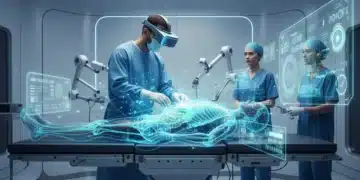
The landscape of United States healthcare is on the cusp of a monumental transformation, driven by the relentless march of artificial intelligence. As we gaze into 2026, it’s clear that AI will not merely be an auxiliary tool but a foundational pillar supporting and enhancing every facet of patient care and operational management for providers. The promise of AI Healthcare Innovation is no longer a distant dream but a tangible reality, with profound implications for how diseases are diagnosed, treatments are administered, and healthcare systems operate.
For US healthcare providers, understanding and strategically adopting these innovations is paramount to remaining competitive, improving patient outcomes, and mitigating the ever-increasing pressures of an evolving healthcare environment. This article delves into the three most significant areas where AI is set to revolutionize healthcare by 2026, offering a comprehensive look at the technologies, their benefits, and the challenges that lie ahead.
The Dawn of Precision: AI in Advanced Diagnostics and Predictive Analytics
One of the most impactful areas of AI Healthcare Innovation for US providers lies in advanced diagnostics and predictive analytics. The ability of AI algorithms to process vast amounts of data – from medical images and genomic sequences to electronic health records (EHRs) and real-time physiological monitoring – far surpasses human capabilities. This computational prowess is leading to earlier, more accurate diagnoses and the proactive identification of at-risk patients, fundamentally shifting healthcare from a reactive to a preventive model.
Revolutionizing Medical Imaging
By 2026, AI’s role in medical imaging will be indispensable. Algorithms are already excelling at detecting subtle anomalies in X-rays, CT scans, MRIs, and pathology slides that might be missed by the human eye. For instance, AI-powered systems can identify cancerous lesions in mammograms with greater accuracy and speed, reducing false positives and negatives. This not only eases the burden on radiologists but also ensures patients receive timely and appropriate care. The integration of AI in imaging also extends to ophthalmology, dermatology, and cardiology, where it assists in diagnosing conditions like diabetic retinopathy, skin cancer, and heart disease with unprecedented precision.
Furthermore, AI can analyze imaging data in conjunction with other patient information to provide a more holistic view, leading to a more comprehensive diagnostic picture. This multi-modal data integration is a hallmark of advanced AI Healthcare Innovation, moving beyond siloed analyses to create a truly interconnected diagnostic landscape.
Genomic Medicine and Personalized Risk Assessment
The explosion of genomic data presents both an opportunity and a challenge. AI is the key to unlocking its full potential. By 2026, AI will be routinely used to analyze individual genetic profiles, identifying predispositions to various diseases, predicting drug responses, and tailoring treatment plans based on a patient’s unique genetic makeup. This level of personalization, once theoretical, is becoming a clinical reality.
Predictive analytics, powered by AI, will also play a crucial role in identifying patients at high risk for chronic conditions such as diabetes, heart disease, or even sepsis in hospital settings. By continuously monitoring physiological data from wearables and EHRs, AI systems can alert providers to impending health crises, allowing for early intervention and potentially preventing severe outcomes. This proactive approach not only saves lives but also significantly reduces healthcare costs associated with emergency care and long-term complications.
Challenges in Adoption
Despite the immense promise, the adoption of AI in diagnostics faces hurdles. Data privacy and security are paramount concerns, requiring robust safeguards. Regulatory frameworks need to evolve to keep pace with rapid technological advancements, ensuring the safety and efficacy of AI-driven diagnostic tools. Furthermore, the integration of AI systems into existing, often fragmented, healthcare IT infrastructures presents a significant technical challenge. Training healthcare professionals to effectively utilize and trust AI tools is also crucial for successful implementation.

Personalized Treatment Pathways and Drug Discovery Powered by AI
Beyond diagnostics, AI Healthcare Innovation is dramatically reshaping treatment strategies, moving towards highly personalized and effective interventions. This includes everything from tailoring drug dosages to individual patients to accelerating the discovery of novel therapies.
Precision Medicine and Treatment Optimization
The concept of ‘one-size-fits-all’ medicine is rapidly becoming obsolete. AI enables true precision medicine by analyzing a patient’s genetic profile, lifestyle, environmental factors, and disease characteristics to recommend the most effective treatment. For oncology, AI can predict how a patient will respond to different chemotherapy regimens or immunotherapies, guiding oncologists in selecting optimal treatments and minimizing adverse effects. This level of personalized care leads to better patient outcomes and a more efficient use of resources.
AI also assists in continuous treatment optimization. By analyzing real-time patient data – including vital signs, medication adherence, and reported symptoms – AI algorithms can suggest adjustments to treatment plans, ensuring therapies remain effective and responsive to a patient’s evolving condition. This dynamic approach to treatment is a cornerstone of future healthcare delivery.
Accelerating Drug Discovery and Development
The process of drug discovery is notoriously long, expensive, and often unsuccessful. AI is poised to dramatically change this. Machine learning algorithms can analyze vast chemical libraries, predict molecular interactions, and identify potential drug candidates much faster than traditional methods. This significantly reduces the time and cost associated with early-stage drug development.
Furthermore, AI can simulate drug efficacy and toxicity, helping researchers prioritize promising compounds and discard those likely to fail. This not only speeds up the drug development pipeline but also increases the success rate of clinical trials. By 2026, we can expect AI to be a standard tool in pharmaceutical research, leading to a faster development of new treatments for a wide range of diseases, including rare conditions that currently lack effective therapies. This acceleration in drug discovery is a critical component of AI Healthcare Innovation, promising new hope for patients worldwide.
Ethical Considerations and Data Quality
The ethical implications of AI in personalized treatment are profound. Ensuring equitable access to these advanced therapies, preventing algorithmic bias in treatment recommendations, and maintaining patient autonomy are critical considerations. Moreover, the success of AI in drug discovery hinges on the quality and availability of vast, well-curated datasets. Poor data quality can lead to flawed predictions and potentially dangerous outcomes, emphasizing the need for rigorous data governance and validation.
Enhancing Operational Efficiency and Administrative Streamlining
While often less visible than clinical applications, AI Healthcare Innovation in operational efficiency and administrative streamlining will have a colossal impact on US healthcare providers by 2026. By automating routine tasks, optimizing resource allocation, and improving patient flow, AI can free up valuable human capital, reduce burnout, and significantly lower operational costs.
Automating Administrative Tasks
Healthcare providers spend an inordinate amount of time on administrative tasks, from scheduling appointments and managing billing to processing insurance claims and maintaining patient records. AI-powered solutions, such as intelligent automation and natural language processing (NLP), can automate many of these mundane yet essential tasks. Chatbots can handle initial patient inquiries, appointment scheduling, and provide basic information, reducing call volumes and improving patient access.
AI can also streamline the complex process of medical coding and billing, reducing errors and accelerating reimbursement cycles. By analyzing clinical notes and correlating them with appropriate codes, AI can ensure accuracy and compliance, saving providers substantial time and resources that can be reallocated to patient care. This administrative relief is a key benefit of AI Healthcare Innovation.
Optimizing Resource Allocation and Workforce Management
Hospitals and clinics often struggle with optimizing bed capacity, operating room schedules, and staff assignments. AI algorithms can analyze historical data, patient flow patterns, and predicted demand to create highly efficient schedules and resource allocation plans. This can lead to reduced patient wait times, improved staff utilization, and a more efficient use of expensive medical equipment.
For workforce management, AI can predict staffing needs based on patient volumes, seasonal trends, and staff availability, helping healthcare organizations optimize scheduling and prevent staff shortages or overstaffing. This not only improves operational fluidity but also enhances staff satisfaction by ensuring fair and balanced workloads, directly contributing to a healthier work environment within the healthcare sector.
Supply Chain Management and Inventory Optimization
The healthcare supply chain is incredibly complex, with numerous vendors, products, and fluctuating demands. AI can optimize inventory management by predicting consumption patterns, identifying potential supply chain disruptions, and automating reorder processes. This ensures that critical medical supplies are always available when needed, reducing waste and minimizing the risk of shortages, which can have severe consequences for patient care. Efficient supply chain management is a critical, though often overlooked, aspect of AI Healthcare Innovation.

Data Security and Integration Challenges
Implementing AI for operational efficiency requires seamless integration with existing IT systems and robust data security measures. Protecting sensitive patient and operational data from cyber threats is paramount. Furthermore, the initial investment in AI infrastructure and the training required for staff to manage and interpret AI-generated insights can be substantial. Overcoming these challenges will be crucial for widespread adoption.
The Road Ahead: Overcoming Challenges and Embracing the Future
While the potential of AI Healthcare Innovation is immense, its widespread adoption by US providers by 2026 is not without significant challenges. These include regulatory hurdles, ethical considerations, data privacy concerns, the need for robust IT infrastructure, and the imperative for comprehensive training of healthcare professionals.
Regulatory Landscape and Ethical Frameworks
The rapid pace of AI development often outstrips the ability of regulatory bodies to establish clear guidelines. The FDA, for instance, is grappling with how to approve and monitor AI-driven medical devices and software. Clear, consistent regulatory frameworks are essential to foster innovation while ensuring patient safety and efficacy. Ethical considerations, such as algorithmic bias in diagnosis or treatment recommendations, require careful attention to ensure AI systems are fair and equitable for all patient populations.
Data Privacy and Interoperability
Healthcare data is among the most sensitive information. Ensuring its privacy and security in an AI-driven ecosystem is a monumental task. Robust cybersecurity measures, anonymization techniques, and strict adherence to regulations like HIPAA are non-negotiable. Furthermore, the lack of interoperability between disparate healthcare IT systems remains a significant barrier. AI systems thrive on comprehensive, integrated data, and addressing these data silos is critical for maximizing AI’s impact.
Workforce Training and Adaptation
The successful integration of AI into healthcare requires a paradigm shift in how healthcare professionals are trained and operate. Clinicians need to understand how to interact with AI tools, interpret their outputs, and integrate AI-generated insights into their decision-making processes. This doesn’t mean replacing human expertise but augmenting it. Educational programs and continuous professional development will be vital to equip the healthcare workforce with the necessary skills to leverage AI Healthcare Innovation effectively.
Conclusion: A Brighter Future for US Healthcare
By 2026, AI Healthcare Innovation will have fundamentally reshaped the delivery of care across the United States. From enabling earlier and more precise diagnoses through advanced imaging and genomics, to crafting highly personalized treatment plans, and dramatically improving the operational efficiency of healthcare systems, AI’s influence will be pervasive. While challenges related to regulation, ethics, data security, and workforce adaptation remain, the benefits of embracing these technologies are too significant to ignore.
US healthcare providers who proactively invest in AI solutions, foster a culture of innovation, and prioritize ethical implementation will be best positioned to thrive in this new era. The ultimate goal is not just technological advancement, but the creation of a more accessible, equitable, efficient, and ultimately, healthier future for all Americans. The journey towards a truly AI-powered healthcare system is well underway, promising a revolution that will benefit patients and providers alike, setting new benchmarks for medical excellence.