Gig Economy Boom: 10% Freelancer Spending Growth by 2026

The global economic landscape is in constant flux, shaped by technological advancements, evolving work paradigms, and shifting consumer behaviors. Among the most significant disruptors and innovators of recent times is the rise of the gig economy. Far from being a temporary phenomenon, the gig economy has cemented its place as a formidable force, transforming not only how people work but also how they earn and, crucially, how they spend. A recent comprehensive analysis projects a remarkable 10% growth in discretionary income for freelancers by the year 2026, a statistic that underscores the profound influence of the gig economy on spending habits and broader economic trends.
This anticipated surge in discretionary income is not merely a number; it represents a fundamental shift in economic power and consumer behavior. Freelancers, once considered outliers, are now increasingly viewed as key economic drivers. Their growing financial independence and flexibility are enabling them to make more significant contributions to various sectors of the economy, from technology and retail to leisure and personal development. Understanding the multifaceted implications of this trend is crucial for businesses, policymakers, and individuals alike.
The Rise of the Gig Economy: A Paradigm Shift in Work
To fully appreciate the impact of a 10% growth in discretionary income for freelancers, it’s essential to first grasp the foundational changes brought about by the gig economy itself. The traditional 9-to-5 corporate structure is gradually being supplemented, and in some cases supplanted, by a more agile, project-based work model. This model offers unparalleled flexibility, autonomy, and the potential for higher earning capacity, attracting a diverse talent pool ranging from highly skilled professionals to those seeking supplemental income.
The proliferation of digital platforms has been a primary catalyst for this shift. Platforms like Upwork, Fiverr, Airbnb, and Uber have created accessible marketplaces where individuals can offer their skills or assets to a global audience. This democratization of work has dismantled geographical barriers, allowing talent to be matched with demand irrespective of location. As a result, the workforce is becoming increasingly decentralized, diverse, and dynamic.
The allure of the gig economy extends beyond mere flexibility. It offers individuals the freedom to pursue multiple passions, develop a broader skill set, and achieve a work-life balance that traditional employment often cannot provide. For many, it’s a pathway to entrepreneurship, allowing them to build personal brands and client portfolios without the overheads associated with traditional business startups. This empowerment directly correlates with increased earning potential, which, in turn, fuels the growth in discretionary income.
Defining Discretionary Income in the Freelance Context
Discretionary income refers to the amount of an individual’s income that is left over after all taxes, essential living expenses (like housing, food, and utilities), and necessary debt payments have been made. It’s the money that can be freely spent, saved, or invested at the individual’s discretion. For freelancers, whose income streams can often be variable, the concept of discretionary income holds particular significance. A 10% increase in this specific category signifies not just more money, but more financial freedom and security.
Traditionally, freelancers might have focused primarily on covering their basic needs, often facing income instability. However, as the gig economy matures and opportunities expand, many freelancers are finding more consistent and lucrative work. This stability allows them to move beyond mere subsistence towards building savings, investing in personal and professional development, and indulging in lifestyle choices that were previously out of reach. This surge in Gig Economy Spending power is a testament to the increasing viability and profitability of freelance careers.
Drivers Behind the 10% Growth in Freelancer Discretionary Income
Several interconnected factors are contributing to this projected 10% growth in discretionary income for freelancers by 2026. Understanding these drivers provides insight into the sustainability and future trajectory of this economic trend.
Increased Demand for Specialized Skills
Businesses, both large and small, are increasingly turning to freelancers for specialized skills that may be too costly or difficult to maintain in-house on a full-time basis. This includes areas such as digital marketing, web development, graphic design, content creation, data analysis, and cybersecurity. As technology evolves rapidly, the demand for these niche skills intensifies, pushing up the rates that skilled freelancers can command.
The project-based nature of freelance work also allows companies to scale their workforce up or down as needed, offering a cost-effective alternative to permanent hires. This mutual benefit – businesses gaining access to top talent without long-term commitments, and freelancers earning premium rates for their expertise – creates a buoyant market for specialized freelance services.
Globalization of the Workforce
The internet has effectively dissolved geographical boundaries for work. Freelancers in one country can easily serve clients in another, accessing a much larger market than their local economy could provide. This globalization not only increases the pool of potential clients but also often allows freelancers from regions with lower costs of living to earn rates comparable to those in higher-cost regions, significantly boosting their purchasing power and discretionary income.
Conversely, businesses in developed nations can access highly skilled talent at competitive rates, leading to a more efficient allocation of global human capital. This cross-border collaboration is a powerful engine for growth in the Gig Economy Spending landscape.
Technological Advancements and Platform Sophistication
The continuous evolution of technology plays a pivotal role. More sophisticated platforms offer better matching algorithms, secure payment systems, and tools for project management and communication. These advancements reduce friction in the freelancing process, making it easier for freelancers to find work, manage multiple projects, and receive timely payments. Furthermore, AI-powered tools are automating mundane tasks, allowing freelancers to focus on higher-value work and increase their efficiency and earning capacity.
Growing Acceptance and Professionalization of Freelancing
What was once considered a stop-gap or side hustle is now increasingly recognized as a legitimate and often highly lucrative career path. Educational institutions are beginning to offer courses in freelancing and entrepreneurship, and governments are exploring ways to provide better social safety nets for independent workers. This growing acceptance contributes to the professionalization of freelancing, attracting more talent and bolstering the perception of freelancers as valuable contributors to the economy.
Inflationary Pressures and Cost of Living
While often viewed negatively, inflationary pressures can, paradoxically, contribute to an increase in nominal discretionary income for certain segments of the population, particularly those in demand. As the cost of goods and services rises, businesses may increase their budgets for essential services, including those provided by freelancers. Skilled freelancers, especially those in high-demand fields, are often in a better position to negotiate higher rates to keep pace with the rising cost of living, thereby maintaining or even increasing their real discretionary income.
Impact of Increased Freelancer Discretionary Spending
A 10% growth in freelancers’ discretionary income is poised to have ripple effects across various sectors of the economy, influencing consumer markets, investment patterns, and even social structures.
Boost to Consumer Markets
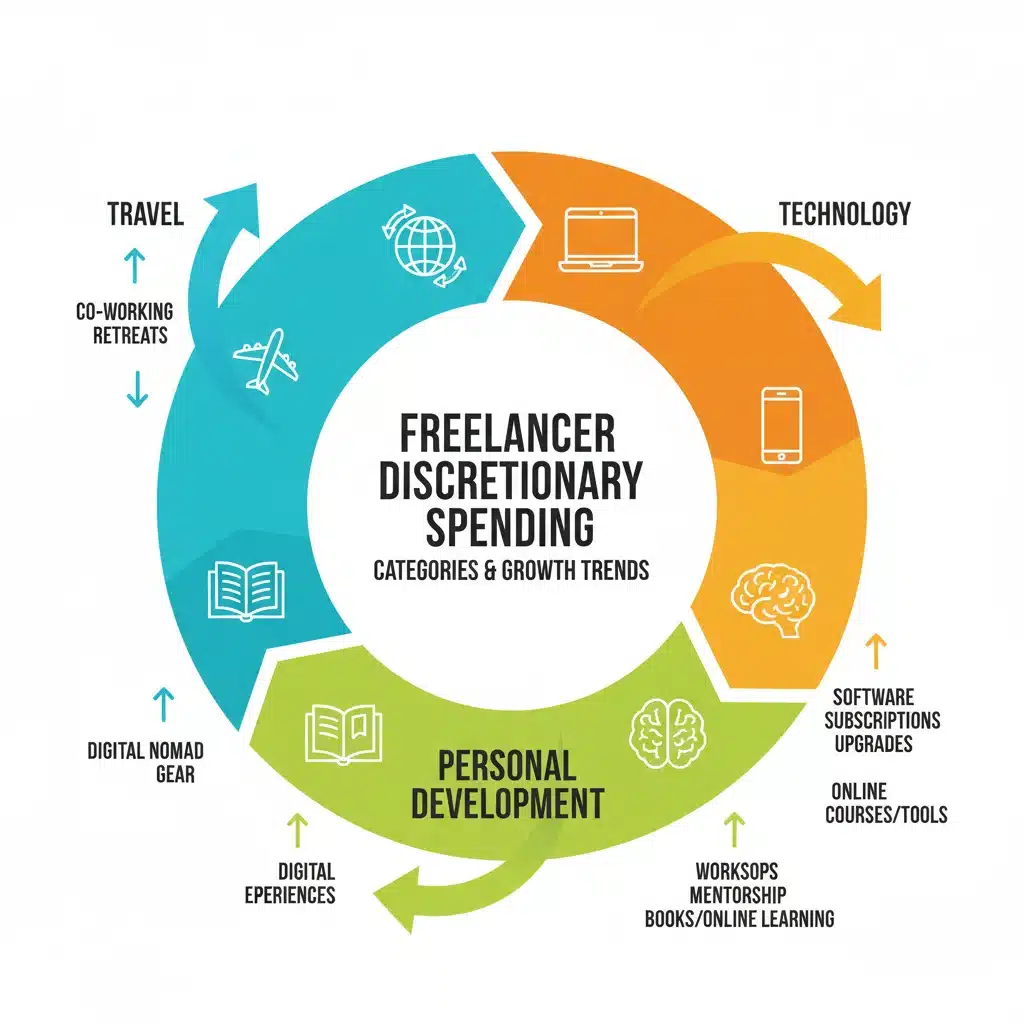
More discretionary income means more consumption. Freelancers are likely to spend their increased earnings on a wide range of goods and services. This includes:
- Travel and Leisure: With greater flexibility and financial freedom, freelancers are more inclined to invest in experiences, including domestic and international travel, dining out, and entertainment.
- Technology and Gadgets: As digital natives, freelancers often prioritize upgrading their tech equipment, from laptops and smartphones to specialized software and accessories, which are essential tools for their work.
- Personal Development and Education: Many freelancers proactively invest in upskilling and reskilling to stay competitive. This means increased spending on online courses, workshops, certifications, and professional coaching.
- Health and Wellness: A growing emphasis on well-being translates into spending on fitness memberships, healthy food options, mental health services, and ergonomic home office setups.
- Home Improvement: With more time spent at home, freelancers might invest in creating more comfortable and functional living and working spaces.
This increased Gig Economy Spending provides a significant boost to these consumer-facing industries, stimulating economic activity and job creation.
Stimulus for Investment and Savings
Beyond immediate consumption, a portion of the increased discretionary income will likely be directed towards savings and investments. Freelancers, often without employer-sponsored retirement plans, have a strong incentive to build their financial safety nets. This could lead to:
- Increased Personal Savings: Building emergency funds and long-term savings for retirement or other significant life goals.
- Investment in Financial Markets: Contributing to stocks, bonds, mutual funds, or real estate, thereby injecting capital into financial markets.
- Entrepreneurial Ventures: Some freelancers might use their increased capital to launch their own businesses, hire other freelancers, or invest in tools and resources that further their entrepreneurial ambitions.
This shift from consumption to investment has broader implications for capital formation and long-term economic stability.
Changes in Housing Markets
The flexibility offered by freelance work, coupled with increased income, can influence housing preferences. Freelancers may opt for:
- Relocation to Lower Cost-of-Living Areas: The ability to work remotely allows freelancers to move away from expensive urban centers, leading to revitalization in smaller towns and rural areas.
- Investment in Home Offices: A dedicated and well-equipped home office becomes a priority, influencing housing choices and renovation decisions.
- Digital Nomad Lifestyle: A segment of freelancers might choose a fully mobile lifestyle, spending on short-term rentals and travel experiences across different geographies.
These trends can exert pressure on housing markets, creating new demands and opportunities in various regions.
Social and Cultural Shifts
The empowerment of freelancers through increased discretionary income also has social and cultural ramifications. It can lead to:
- Greater Social Mobility: Freelancing can provide a pathway for individuals from diverse backgrounds to achieve financial independence and improve their socio-economic standing.
- Diversification of Lifestyles: The ability to choose when, where, and how to work fosters a greater variety of lifestyles, challenging traditional norms of employment and success.
- Community Building: The rise of co-working spaces and online communities caters to the specific needs of freelancers, fostering collaboration and mutual support.
Challenges and Considerations for Sustained Growth
While the projected growth in Gig Economy Spending is promising, it’s important to acknowledge potential challenges and considerations that could impact its sustainability and equitable distribution.
Income Volatility and Financial Planning
Despite the overall increase in discretionary income, income volatility remains a characteristic of freelance work. Periods of high earnings can be interspersed with leaner times. This necessitates robust financial planning, including maintaining substantial emergency funds and carefully managing cash flow. The 10% growth figure likely represents an average, and individual experiences will vary.
Access to Benefits and Social Safety Nets
Freelancers often lack access to traditional employee benefits such as health insurance, paid time off, and retirement contributions. While increased discretionary income can help cover some of these costs, it highlights the ongoing need for policy solutions that provide adequate social safety nets for independent workers. This is a critical area for government and industry collaboration.
Skill Development and Market Saturation
To maintain high earning potential, freelancers must continuously invest in skill development and adapt to evolving market demands. As more individuals enter the gig economy, certain fields may experience increased competition, potentially impacting rates. The 10% growth assumes a continued demand for specialized skills and the ability of freelancers to remain competitive.
Regulatory Landscape
The regulatory environment surrounding the gig economy is still evolving. Issues related to worker classification, taxation, and labor rights are complex and vary by region. Future regulations could impact how platforms operate and how freelancers are compensated, potentially influencing discretionary income levels. A stable and clear regulatory framework is essential for sustained growth.
Strategies for Freelancers to Maximize Discretionary Income
For freelancers looking to capitalize on this trend and ensure they are part of the 10% growth in discretionary income, several strategies can be employed:
- Specialize and Niche Down: Focusing on a specific, high-demand niche allows freelancers to command higher rates and become recognized experts in their field.
- Continuous Learning and Upskilling: Investing in new skills and staying abreast of industry trends ensures continued relevance and demand for their services.
- Effective Pricing Strategies: Learning to value their work appropriately and negotiate fair rates is crucial. This includes understanding market rates and communicating their value proposition clearly.
- Diversify Income Streams: Relying on multiple clients or offering various services can mitigate income volatility and increase overall earning potential.
- Build a Strong Personal Brand: A strong online presence, portfolio, and network can attract higher-paying clients and reduce the need for constant prospecting.
- Financial Literacy and Planning: Developing strong financial management skills, including budgeting, saving, and investing, is paramount for maximizing discretionary income and building long-term wealth.

The Future Outlook: Beyond 2026
The projection of a 10% growth in discretionary income for freelancers by 2026 is just one milestone in the ongoing evolution of the gig economy. Looking beyond this timeframe, several trends suggest that the influence of independent workers on global spending will continue to expand.
Further Integration into Mainstream Economy
As the gig economy matures, it will likely become even more integrated into the mainstream economy. This could involve traditional businesses adopting more hybrid work models, where a significant portion of their workforce consists of freelancers or contractors. This integration would further normalize freelance careers and potentially lead to more stable and higher-paying opportunities.
Emergence of New Gig Economy Niches
Technological advancements, particularly in areas like artificial intelligence, virtual reality, and biotechnology, will undoubtedly create new demands for specialized skills. This will lead to the emergence of entirely new gig economy niches, offering fresh avenues for freelancers to earn and contribute. The ability to adapt to these new fields will be key to sustained growth in Gig Economy Spending.
Policy Innovations and Support Systems
As the number of independent workers grows, there will be increasing pressure on governments and private entities to develop robust policy frameworks and support systems tailored to their needs. This could include portable benefits packages, simplified tax structures, and access to affordable training and development resources. Such innovations would further solidify the financial security and earning potential of freelancers.
Increased Entrepreneurial Activity
The gig economy serves as a powerful incubator for entrepreneurship. As freelancers gain more experience, build capital, and develop strong networks, many will transition into launching their own businesses, hiring other freelancers, and creating new economic opportunities. This entrepreneurial ripple effect will further amplify the impact of increased discretionary income.
Conclusion
The projected 10% growth in discretionary income for freelancers by 2026 is a compelling indicator of the gig economy’s enduring power and transformative potential. It signifies a future where independent work is not just a viable alternative but a significant driver of economic growth and individual prosperity. This surge in Gig Economy Spending is set to reshape consumer markets, investment patterns, and the very fabric of how we perceive work and wealth.
While challenges remain, the overall trajectory points towards a more flexible, empowered, and financially robust freelance workforce. For individuals, this means unprecedented opportunities for autonomy and income growth. For businesses, it presents a dynamic talent pool and evolving consumer base. For economies, it heralds a new era of distributed wealth and innovation. Embracing and understanding these shifts will be paramount for navigating the exciting and ever-evolving landscape of the future of work.