Gig Economy 2026: US Regulatory Shifts & Worker Rights

The gig economy has revolutionized the way we work, offering unprecedented flexibility for millions and innovative services for consumers. However, its rapid expansion has also brought forth complex challenges, particularly concerning worker rights, classification, and income stability. As we approach 2026, the United States is at a pivotal juncture, with new regulations emerging that promise to significantly reshape the landscape for gig workers and the platforms they operate on. Understanding these shifts, especially the impact of new gig economy regulations, is crucial for anyone involved in this dynamic sector.
For years, the debate has raged: are gig workers independent contractors or employees? This question lies at the heart of many of the regulatory changes we are seeing. The distinction is not merely semantic; it carries profound implications for minimum wage, overtime pay, healthcare benefits, and the right to organize. As state and federal governments grapple with these issues, the aim is often to strike a balance between preserving the flexibility that defines gig work and ensuring adequate protections for those who rely on it for their livelihoods. The evolving framework of gig economy regulations is designed to address these very concerns, striving for a more equitable and sustainable future for all participants.
The Shifting Sands of Worker Classification: A Core Challenge for Gig Economy Regulations
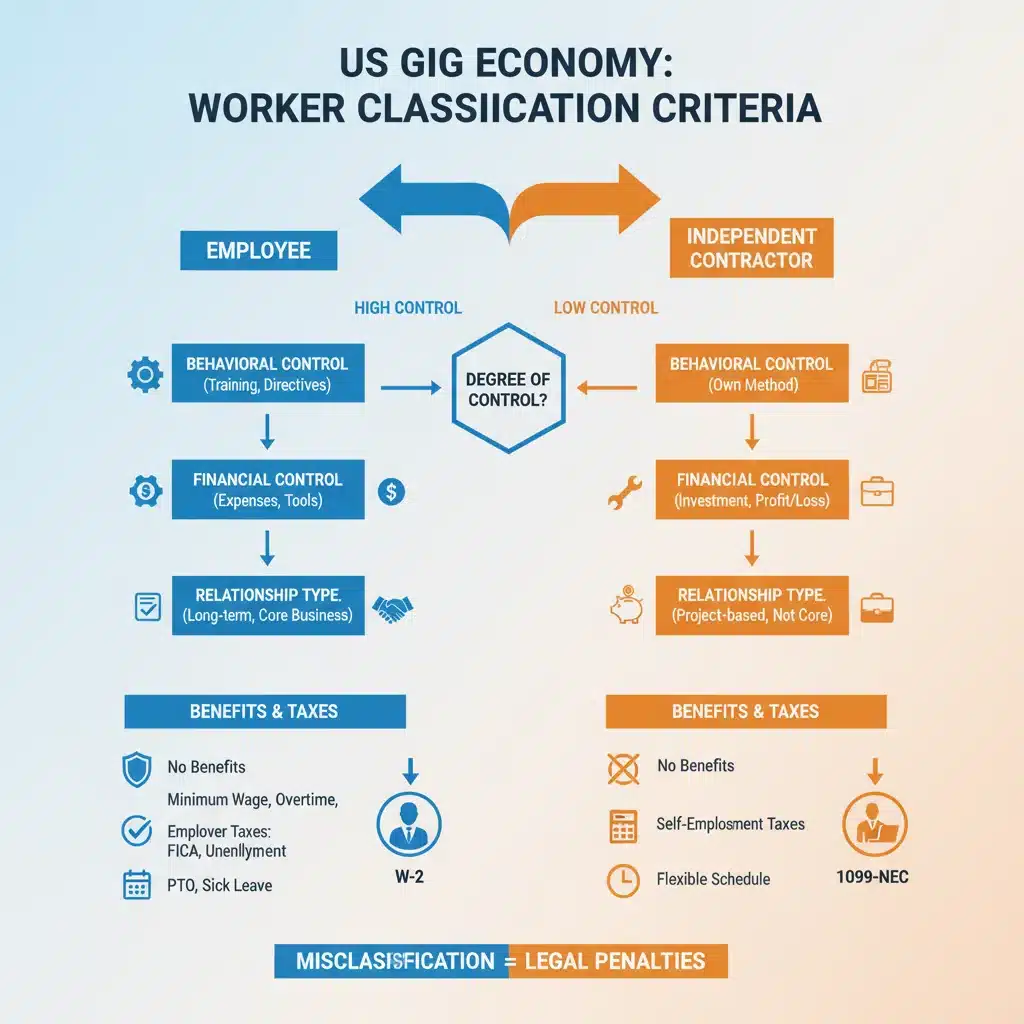
One of the most contentious aspects of the gig economy has been the classification of its workforce. Traditionally, independent contractors have fewer legal protections and benefits compared to employees. Gig platforms have largely operated under the premise that their workers are independent contractors, affording them operational flexibility and lower overhead costs. However, critics argue that many gig workers exhibit characteristics more akin to employees, such as being subject to platform-dictated rates, performance metrics, and sometimes even specific work hours or routes. This fundamental disagreement has fueled legislative efforts to redefine or clarify worker status, directly impacting future gig economy regulations.
Several states have taken the lead in proposing and enacting legislation to address this. California’s Assembly Bill 5 (AB5), for instance, introduced an ‘ABC test’ to determine worker classification, making it significantly harder for companies to classify workers as independent contractors. While AB5 faced considerable pushback and was later modified by Proposition 22 for rideshare and delivery drivers, its initial intent highlighted a growing national sentiment towards greater worker protections. Other states have explored similar models, or are considering tailored approaches that acknowledge the unique nature of gig work while still extending basic labor rights.
The federal government is also increasingly involved. The Department of Labor has issued guidance and proposed rules on worker classification, often leaning towards a broader interpretation of employment status. These federal initiatives, once finalized, could have a sweeping impact across all states, setting a national standard for gig economy regulations. The core objective is to ensure that workers are not misclassified, thereby preventing companies from circumventing labor laws and denying essential benefits. This ongoing legal and legislative tug-of-war underscores the complexity of fitting a novel economic model into existing legal frameworks.
For gig workers, a reclassification could mean access to minimum wage, overtime pay, unemployment insurance, workers’ compensation, and the right to collective bargaining. For gig platforms, it could translate into significantly increased operational costs, potentially leading to higher service prices for consumers or changes in their business models. The economic implications are vast, and the future of the gig economy hinges significantly on how these classification debates are ultimately resolved through new gig economy regulations.
Key Regulatory Updates Expected by 2026: What’s on the Horizon?
As we project forward to 2026, several key regulatory areas are expected to see significant updates, profoundly shaping the future of gig work in the United States. These updates are driven by a combination of worker advocacy, judicial rulings, and legislative action at both state and federal levels. The focus remains on balancing innovation with fairness, a critical component of effective gig economy regulations.
Federal Scrutiny and Department of Labor Guidance
The U.S. Department of Labor (DOL) has been actively reviewing and proposing new rules regarding independent contractor status. A prominent example is the proposed rule that would revert to a ‘totality-of-the-circumstances’ economic reality test, which considers several factors to determine if a worker is economically dependent on a company. This test is generally broader than previous interpretations and could lead to more workers being classified as employees. If finalized, this rule would have a nationwide impact, compelling many gig platforms to re-evaluate their operational structures and compensation models to comply with updated gig economy regulations.
State-Level Innovations and Protections
Beyond California’s AB5, other states are experimenting with different approaches. New York, Massachusetts, and Washington, for example, have seen legislative efforts to define gig worker rights, sometimes proposing a hybrid model that offers some benefits of employment without full employee status. These models often include provisions for minimum earnings, paid sick leave, and access to some form of benefits pool, funded by the platforms. The diversity of state-level approaches highlights the ongoing search for effective gig economy regulations that can be tailored to local economic conditions and worker needs.
The Rise of Portable Benefits
One innovative solution gaining traction is the concept of ‘portable benefits.’ This model proposes that benefits such as health insurance, paid time off, and retirement savings could be attached to the worker, rather than to a specific employer or platform. This would allow gig workers to accrue benefits regardless of how many platforms they work for or how frequently their work shifts. Several pilot programs and legislative proposals are exploring how to implement portable benefits schemes, which could be a game-changer for income stability and worker well-being within the framework of new gig economy regulations.
Collective Bargaining Rights for Gig Workers
The right to organize and collectively bargain is another significant area of focus. While traditional labor laws often exclude independent contractors from forming unions, there’s a growing movement to grant gig workers some form of collective representation. This could involve sector-specific bargaining, where workers on a particular platform or in a specific industry could negotiate terms and conditions with companies. Such developments would empower gig workers to advocate for better pay, safer working conditions, and improved benefits, further solidifying the impact of evolving gig economy regulations.
Impact on Worker Rights and Income Stability: A New Era for Gig Workers
The forthcoming gig economy regulations by 2026 are poised to usher in a new era for gig workers, fundamentally altering their rights and, crucially, their income stability. For many years, the allure of flexibility in gig work came with the trade-off of precarious income, lack of benefits, and minimal legal protections. The impending regulatory shifts aim to mitigate these downsides, creating a more secure and equitable environment.
Enhanced Protections and Benefits
If more gig workers are reclassified as employees, or if hybrid models gain traction, they will likely gain access to a host of protections previously unavailable. This includes:
- Minimum Wage and Overtime Pay: Ensuring a baseline income and fair compensation for extended hours.
- Workers’ Compensation: Providing financial support and medical care for work-related injuries or illnesses.
- Unemployment Insurance: Offering a safety net during periods of unemployment.
- Paid Sick Leave and Family Leave: Allowing workers to take time off for illness or family needs without losing income.
- Healthcare Access: Potentially through employer-sponsored plans or contributions to portable benefits.
These benefits are not merely perks; they are fundamental components of a stable working life. Their widespread adoption under new gig economy regulations would significantly improve the overall well-being and economic security of millions of gig workers.
Addressing Income Volatility
One of the biggest challenges for gig workers has been income volatility. Earnings can fluctuate wildly depending on demand, platform algorithms, and individual effort, making financial planning difficult. New gig economy regulations, particularly those establishing minimum earnings guarantees or more transparent pay structures, could help stabilize incomes. For instance, some proposed models include a minimum hourly rate for engaged time, ensuring that workers are fairly compensated even during slow periods. This predictability is vital for workers to budget, save, and invest in their futures.
The Right to Organize and Advocate
The ability to collectively bargain is a powerful tool for improving working conditions. Historically, independent contractors have been excluded from federal labor laws that protect unionization rights. However, ongoing legislative efforts and innovative legal interpretations are exploring ways to grant gig workers the right to organize. This could lead to stronger worker representation, allowing them to negotiate directly with platforms on issues like pay rates, safety standards, and algorithmic transparency. Such empowerment, facilitated by evolving gig economy regulations, would fundamentally shift the power dynamic between platforms and their workforce.
Challenges and Unintended Consequences
While the intent behind these regulations is positive, there are potential challenges. Platforms might respond by reducing the number of available gigs, increasing automation, or even withdrawing from certain markets if compliance costs become too high. There’s also the risk that increased regulation could stifle the very flexibility that draws many to gig work. Policymakers are acutely aware of these potential trade-offs and are striving to design gig economy regulations that protect workers without undermining the innovative spirit of the sector. The balance is delicate, and the long-term effects will need careful monitoring.
How Businesses are Adapting to Evolving Gig Economy Regulations
The impending wave of gig economy regulations is not only impacting workers but also forcing gig platforms and other businesses that rely on independent contractors to fundamentally re-evaluate their operating models. Adaptation is key to survival in this evolving landscape, and companies are exploring various strategies to remain compliant while maintaining profitability and innovation.
Revisiting Business Models and Cost Structures
For many gig platforms, the potential reclassification of workers from independent contractors to employees represents a significant increase in operational costs. These costs include payroll taxes, benefits contributions, minimum wage guarantees, and potential overtime pay. Businesses are therefore:
- Automating where possible: Investing in AI and automation to reduce reliance on human labor for certain tasks.
- Adjusting pricing: Passing some of the increased costs onto consumers through higher service fees.
- Optimizing logistics: Using advanced algorithms to increase efficiency and reduce idle time for workers, thereby maximizing productivity per paid hour.
- Exploring new markets: Focusing on regions with more favorable regulatory environments or adjusting service offerings in heavily regulated areas.
These strategic shifts are a direct response to the economic realities imposed by new gig economy regulations.
Investing in Compliance and Legal Expertise
Staying abreast of the patchwork of state and federal regulations is a monumental task. Companies are investing heavily in legal counsel and compliance teams to navigate the complexities of worker classification tests, benefit mandates, and reporting requirements. This proactive approach aims to minimize legal risks and avoid costly penalties associated with non-compliance. Understanding the nuances of each piece of gig economy regulations is crucial for platforms operating across multiple jurisdictions.
Developing Hybrid Worker Models
Some companies are exploring hybrid employment models, offering a blend of flexibility with certain employee-like benefits. This could involve a core group of employees supplemented by a larger pool of independent contractors, or a system where workers can choose their classification based on their desired level of commitment and benefits. These innovative models seek to satisfy regulatory demands while still catering to the preferences of workers who value the autonomy of gig work. The success of such models will depend heavily on how they align with future gig economy regulations.
Enhancing Worker Engagement and Communication
Recognizing the importance of their workforce, many platforms are also focusing on improving worker engagement and communication. This includes:
- Transparent policies: Clearly communicating changes in pay structures, benefits, and operational guidelines.
- Feedback mechanisms: Creating channels for workers to voice concerns and contribute to policy development.
- Voluntary benefits: Offering optional benefits and resources, such as access to discounted insurance or financial planning tools, even for independent contractors.
By fostering a more positive relationship with their workers, companies hope to retain talent and demonstrate a commitment to fair practices, which can also influence the perception of gig economy regulations.
Advocacy and Lobbying Efforts
Gig platforms are also actively engaged in lobbying efforts to shape future gig economy regulations. They advocate for policies that support their business models, such as the creation of a third classification for workers that is neither fully employee nor fully independent contractor, or for portable benefits schemes that ease the burden of traditional employment benefits. Their collective voice plays a significant role in the ongoing legislative debates.
The Future Landscape: Predictions for the Gig Economy in 2026 and Beyond
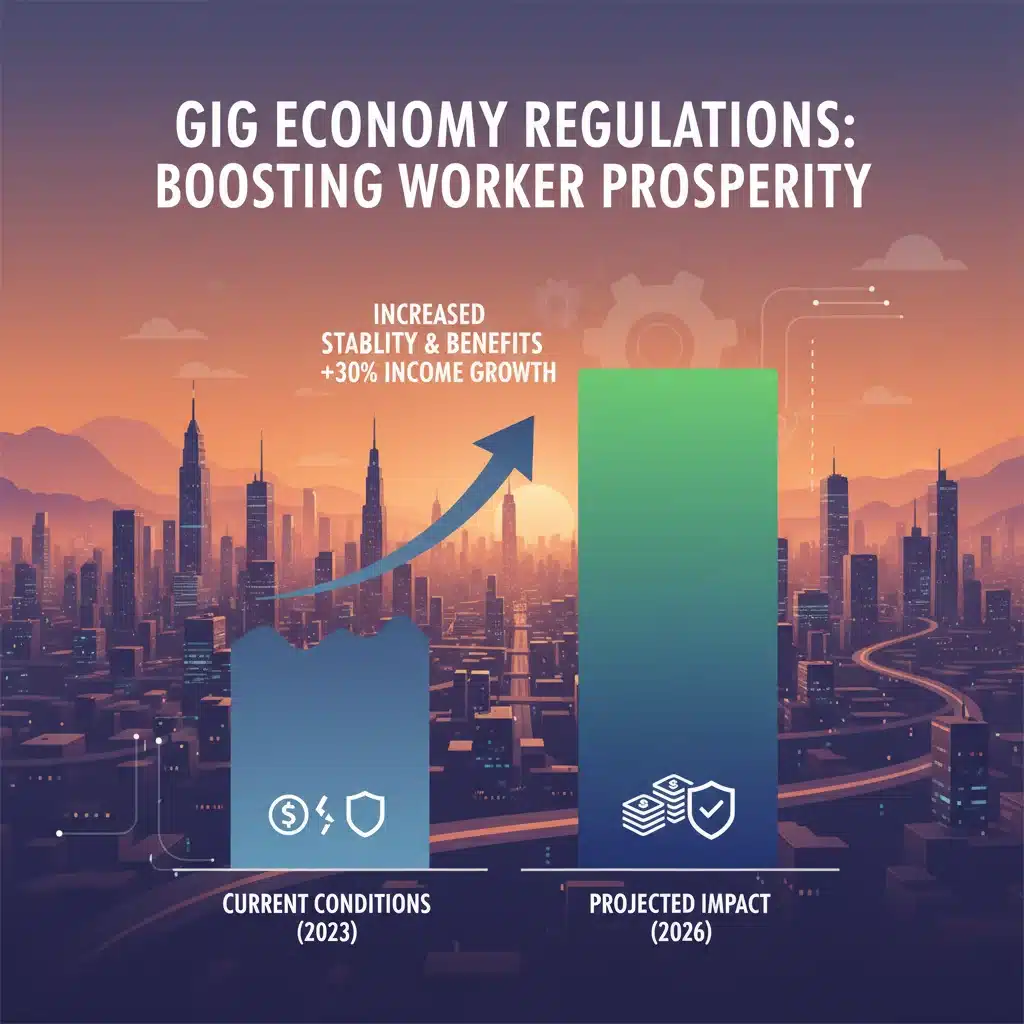
As the dust settles on the initial wave of new gig economy regulations, what can we expect the landscape to look like in 2026 and beyond? The interplay of technological advancement, evolving consumer demands, and robust regulatory frameworks will undoubtedly create a more structured, yet still dynamic, environment for gig work.
A More Defined and Protected Gig Workforce
One of the most significant predictions is a more clearly defined and protected gig workforce. The ambiguity surrounding worker classification will likely diminish as federal and state gig economy regulations solidify. This means fewer workers operating in a legal gray area and more having access to essential labor protections and benefits. While the specific models may vary – from full employee status to hybrid classifications or robust portable benefit systems – the trend is towards greater security for gig workers.
Increased Costs for Platforms, Leading to Innovation
Gig platforms will undoubtedly face increased operating costs due to new gig economy regulations. However, this pressure often serves as a catalyst for innovation. Companies will be forced to find more efficient ways to manage their operations, optimize their algorithms, and potentially explore new service offerings or market niches. This could lead to a more mature and sustainable business model for the industry as a whole, moving away from a reliance on minimal labor costs.
Consumer Impact: Potential Price Adjustments
As platforms absorb increased labor costs, it’s reasonable to expect some impact on consumers. This could manifest as slightly higher prices for gig services, such as rideshares, food delivery, or freelance work. However, the market is competitive, and platforms will likely strive to keep price increases manageable to retain their customer base. Transparency around these adjustments, perhaps framed as contributing to fair worker compensation, could be key to consumer acceptance of the new gig economy regulations.
Growth in Specialized Gig Niches
While some generalist gig platforms might face challenges, there could be a surge in highly specialized gig niches. Professionals with unique skills – from IT consultants to specialized artisans – might find new opportunities on platforms designed to connect them with clients seeking specific expertise. These higher-value gigs may be less impacted by some of the broader classification debates, as the nature of the work often aligns more closely with traditional independent contracting.
The Role of Technology in Compliance and Management
Technology will play an even more critical role in helping platforms comply with complex gig economy regulations. Advanced software will be used for automated time tracking, benefit administration, tax withholding, and ensuring adherence to minimum wage and overtime rules. Data analytics will become crucial for optimizing worker deployment and ensuring fair compensation, all while navigating the new legal landscape.
A More Sustainable and Ethical Gig Ecosystem
Ultimately, the aim of these regulatory shifts is to foster a more sustainable and ethical gig ecosystem. By addressing worker exploitation and ensuring a basic level of protection, the gig economy can shed some of its negative connotations and become a more attractive and viable option for a broader range of workers. This evolution, driven by thoughtful gig economy regulations, could lead to greater public trust and long-term growth for the sector.
Navigating the New Landscape: Advice for Gig Workers and Platforms
The impending changes brought by new gig economy regulations present both challenges and opportunities. For gig workers and the platforms they engage with, proactive engagement and strategic planning will be essential to thrive in this evolving environment.
For Gig Workers: Be Informed and Proactive
- Understand Your Rights: Stay updated on state and federal gig economy regulations regarding worker classification, minimum wage, and benefits. Knowledge is power, and knowing your rights will help you advocate for yourself.
- Track Your Work: Maintain meticulous records of your hours, earnings, expenses, and any incidents. This documentation can be invaluable if disputes arise or if you need to demonstrate your working conditions.
- Explore Portable Benefits: If portable benefits schemes become more widespread, actively seek out and enroll in programs that offer health insurance, retirement savings, or other protections.
- Consider Collective Action: If opportunities arise for collective bargaining or joining worker associations, consider participating to amplify your voice and influence working conditions.
- Diversify Your Income: Relying on a single platform can be risky. Diversify your income streams across multiple platforms or clients to build greater financial resilience.
For Gig Platforms and Businesses: Adapt and Innovate
- Prioritize Compliance: Invest in legal expertise to ensure full compliance with all relevant gig economy regulations. Proactive compliance is far less costly than reactive litigation.
- Review Worker Classification: Conduct thorough audits of your worker classification practices. If reclassification is necessary, develop a clear and transparent transition plan.
- Innovate Your Business Model: Explore new operational efficiencies, automation, and service offerings to offset potential increases in labor costs. Consider hybrid employment models or new benefit structures.
- Engage with Policymakers: Actively participate in discussions with legislators and regulators to help shape future gig economy regulations in a way that is sustainable for both businesses and workers.
- Foster Positive Worker Relationships: Transparency, fair practices, and open communication with your workforce can build loyalty and reduce the likelihood of disputes, even amidst regulatory changes.
- Monitor the Landscape: The regulatory environment is fluid. Continuously monitor legislative developments at both state and federal levels to anticipate future changes and adapt accordingly.
Conclusion: A More Mature Gig Economy on the Horizon
The year 2026 marks a significant turning point for the gig economy in the United States. The era of unchecked growth with minimal worker protections is drawing to a close, giving way to a more regulated and, ideally, more equitable landscape. The evolving gig economy regulations are a testament to the growing recognition that while flexibility is valuable, it should not come at the expense of basic worker rights and income stability. While the transition may present challenges for both workers and platforms, the ultimate outcome is likely to be a more mature, sustainable, and ethically sound gig economy.
For gig workers, this means a potential future with greater financial security, access to benefits, and a stronger voice in shaping their working conditions. For platforms, it necessitates a strategic recalibration of business models, a renewed focus on compliance, and an opportunity to innovate within a clearer regulatory framework. As we move forward, continuous dialogue, adaptation, and a commitment to fairness will be paramount in ensuring that the gig economy continues to be a powerful force for economic opportunity, while simultaneously safeguarding the well-being of its most vital asset: its workers. The journey towards a balanced and robust gig economy, guided by comprehensive gig economy regulations, is well underway.