Ethical Consumerism Surge: 35% Prioritize ESG by 2026

The Rise of Ethical Consumerism: 35% Prioritize Companies with Strong ESG Scores by 2026
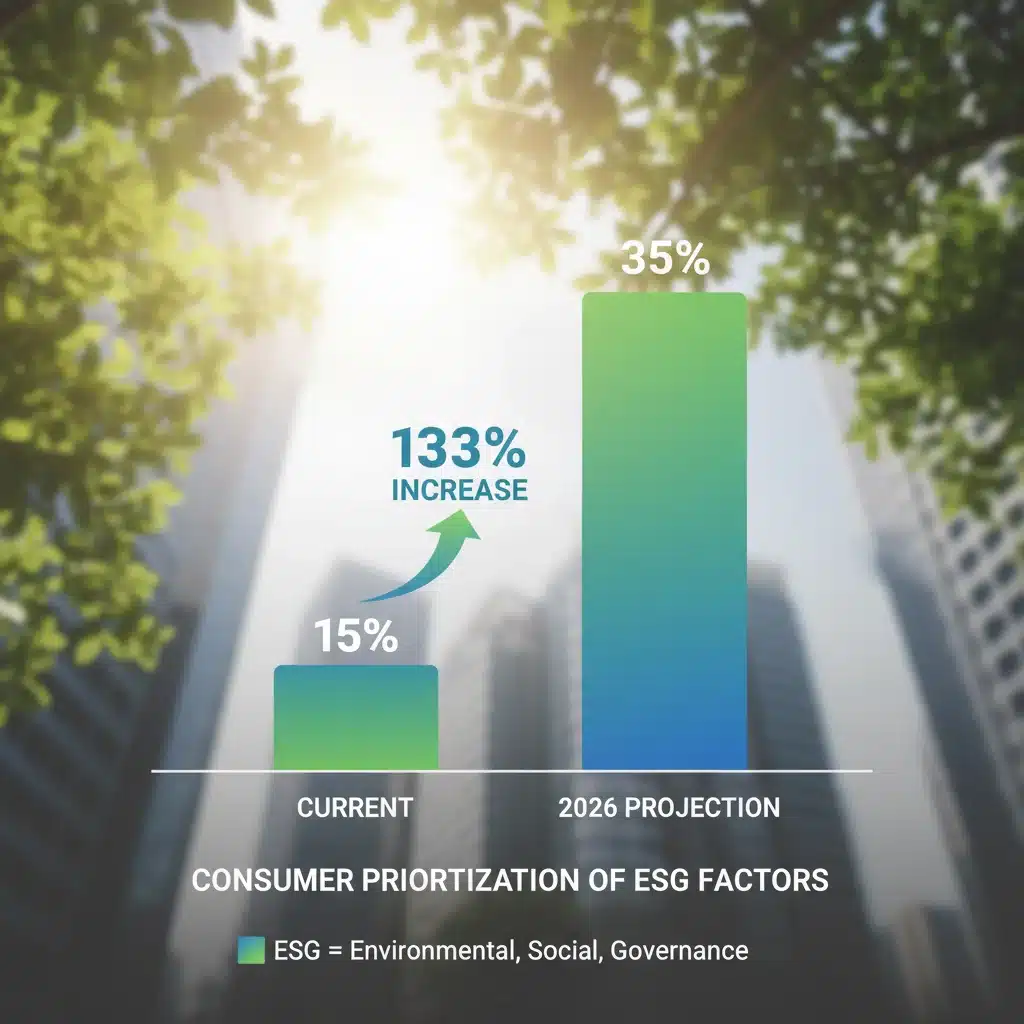
The global marketplace is undergoing a profound transformation, driven by an increasingly informed and conscious consumer base. No longer is price or quality the sole determinant of purchasing decisions. Today, consumers are casting their votes with their wallets, choosing to support companies that align with their values. This seismic shift is encapsulated by a compelling projection: by 2026, a remarkable 35% of consumers will actively prioritize companies demonstrating strong Environmental, Social, and Governance (ESG) scores. This isn’t just a trend; it’s a fundamental change in how businesses are perceived and valued, signaling a new era of ethical consumerism ESG integration.
The implications of this surge in ethical consumerism ESG awareness are vast, touching every facet of business, from supply chain management and product development to marketing and investor relations. Companies that fail to recognize and adapt to this evolving landscape risk not only losing market share but also damaging their brand reputation and long-term viability. Conversely, those that embrace ESG principles and effectively communicate their commitment stand to gain a significant competitive advantage, fostering deeper customer loyalty and attracting mission-aligned talent.
Understanding the Ethical Consumerism ESG Movement
What exactly constitutes ethical consumerism ESG? At its core, it’s about consumers making purchasing decisions based on the ethical impact of a product or service, and the company that provides it. ESG, which stands for Environmental, Social, and Governance, provides a comprehensive framework for evaluating a company’s sustainability and ethical practices. These three pillars offer a holistic view of a company’s non-financial performance and its broader impact on the world.
Environmental Factors
Environmental criteria examine how a company performs as a steward of nature. This includes its efforts to mitigate climate change, reduce pollution, manage waste, conserve natural resources, and protect biodiversity. For the ethical consumer, this means supporting brands that use renewable energy, minimize their carbon footprint, employ sustainable sourcing practices, and design products for longevity and recyclability. Companies that are transparent about their environmental impact and actively work towards reducing it resonate strongly with this growing segment of the market.
Social Factors
Social criteria address how a company manages relationships with its employees, suppliers, customers, and the communities where it operates. This encompasses fair labor practices, diversity and inclusion, human rights, data privacy, product safety, and community engagement. Ethical consumers are increasingly concerned about issues like living wages, safe working conditions, ethical supply chains free from exploitation, and a company’s contribution to social equity. A strong social score indicates a company that values its people and its societal role.
Governance Factors
Governance criteria deal with a company’s leadership, executive pay, audits, internal controls, and shareholder rights. It ensures that a company is managed ethically, transparently, and accountably. Good governance minimizes risks such as corruption, conflicts of interest, and unethical business practices. Ethical consumers want to trust that the companies they support are run with integrity and that their leadership is committed to long-term sustainable value creation, not just short-term profits. Poor governance can quickly erode consumer trust, even if environmental and social efforts are strong.
The Driving Forces Behind the 35% Projection
The projection of 35% of consumers prioritizing ESG by 2026 isn’t arbitrary; it’s the culmination of several powerful trends and societal shifts. Understanding these drivers is crucial for businesses aiming to connect with the modern consumer.
Increased Awareness and Education
Information is more accessible than ever before. Social media, independent news outlets, and dedicated consumer watchdog organizations have amplified awareness of global issues like climate change, social inequality, and corporate malpractice. Consumers are no longer passive recipients of marketing messages; they actively seek out information about a company’s practices and values. Educational initiatives, documentaries, and even peer discussions contribute to a more informed populace that understands the broader impact of their consumption choices.
Generational Shift: Millennials and Gen Z Leading the Charge
Younger generations, particularly Millennials and Gen Z, are at the forefront of the ethical consumerism ESG movement. Having grown up amidst pressing environmental crises and social upheavals, these demographics inherent a strong sense of social responsibility. They expect the brands they engage with to share their values and actively contribute to a better world. For them, purchasing is not just a transaction; it’s a statement of personal belief and a tool for social change. As these generations gain more purchasing power, their influence on the market will only intensify.
Growing Demand for Transparency
In an age of skepticism, transparency has become a powerful currency. Consumers want to know where their products come from, how they are made, and under what conditions. They are increasingly wary of ‘greenwashing’ – misleading claims about environmental benefits – and demand verifiable proof of a company’s ESG commitments. Blockchain technology and other innovations are making it easier for companies to provide end-to-end transparency, and consumers are eagerly adopting platforms that offer this insight.
Influence of Social Media and Peer Networks
Social media acts as both a megaphone for corporate good deeds and a magnifying glass for missteps. Positive ESG actions can go viral, boosting brand reputation and attracting new customers. Conversely, negative news regarding ethical breaches can spread rapidly, leading to boycotts and severe reputational damage. Consumers trust recommendations from their peers more than traditional advertising, and a brand’s ESG performance often becomes a topic of discussion within these influential online communities.
Regulatory and Investor Pressure
While primarily driven by consumer demand, regulatory bodies and institutional investors are also increasingly emphasizing ESG factors. Governments are implementing stricter environmental regulations, and investors are recognizing that strong ESG performance correlates with reduced risk and long-term financial resilience. This top-down pressure reinforces the bottom-up consumer demand, creating a powerful ecosystem where ESG is becoming a business imperative rather than a voluntary add-on.

Implications for Businesses: Adapting to the Ethical Consumerism ESG Wave
For businesses, the 35% projection by 2026 represents both a challenge and an immense opportunity. Those that proactively integrate ESG into their core strategy will be well-positioned for future success.
Rethinking Supply Chains
The ethical consumer scrutinizes the entire lifecycle of a product. This necessitates a thorough review of supply chains to ensure ethical sourcing of raw materials, fair labor practices at every stage, and minimal environmental impact from production to distribution. Companies must move beyond simply auditing their first-tier suppliers and delve deeper into their extended networks, fostering transparency and accountability throughout.
Sustainable Product Innovation
Demand for sustainable products is skyrocketing. Businesses need to invest in research and development to create eco-friendly alternatives, reduce packaging waste, design for circularity (products that can be reused, repaired, or recycled), and extend product lifespans. Innovation in this area is not just about meeting demand; it’s about leading the market and setting new standards for responsible production.
Authentic Communication and Marketing
‘Greenwashing’ is out; authentic communication is in. Companies must be genuine in their ESG commitments and transparent in reporting their progress – and their challenges. Marketing efforts should focus on communicating tangible impacts, verifiable data, and the real stories behind their ethical practices. Storytelling that highlights positive environmental and social contributions can build deep emotional connections with consumers.
Employee Engagement and Culture
A company’s internal culture and how it treats its employees are critical social factors. Businesses with strong diversity, equity, and inclusion (DEI) initiatives, fair wages, and supportive work environments will not only attract and retain top talent but also appeal to ethical consumers who value responsible employer practices. An engaged workforce that believes in the company’s mission can also be powerful ambassadors for its ESG efforts.
Robust Governance and Accountability
Strong governance underpins all ESG efforts. Companies must establish clear ethical guidelines, implement robust compliance programs, and ensure independent oversight. Transparent reporting on ESG performance, often through annual sustainability reports, builds trust with both consumers and investors. Accountability mechanisms ensure that commitments are met and that the company remains true to its stated values.
Measuring and Reporting ESG Performance
To truly cater to the ethical consumerism ESG movement, companies must move beyond mere intentions and embrace rigorous measurement and reporting. This involves:
- Setting Clear ESG Goals: Defining specific, measurable, achievable, relevant, and time-bound (SMART) goals for environmental, social, and governance improvements.
- Adopting Reporting Frameworks: Utilizing established frameworks like the Global Reporting Initiative (GRI), Sustainability Accounting Standards Board (SASB), or the Task Force on Climate-related Financial Disclosures (TCFD) to ensure comprehensive and comparable reporting.
- Third-Party Verification: Engaging independent auditors to verify ESG data and reports, adding credibility and reducing skepticism.
- Transparency and Accessibility: Making ESG reports easily accessible to the public, often through dedicated sections on company websites.
The ability to demonstrate tangible progress and openly communicate both successes and areas for improvement will be paramount in earning and maintaining the trust of the ethical consumer.


The Future Landscape: Beyond 2026
The 35% projection for 2026 is likely just a waypoint in a much larger journey. As awareness deepens and the urgency of global challenges becomes more apparent, the percentage of consumers prioritizing ESG factors is expected to continue its upward trajectory. What does this mean for the long-term?
Mainstreaming of ESG
ESG will cease to be a niche concern and become a fundamental aspect of business operations and consumer expectations. It will be integrated into product design, marketing strategies, and corporate culture as a matter of course, rather than an optional add-on. Companies that view ESG as a compliance burden will struggle, while those that see it as an opportunity for innovation and value creation will thrive.
Increased Pressure on Non-Compliant Businesses
Companies that lag in their ESG performance will face increasing pressure from all stakeholders – consumers, investors, employees, and regulators. This could manifest as boycotts, divestment campaigns, talent drain, and even legal repercussions. The cost of inaction on ESG will grow exponentially.
Collaborative Solutions
Addressing complex environmental and social challenges requires collective action. We can expect to see more cross-sector collaborations, industry-wide initiatives, and partnerships between businesses, NGOs, and governments to develop sustainable solutions and set higher ethical standards. This collaborative spirit will further accelerate the adoption of ESG principles.
Personalized Ethical Consumption
As technology advances, consumers may have access to more personalized tools and data to evaluate the ESG performance of products and companies. Apps and platforms could provide instant ethical ratings, carbon footprint data, and social impact scores, empowering individuals to make even more granular and informed choices tailored to their specific values.
Conclusion: Embracing Ethical Consumerism ESG for Sustainable Success
The rise of ethical consumerism ESG is not merely a fleeting trend; it is a powerful and enduring force reshaping the global economy. The projection that 35% of consumers will prioritize companies with strong ESG scores by 2026 serves as a clear call to action for businesses worldwide. This shift represents a fundamental realignment of consumer values, where purpose and impact are increasingly weighted alongside price and quality.
For companies, the pathway to long-term success lies in genuinely embedding ESG principles into their core strategy, operations, and culture. It demands transparency, accountability, and a sincere commitment to making a positive difference in the world. Those that embrace this challenge will not only meet the demands of the evolving ethical consumer but will also build more resilient, innovative, and ultimately more successful businesses for the future. The era of conscious capitalism is here, and companies that lead with purpose are set to reap the rewards.
The journey towards a more sustainable and equitable future is a shared responsibility. As consumers become more discerning and businesses more accountable, the collective impact can drive meaningful change. The 35% milestone by 2026 is just the beginning of this transformative movement, promising a future where ethical considerations are integral to every purchase and every business decision.