Social Media’s Political Impact: 3 US Cultural Shifts by 2026
The Role of Social Media in Shaping Political Discourse: 3 Cultural Impacts in the US for 2026
Social media has undeniably revolutionized the way we communicate, connect, and consume information. Its influence extends far beyond personal interactions, deeply embedding itself within the fabric of political discourse, especially in the United States. As we approach 2026, the cultural impacts of social media on US politics are becoming increasingly pronounced, shaping public opinion, civic engagement, and even the very definition of truth. This comprehensive analysis will explore three critical cultural impacts that social media is having and will continue to have on the political landscape of the US: the intensification of political polarization, the transformation of civic engagement and activism, and the radical alteration of information consumption and trust in media. Understanding these shifts is crucial for anyone seeking to comprehend the future of American democracy.
The Intensification of Political Polarization Through Social Media
One of the most significant and often discussed cultural impacts of social media politics is its role in exacerbating political polarization. Before the widespread adoption of platforms like Facebook, Twitter (now X), and Instagram, news consumption was largely dominated by traditional media outlets, which, while not without bias, often presented a broader spectrum of viewpoints or at least adhered to a journalistic standard of presenting both sides of an argument. Social media, however, operates on different principles.
Algorithmic Echo Chambers and Filter Bubbles
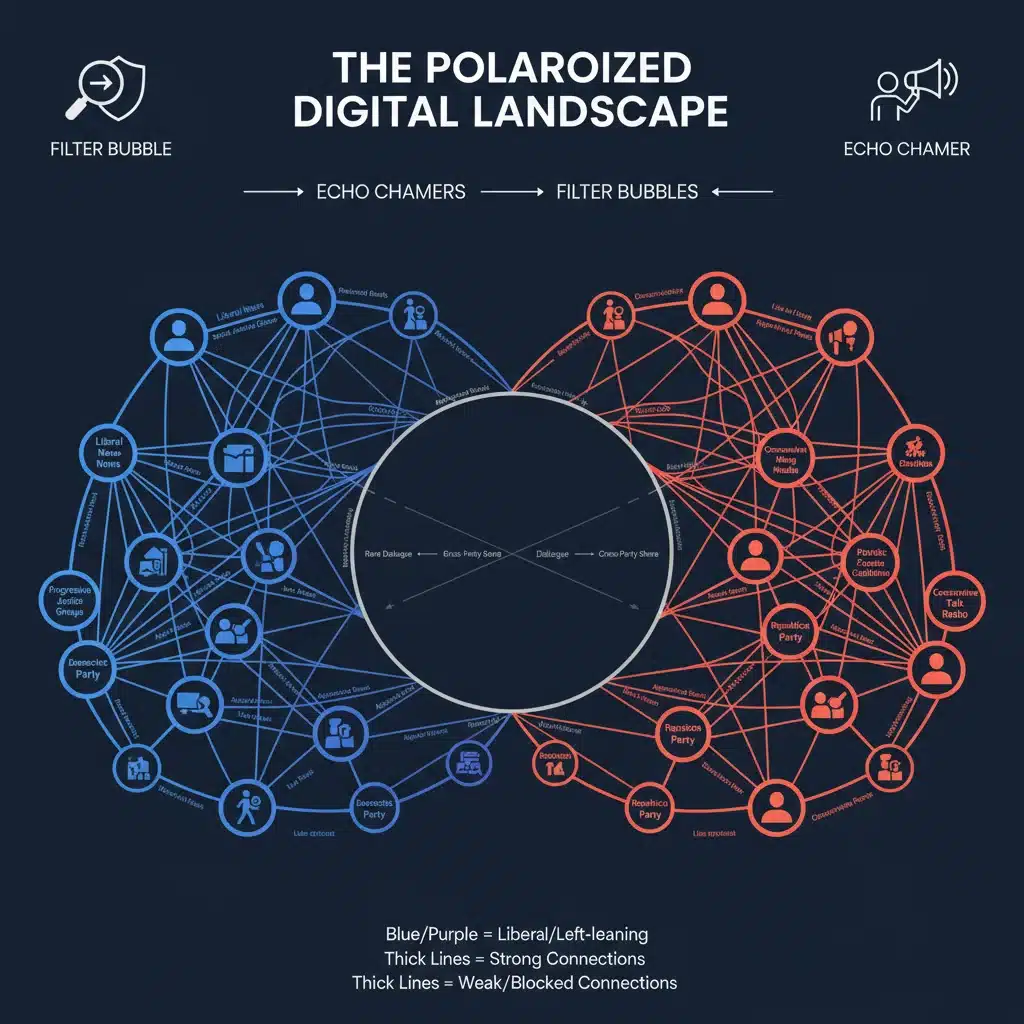
The core mechanism driving this polarization is the algorithm. Social media algorithms are designed to keep users engaged by showing them content they are most likely to interact with. This often means content that aligns with their pre-existing beliefs and preferences. Over time, this creates “echo chambers” and “filter bubbles,” where individuals are primarily exposed to information, opinions, and perspectives that reinforce their own. This constant reinforcement leads to a deeper entrenchment of beliefs and a decreased exposure to alternative viewpoints.
For instance, if a user frequently likes or shares posts from a particular political leaning, the algorithm will prioritize showing them more content from that same leaning. This can lead to a distorted perception of reality, where users believe their views are more widespread than they actually are, and that opposing views are extreme or irrational. By 2026, this phenomenon is expected to intensify, as algorithms become even more sophisticated in predicting and catering to individual biases, making it increasingly difficult for individuals to encounter diverse perspectives organically.
The “Us vs. Them” Mentality
Beyond algorithms, the very nature of online interaction contributes to polarization. The anonymity or semi-anonymity offered by social media can embolden individuals to express more extreme views than they might in face-to-face interactions. This often leads to heated debates, personal attacks, and a general “us vs. them” mentality. Political opponents are no longer just people with different ideas; they become “the enemy.” This dehumanization makes compromise and constructive dialogue exceedingly difficult, both online and, increasingly, offline.
The speed at which information (and misinformation) spreads on social media also plays a role. Outrage-inducing content, regardless of its accuracy, tends to go viral, further fueling partisan divides. By 2026, the rapid dissemination of emotionally charged political content is likely to be even more prevalent, creating a constant state of heightened tension and making rational discourse a rare commodity. This has profound implications for democratic processes, where compromise and consensus are essential for effective governance.
The Transformation of Civic Engagement and Activism
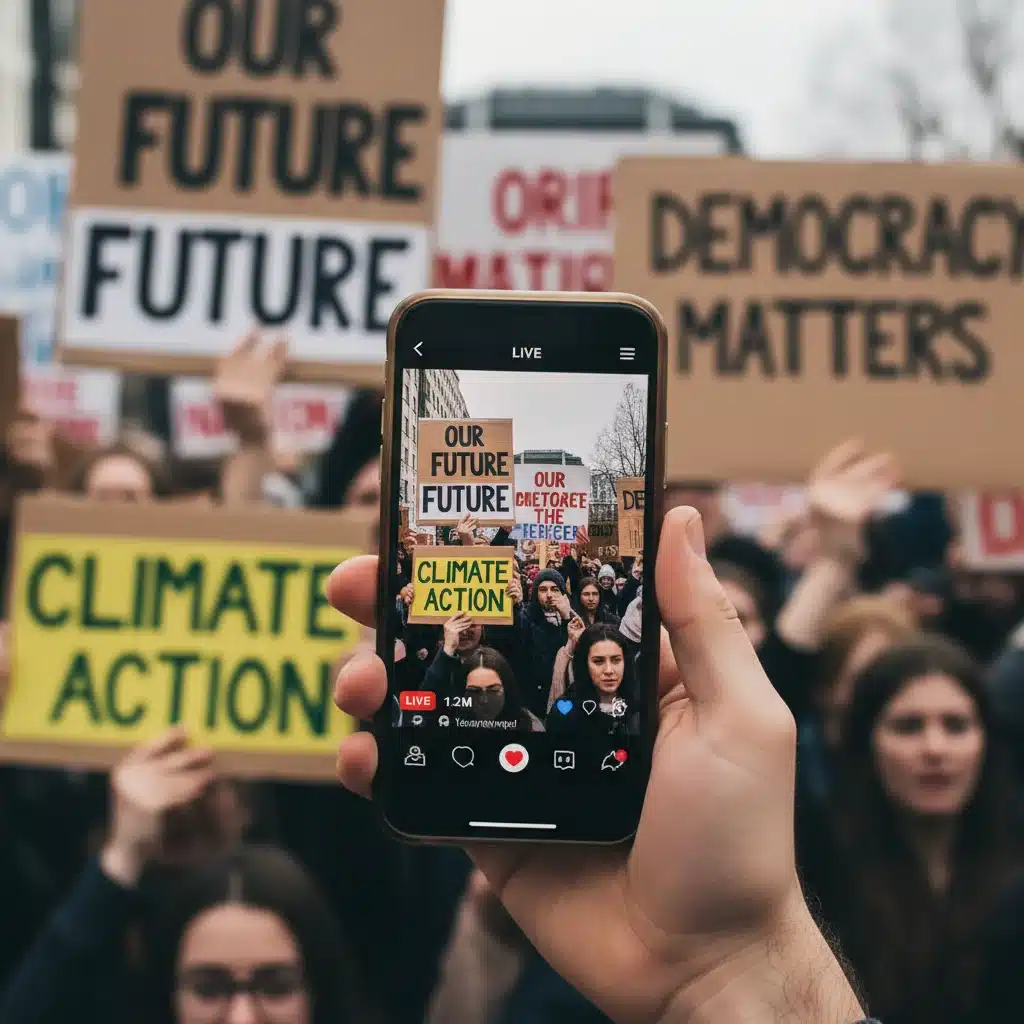
While social media often gets a bad rap for its role in polarization, it has also undeniably transformed civic engagement and activism, offering new avenues for political participation and mobilization. By 2026, these transformations are expected to be even more deeply ingrained in the political landscape of the US.
Democratization of Voice and “Click-Activism”
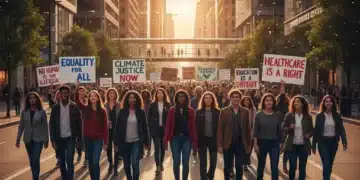
Social media platforms have democratized political discourse by giving a voice to individuals and groups who might traditionally have been marginalized or unheard. Anyone with an internet connection can now share their opinions, organize protests, or advocate for causes they believe in. This has led to the rise of “click-activism” or “slacktivism,” where individuals can show support for a cause with minimal effort, such as signing an online petition or sharing a post. While sometimes criticized for its superficiality, this low barrier to entry can still raise awareness and, in some cases, snowball into significant movements.
Movements like #BlackLivesMatter and #MeToo gained immense traction and global recognition largely due to their organic spread across social media platforms. These platforms allowed for rapid information sharing, coordination, and the amplification of voices that might otherwise have been suppressed. By 2026, we can anticipate an even greater reliance on social media for initiating and sustaining social and political movements, making it an indispensable tool for grassroots organizing and advocacy.
Direct Communication with Political Figures
Social media has also fundamentally altered the relationship between citizens and their elected officials. Politicians and government agencies increasingly use platforms like Twitter (X) and Facebook to communicate directly with constituents, share policy updates, and even engage in Q&A sessions. This direct line of communication can foster a sense of accessibility and accountability, allowing citizens to voice their concerns and hold their representatives responsible more immediately than ever before.
However, this direct access also comes with challenges. The informal nature of social media can sometimes lead to misunderstandings or the spread of unverified information directly from official sources. Furthermore, the sheer volume of messages can make meaningful engagement difficult for politicians. Nevertheless, the trend towards direct digital engagement is set to continue, making social media politics an even more integral part of the political communication strategy for candidates and officeholders by 2026.
Mobilization and Real-World Impact
Beyond awareness and direct communication, social media has proven to be a powerful tool for mobilizing people for real-world political action. From organizing protests and rallies to voter registration drives and fundraising campaigns, platforms provide the infrastructure for rapid and widespread coordination. The ability to quickly disseminate information about events, logistics, and calls to action can significantly boost participation in political processes.
For example, during election cycles, social media is heavily utilized to encourage voter turnout, share polling place information, and even facilitate peer-to-peer outreach. This immediate and pervasive reach means that political campaigns and activist groups can connect with potential supporters and volunteers on an unprecedented scale. By 2026, the sophistication of these mobilization efforts, leveraging advanced data analytics and targeted messaging on social media, will likely make them even more effective in influencing election outcomes and shaping public policy.
The Radical Alteration of Information Consumption and Trust in Media
Perhaps one of the most profound and concerning cultural impacts of social media on US political discourse is the radical alteration of how citizens consume information and their eroding trust in traditional media. This shift has significant implications for an informed electorate, which is foundational to a functioning democracy.
The Rise of “Fake News” and Disinformation
Social media platforms have become fertile ground for the proliferation of “fake news,” misinformation, and disinformation. The ease with which false narratives can be created and spread, often designed to be emotionally resonant and divisive, poses a severe threat to public understanding of political issues. These narratives can originate from foreign state actors, domestic partisan groups, or even individuals seeking to sow discord.
The speed and reach of social media mean that a piece of “fake news” can go viral globally before traditional fact-checking mechanisms can even begin to address it. This constant bombardment of conflicting information makes it incredibly difficult for the average citizen to discern truth from falsehood, leading to widespread confusion and cynicism. By 2026, the challenge of combating sophisticated disinformation campaigns, potentially amplified by AI-generated content, will be an even more pressing concern for the integrity of political discourse.
Erosion of Trust in Traditional Media
Concurrently with the rise of “fake news,” there has been a noticeable decline in public trust in traditional news media. Social media platforms often host content that actively disparages mainstream news organizations, accusing them of bias or ulterior motives. While healthy skepticism of media is valuable, the constant barrage of criticism, often unfounded, erodes the credibility of institutions that historically played a crucial role in informing the public and holding power accountable.
When trust in traditional media wanes, individuals are more likely to rely on their social media feeds for information, which, as discussed, are often curated to reinforce existing biases. This creates a vicious cycle: decreased trust in established news sources leads to greater reliance on potentially unreliable social media sources, which then further fuels distrust in traditional media. By 2026, this erosion of trust could reach critical levels, making it harder for society to agree on a common set of facts necessary for informed political decision-making.
Personalized News Feeds vs. Shared Reality
The highly personalized nature of social media news feeds means that different individuals can inhabit vastly different information realities. Two people living in the same neighborhood, with differing political views, might see completely different sets of “news” on their social media, tailored to their perceived interests and biases. This fragmentation of information consumption makes it increasingly difficult to have a shared understanding of events or a common basis for political discussion.
In a healthy democracy, a shared public sphere, where citizens encounter a range of views and can engage in common discourse, is vital. Social media, by creating these personalized information silos, undermines this shared reality. By 2026, the challenge of fostering a common understanding of political issues across a deeply fractured information landscape will be one of the most significant hurdles for maintaining cohesive political discourse in the US. The implications for national unity and the ability to address collective challenges are profound.
Addressing the Challenges and Harnessing the Opportunities
Given these significant cultural impacts, the question becomes: how can society navigate the complexities of social media politics to mitigate its negative effects while maximizing its potential for positive change? There is no single, easy answer, but a multi-faceted approach involving technology companies, governments, educators, and individual users will be essential.
Role of Social Media Platforms
Platforms themselves bear a significant responsibility. This includes investing more heavily in content moderation, developing clearer and more consistent policies against hate speech and disinformation, and increasing transparency around their algorithms. While completely eliminating echo chambers might be impossible, platforms could explore ways to subtly introduce users to diverse viewpoints, perhaps through curated “recommended reading” from credible, ideologically varied sources. Furthermore, supporting independent fact-checking organizations and clearly labeling disputed content are crucial steps.
Government Regulation and Oversight
Governments, too, have a role to play, though this is a contentious area. The balance between regulating platforms to protect democratic processes and safeguarding free speech is delicate. Potential avenues include legislation aimed at increasing platform accountability, promoting data privacy, and potentially addressing anti-trust issues to reduce the monopolistic power of a few large tech companies. However, any regulatory efforts must be carefully crafted to avoid unintended consequences, such as stifling innovation or leading to censorship.
Media Literacy Education
Perhaps the most empowering solution lies in education. Equipping citizens with strong media literacy skills is paramount. This means teaching critical thinking, how to identify credible sources, recognize biases, and understand the mechanisms of disinformation. Starting from an early age, educational institutions can play a vital role in preparing future generations to navigate the complex digital information landscape. By 2026, widespread media literacy programs could begin to shift the tide, empowering individuals to be more discerning consumers of political information.
Individual Responsibility
Ultimately, individual users also have a critical role. This includes being mindful of what content they consume and share, actively seeking out diverse perspectives, and engaging in respectful dialogue even with those who hold differing views. Challenging one’s own biases and being open to new information are essential for breaking out of echo chambers. Conscious efforts to diversify one’s news diet beyond social media, incorporating traditional and international news sources, can also mitigate the negative effects of algorithmic curation.
Conclusion: Navigating the Future of US Political Discourse
The cultural impacts of social media politics on US political discourse are undeniable and will continue to evolve rapidly towards 2026 and beyond. The intensification of political polarization, the transformation of civic engagement, and the radical alteration of information consumption and trust in media represent profound shifts that touch the very core of American democracy. While social media offers unprecedented opportunities for connection, mobilization, and the amplification of diverse voices, it also presents significant challenges related to fragmentation, misinformation, and the erosion of shared understanding.
Addressing these challenges requires a concerted effort from all stakeholders: technology companies, governments, educational institutions, and individual citizens. By fostering media literacy, promoting responsible platform governance, and encouraging thoughtful digital citizenship, it is possible to harness the power of social media for positive democratic outcomes. The future of political discourse in the US will largely depend on our collective ability to navigate this complex digital terrain, ensuring that these powerful tools serve to strengthen, rather than undermine, the foundations of a healthy, informed, and engaged citizenry.