Cultural Identity in the Digital Age: Shaping US Values 2026
Cultural Identity in the Digital Age: How Online Communities Are Shaping US Values in 2026
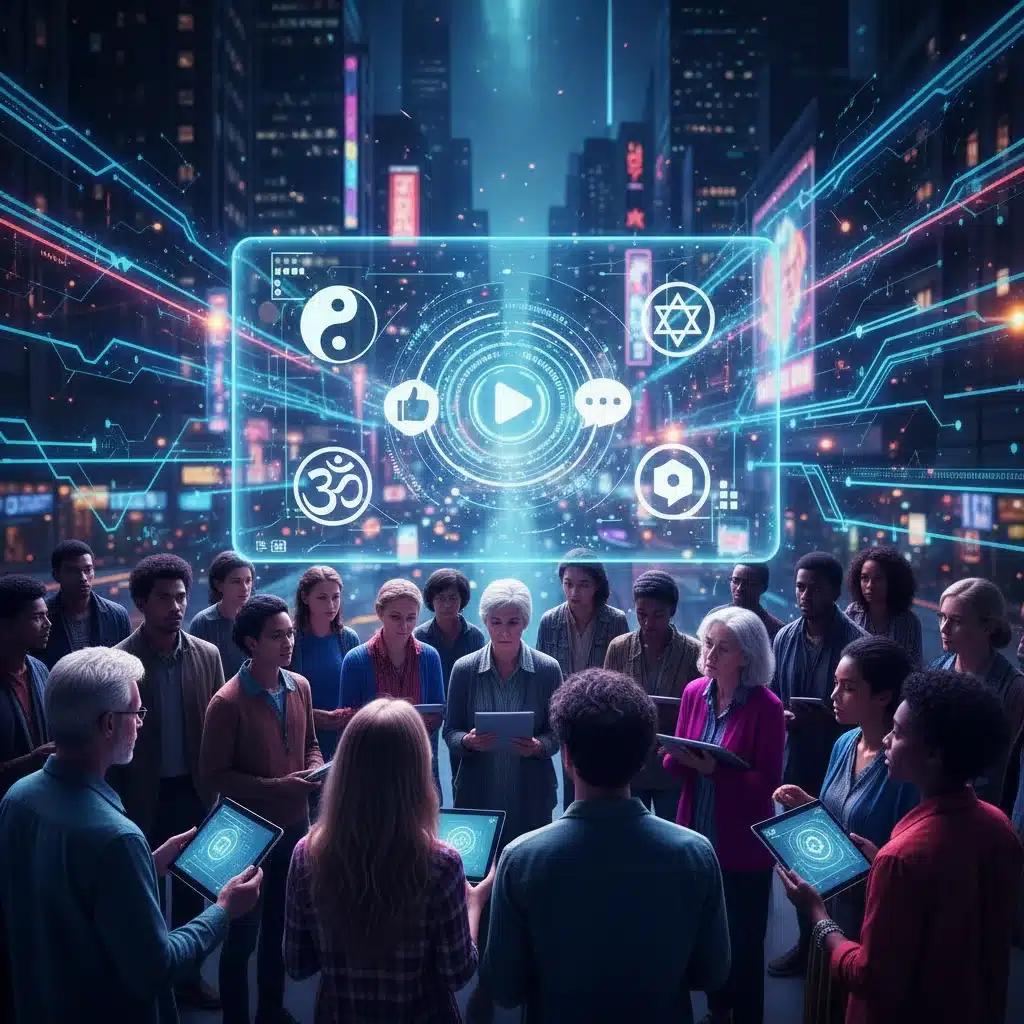
In the year 2026, the concept of cultural identity has undergone a profound transformation, largely driven by the pervasive influence of the digital age and the burgeoning power of online communities. What it means to be American, to belong to a specific subculture, or even to define oneself, is increasingly intertwined with digital interactions and virtual spaces. This article delves into the intricate ways in which online communities are not just reflecting, but actively shaping US values and individual identities, creating a dynamic and often unpredictable cultural landscape.
The internet, once a mere tool for information exchange, has evolved into a sprawling ecosystem of interconnected communities, each with its own norms, values, and shared experiences. From niche hobby groups on Reddit to global activism movements on Twitter, these digital spaces offer platforms for individuals to explore, express, and solidify their digital cultural identity. This exploration is crucial for understanding the evolving fabric of American society.
The Genesis of Digital Cultural Identity: A Historical Perspective
To truly grasp the current state of digital cultural identity, it’s essential to look back at its origins. The early days of the internet, characterized by bulletin board systems (BBS) and IRC chat rooms, laid the groundwork for online communities. These nascent platforms allowed individuals to connect based on shared interests, often transcending geographical boundaries. While rudimentary by today’s standards, they offered a glimpse into the potential for digital spaces to foster a sense of belonging and collective identity.
The advent of social media platforms in the mid-2000s marked a significant turning point. Facebook, MySpace, and later Twitter and Instagram, provided more sophisticated tools for self-expression and community building. Users could curate their online personas, share their lives, and connect with vast networks of like-minded individuals. This era saw the rise of ‘influencers’ and the commodification of online identity, where personal brands became increasingly important.
By 2026, the landscape is even more complex. Virtual reality (VR) and augmented reality (AR) are becoming integral to online interactions, creating immersive digital environments where individuals can inhabit avatars and participate in highly interactive social experiences. The metaverse, once a sci-fi concept, is now a burgeoning reality, offering new frontiers for digital cultural identity formation. These advancements blur the lines between the physical and digital, making online identities as tangible and impactful as their offline counterparts.
Online Communities: New Arenas for Value Formation
Online communities are not merely passive reflections of existing values; they are active crucibles where new values are forged and traditional ones are challenged. In the US, this dynamic is particularly evident. For instance, consider the rapid shifts in social justice movements. Digital platforms have amplified marginalized voices, allowing for collective action and discourse that might have been impossible in traditional media. This has led to a re-evaluation of historical narratives, a greater emphasis on diversity and inclusion, and a more nuanced understanding of systemic inequalities.
The speed at which information and ideas propagate online means that social norms and values can evolve at an unprecedented pace. A viral tweet or a trending TikTok challenge can spark nationwide conversations and even drive policy changes. This immediacy has both positive and negative implications. While it can accelerate progress on important issues, it can also lead to the rapid dissemination of misinformation and the formation of echo chambers, where individuals are primarily exposed to information that confirms their existing beliefs, potentially polarizing society further.
Furthermore, online communities often foster a sense of ‘chosen family’ or ‘found family’ among individuals who may feel isolated in their physical environments. LGBTQ+ communities, for example, have long utilized online spaces to connect, share experiences, and advocate for their rights. These digital havens provide crucial support networks and contribute significantly to the formation of individual and collective digital cultural identity within these groups, reinforcing values of acceptance, solidarity, and self-expression.
The Impact on Traditional US Values: A Shifting Paradigm
Traditional US values, such as individualism, patriotism, and community, are also being reinterpreted through the lens of digital cultural identity. Individualism, for example, is now often expressed through curated online personas and personal brands, where self-expression and unique identity are paramount. While this can foster creativity and self-discovery, it also raises questions about authenticity and the pressure to conform to idealized online images.
Patriotism, too, has found new digital manifestations. Online forums and social media groups dedicated to national pride or specific political ideologies can mobilize supporters and disseminate messages with incredible efficiency. However, this can also lead to the proliferation of hyper-nationalist sentiments and the demonization of dissenting opinions, posing challenges to democratic discourse and civic engagement. The very definition of ‘community’ itself is expanding beyond geographical proximity to encompass shared digital spaces and interests.
From Local to Global: The Blurring of Boundaries
One of the most significant impacts of digital cultural identity is the blurring of geographical and cultural boundaries. Americans are no longer solely influenced by their immediate surroundings or national media. They are exposed to global trends, ideas, and subcultures through online interactions. This global interconnectedness can lead to a more cosmopolitan outlook, fostering empathy and understanding across different cultures. However, it can also lead to a homogenization of culture, where local traditions are overshadowed by dominant global trends, or conversely, a retreat into highly specific, globally dispersed niche communities that may have little connection to local realities.
Consider the rise of K-Pop fandoms in the US, or the widespread adoption of international culinary trends driven by food bloggers and online recipe communities. These phenomena demonstrate how digital cultural identity allows for the absorption and integration of diverse cultural elements, enriching the American cultural tapestry while simultaneously challenging traditional notions of cultural purity.
Challenges and Opportunities in a Digitally Shaped Culture
While the digital age offers unprecedented opportunities for connection and self-expression, it also presents significant challenges to the formation and maintenance of digital cultural identity and US values. The pervasive issue of misinformation and disinformation, often amplified by algorithmic biases, can distort public perception and erode trust in institutions. The constant bombardment of information can lead to cognitive overload and a diminished capacity for critical thinking.
Moreover, the curated nature of online interactions can lead to feelings of inadequacy and social comparison. The pressure to present an idealized version of oneself can contribute to mental health issues, particularly among younger generations who have grown up entirely within this digital landscape. Addressing these challenges requires a concerted effort from individuals, educators, technology companies, and policymakers to promote digital literacy, critical engagement, and ethical online behavior.
The Role of Algorithmic Influence on Identity
Algorithms play an increasingly powerful role in shaping digital cultural identity. These complex systems determine what content users see, who they connect with, and even how they perceive themselves and the world. While designed to personalize experiences, algorithms can inadvertently create ‘filter bubbles’ and ‘echo chambers,’ reinforcing existing biases and limiting exposure to diverse perspectives. This can lead to a fragmentation of cultural identity, where different groups inhabit increasingly distinct digital realities.
Understanding the mechanics of algorithmic influence is paramount for navigating the digital landscape of 2026. Users must be empowered to critically evaluate the information they consume and to actively seek out diverse viewpoints. Technology companies, in turn, bear a responsibility to design algorithms that promote healthy discourse and foster inclusive communities, rather than simply optimizing for engagement at any cost.
The Future of Digital Cultural Identity and US Values
Looking ahead to the rest of 2026 and beyond, the trajectory of digital cultural identity and its impact on US values is likely to continue its rapid evolution. The integration of AI into everyday digital interactions, for example, will introduce new dimensions to how individuals form and express their identities online. AI-powered tools could facilitate deeper connections by overcoming language barriers or suggesting relevant communities, but they also raise concerns about data privacy, algorithmic manipulation, and the potential for AI to influence human decision-making and identity formation in subtle yet profound ways.
The ongoing development of the metaverse will also play a crucial role. As more aspects of life, from work and education to entertainment and social interaction, migrate into immersive virtual worlds, the boundaries between physical and digital cultural identity will become even more fluid. This could lead to the emergence of entirely new subcultures and social norms unique to these virtual spaces, further diversifying the American cultural landscape.
Nurturing Positive Digital Cultural Identity
To navigate this complex future, it is imperative to foster a positive and resilient digital cultural identity. This involves several key strategies:
- Digital Literacy and Critical Thinking: Equipping individuals with the skills to evaluate online information, understand algorithmic biases, and engage critically with digital content is essential. Education systems must adapt to prioritize these skills from an early age.
- Promoting Inclusive Online Spaces: Platforms and community administrators have a responsibility to create and enforce policies that prevent harassment, hate speech, and discrimination, ensuring that online communities are safe and welcoming for all.
- Encouraging Diverse Perspectives: Actively seeking out and engaging with viewpoints that differ from one’s own can help to break down echo chambers and foster a more nuanced understanding of complex issues.
- Balancing Online and Offline Life: While digital interactions are valuable, maintaining healthy connections in the physical world and engaging in offline activities is crucial for holistic well-being and a well-rounded identity.
- Ethical Technology Development: Tech companies must prioritize user well-being, privacy, and ethical considerations in the design and deployment of new technologies, ensuring that advancements serve humanity rather than exploit it.
The ongoing dialogue about what constitutes a ‘healthy’ digital cultural identity will be central to shaping the future of US values. As technology continues to evolve, so too will our understanding of self, community, and nation. The ability to adapt, learn, and critically engage with these changes will determine whether the digital age leads to a more fractured or a more unified and enriched American society.
Case Studies: Digital Communities and Their Impact
To illustrate the profound impact of online communities on digital cultural identity and US values, let’s consider a few specific examples from 2026:
- The ‘Eco-Conscious Collective’ on TerraLink: This global online community, primarily hosted on a decentralized social platform called TerraLink, unites individuals passionate about environmental sustainability. Through shared projects, educational resources, and mutual support, they have successfully lobbied for stricter environmental regulations in several US states and have fostered a strong sense of collective responsibility for the planet among their members. Their digital cultural identity is rooted in activism and sustainable living, influencing real-world consumption patterns and political engagement.
- The ‘Retro-Gaming Revival’ on PixelHub: A thriving community on PixelHub, a VR-enabled platform, is dedicated to the preservation and celebration of retro video games. Members not only discuss classic titles but also collaborate on fan-made remasters, organize virtual tournaments, and even recreate vintage arcade experiences in VR. This community has cultivated a strong digital cultural identity based on nostalgia, shared history, and a passion for gaming, influencing consumer demand for retro consoles and inspiring new game developers.
- The ‘Diaspora Dialogues’ on GlobalConnect: This network of online forums and video conferencing groups connects members of various diasporic communities across the US. From Ukrainian Americans discussing their heritage amidst ongoing global events to Filipino Americans exploring their cultural roots, these platforms provide vital spaces for cultural preservation, intergenerational dialogue, and the negotiation of dual identities. Their digital cultural identity is a rich tapestry woven from ancestral traditions and contemporary American experiences.
These examples underscore the diverse ways in which online communities contribute to the mosaic of digital cultural identity, demonstrating both the power of collective action and the nuanced evolution of individual self-perception within the digital realm.
Conclusion: Navigating the Evolving Digital Cultural Landscape
The year 2026 stands as a testament to the transformative power of the digital age on cultural identity and US values. Online communities have become indispensable spaces for self-expression, belonging, and the collective shaping of societal norms. From the reinterpretation of traditional values to the emergence of entirely new subcultures, the influence of digital cultural identity is undeniable and ever-expanding.
As we move further into this digitally saturated future, it is crucial for individuals, institutions, and policymakers to understand and engage with these dynamics proactively. Fostering digital literacy, promoting inclusive online environments, and encouraging critical thinking are not just desirable traits but essential skills for navigating a world where our identities are increasingly forged in the crucible of the internet. The future of American values and the very essence of what it means to be a part of this diverse nation will undoubtedly continue to be shaped by the invisible, yet powerful, hand of our collective digital cultural identity.