Quantum Computing’s Impact: US Financial Services Cybersecurity & Data Encryption (3-Year Outlook)

The dawn of quantum computing heralds a new era, promising unprecedented computational power that could revolutionize various sectors, from healthcare to logistics. However, its impending arrival casts a long shadow over the current landscape of cybersecurity, particularly within the highly sensitive and data-intensive US financial services industry. The potential for quantum computers to render existing encryption methods obsolete poses an existential threat to the integrity and confidentiality of financial data, necessitating urgent and strategic preparation. This comprehensive analysis, focusing on the next three years, explores the profound impact of quantum computing on US financial services, with a keen eye on cybersecurity and data encryption, and outlines the critical steps required to ensure robust Quantum Financial Security.
The financial sector is built upon trust, which is underpinned by the impenetrable security of its data. Billions of transactions, sensitive customer information, and proprietary algorithms are protected by cryptographic techniques that, for decades, have been considered uncrackable by classical computers. The advent of sufficiently powerful quantum computers, however, threatens to dismantle these digital fortresses. Shor’s algorithm, for instance, has the theoretical capability to break widely used public-key cryptographic systems like RSA and ECC, which are fundamental to securing online banking, digital signatures, and secure communication protocols. This potential vulnerability demands immediate attention and a proactive approach to developing and implementing quantum-resistant solutions to maintain Quantum Financial Security.
Over the next three years, the US financial services industry will face a critical juncture. While fully fault-tolerant quantum computers capable of breaking current encryption are not yet widely available, the ‘harvest now, decrypt later’ threat is already present. Malicious actors could be collecting encrypted financial data today, with the intention of decrypting it once quantum computers reach maturity. This necessitates a strategic shift towards post-quantum cryptography (PQC) – cryptographic algorithms designed to be secure against both classical and quantum attacks. The race is on to identify, standardize, and integrate these new cryptographic primitives into the vast and complex infrastructure of financial institutions.
The Immediate Quantum Threat: A 3-Year Horizon for Financial Data
Within the next three years, the primary quantum threat to US financial services will not necessarily be the widespread deployment of quantum computers capable of breaking all encryption in real-time. Instead, the danger lies in the accelerating progress of quantum research and development, coupled with the ‘harvest now, decrypt later’ strategy. Sensitive financial data, such as trade secrets, intellectual property, long-term financial contracts, and personally identifiable information (PII), has a long shelf life. If this data is exfiltrated today, it could be stored and decrypted years down the line by a sufficiently powerful quantum computer. This prospect alone compels financial institutions to begin their transition to quantum-resistant security measures immediately to ensure future Quantum Financial Security.
The current cryptographic landscape in finance heavily relies on public-key algorithms like RSA for key exchange and digital signatures, and elliptic curve cryptography (ECC) for smaller key sizes and efficiency. Both are vulnerable to Shor’s algorithm. Symmetric-key algorithms, such as AES, are considered more resistant, but their key sizes might need to be increased to remain secure against Grover’s algorithm, which offers a quadratic speedup for searching unsorted databases. The sheer volume and diversity of cryptographic touchpoints within a modern financial institution – from secure communication channels and data storage to payment processing and identity verification – make this transition a monumental undertaking.
Furthermore, the supply chain for cryptographic hardware and software is global and complex. Identifying all cryptographic dependencies, assessing their quantum vulnerability, and orchestrating a coordinated upgrade across an entire enterprise and its partners will require significant investment in time, resources, and expertise. The regulatory landscape is also beginning to evolve, with government bodies like NIST actively working on standardizing PQC algorithms. Financial institutions will need to closely monitor these developments and proactively engage with regulators to ensure compliance and maintain leading-edge Quantum Financial Security practices.
Post-Quantum Cryptography (PQC): The Shield for Quantum Financial Security
The development and standardization of Post-Quantum Cryptography (PQC) are at the forefront of securing financial data against future quantum attacks. NIST (National Institute of Standards and Technology) has been leading a multi-year process to evaluate and select quantum-resistant algorithms. This process is crucial for providing the financial sector with a robust set of tools to ensure Quantum Financial Security. Over the next three years, we expect to see the initial NIST-selected algorithms move towards widespread adoption and implementation.
These PQC algorithms fall into several categories, including lattice-based cryptography, code-based cryptography, multivariate polynomial cryptography, and hash-based cryptography. Each category offers different security properties and performance characteristics. Financial institutions will need to carefully assess which algorithms are best suited for their specific applications, considering factors like key size, computational overhead, and resistance to various attack vectors. The transition will not be a simple ‘plug-and-play’ replacement; it will involve significant architectural changes and testing.
A critical aspect of PQC adoption will be cryptographic agility – the ability to easily swap out cryptographic algorithms as new threats emerge or as more efficient and secure PQC standards are developed. This agile approach is essential in a rapidly evolving threat landscape. Financial institutions will need to invest in cryptographic management systems that can support hybrid modes (running both classical and PQC algorithms simultaneously) during the transition period, ensuring continuity of service while gradually migrating to quantum-resistant solutions. This dual-layer protection will be vital for maintaining uninterrupted Quantum Financial Security.
Challenges in PQC Implementation for Financial Services
- Scale and Complexity: Financial institutions operate vast and intricate IT infrastructures with countless cryptographic touchpoints. Migrating all these systems to PQC will be a monumental task, requiring extensive planning and coordination.
- Performance Overhead: Some PQC algorithms may have larger key sizes or require more computational resources than their classical counterparts. This could impact transaction speeds, network latency, and storage requirements, necessitating careful optimization.
- Talent Gap: There is a significant shortage of cybersecurity professionals with expertise in quantum computing and PQC. Financial institutions will need to invest in training existing staff and recruiting new talent to manage this transition.
- Interoperability: Ensuring seamless interoperability between systems using different PQC algorithms, or between systems in various stages of migration, will be complex. Standardization committees and industry consortia will play a vital role in addressing this.
- Regulatory Compliance: As PQC standards emerge, regulatory bodies will likely mandate their adoption. Financial institutions must stay ahead of these regulatory changes to avoid compliance risks and ensure ongoing Quantum Financial Security.
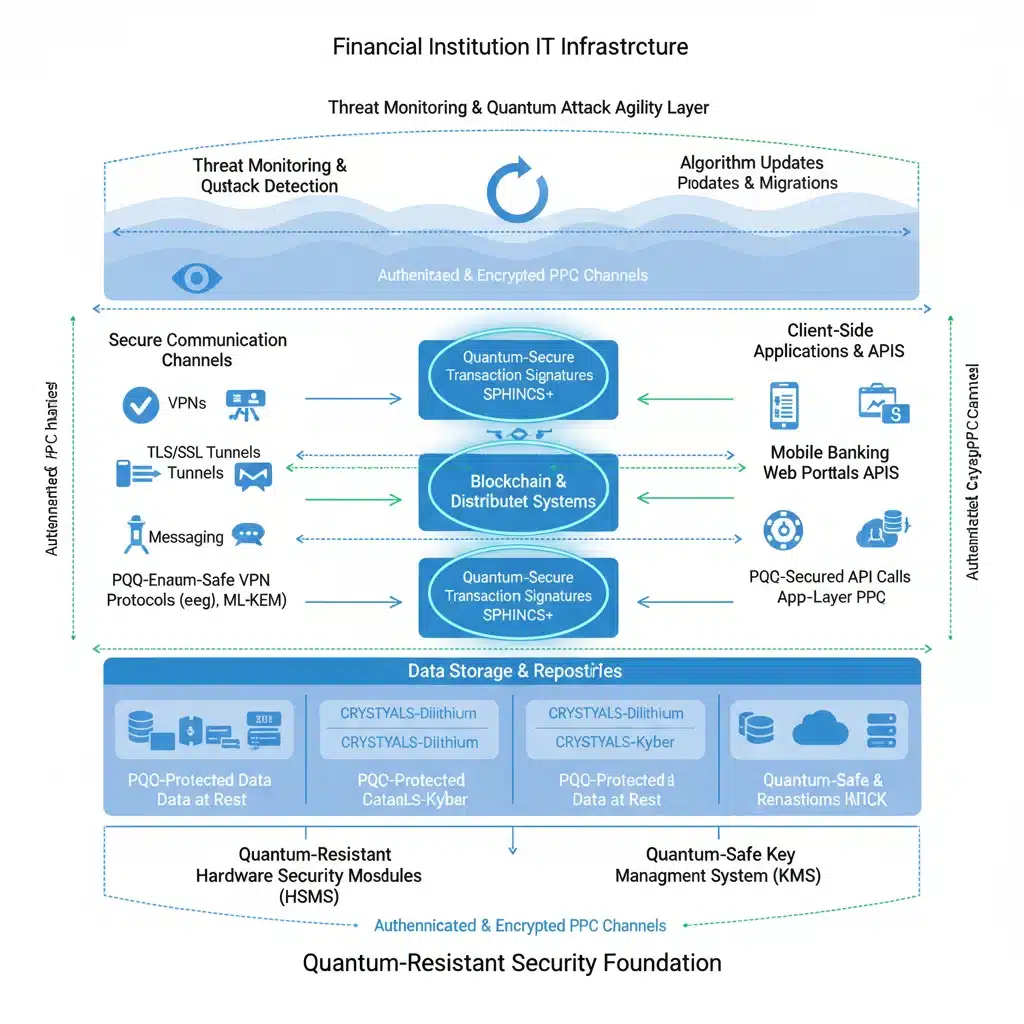
Data Encryption in a Quantum World: Beyond PQC
While PQC is the cornerstone of future Quantum Financial Security, the financial sector must also consider broader implications for data encryption. The sheer volume of data handled by financial institutions – from customer records and transaction histories to proprietary trading algorithms and market intelligence – makes it a prime target. Ensuring the confidentiality, integrity, and availability of this data in a quantum era extends beyond merely replacing algorithms.
One key area of focus will be the re-evaluation of data classification and retention policies. Data with a long-term confidentiality requirement will need to be prioritized for PQC migration. This ‘crypto-agility’ mindset, where cryptographic primitives can be updated without significant system overhauls, will become a standard requirement. Financial institutions will need to conduct comprehensive cryptographic inventories to identify all instances of encryption, assess their quantum vulnerability, and develop a phased migration plan.
Furthermore, the concept of ‘quantum-safe’ encryption might also involve exploring new paradigms beyond traditional cryptography. Quantum key distribution (QKD) offers an intrinsically quantum-secure method for exchanging cryptographic keys, leveraging the laws of quantum mechanics to detect eavesdropping. While QKD is currently limited by distance and infrastructure requirements, advancements in quantum networking over the next three years could make it a viable option for securing high-value, point-to-point financial communications. Incorporating QKD into critical infrastructure would provide an additional layer of robust Quantum Financial Security.
The Role of Quantum-Resistant Hardware and Software
The transition to quantum-safe data encryption will not be solely a software upgrade. Hardware security modules (HSMs) and other cryptographic accelerators play a crucial role in securing cryptographic operations in financial systems. These devices will need to be upgraded or replaced with quantum-resistant versions that can natively support PQC algorithms. Manufacturers are already beginning to develop ‘quantum-ready’ HSMs, and their widespread adoption will be critical for seamless integration and performance. These hardware solutions will form the backbone of future Quantum Financial Security.
Software development practices will also need to evolve. Developers will require training in secure coding practices for PQC, understanding the nuances of different algorithms, and ensuring correct implementation to avoid vulnerabilities. The open-source community is already contributing significantly to PQC libraries, but financial institutions will need to conduct rigorous internal validation and testing to ensure the security and reliability of these implementations in their specific environments.
Opportunities for US Financial Services in the Quantum Era
While the cybersecurity threats posed by quantum computing are substantial, the technology also presents transformative opportunities for US financial services. Over the next three years, institutions that proactively embrace quantum technologies can gain a significant competitive advantage, enhancing their Quantum Financial Security and operational efficiency.
Quantum computing’s ability to process complex calculations at unparalleled speeds could revolutionize areas such as:
- Financial Modeling and Risk Management: Quantum algorithms can potentially optimize complex financial models, such as Monte Carlo simulations for risk assessment, portfolio optimization, and derivative pricing. This could lead to more accurate risk predictions and more efficient capital allocation, significantly bolstering Quantum Financial Security against market volatility.
- Fraud Detection: By analyzing vast datasets with greater speed and sophistication, quantum machine learning could enhance fraud detection systems, identifying subtle patterns and anomalies that current classical algorithms might miss. This would lead to a reduction in financial losses and increased trust.
- High-Frequency Trading and Algorithmic Trading: The speed advantage of quantum computing could provide an edge in high-frequency trading, enabling faster execution and more complex algorithmic strategies. However, this also carries risks of increased market volatility if not managed carefully.
- Drug Discovery and Personalized Medicine (Indirect Impact): While not directly financial, advancements in other sectors driven by quantum computing, such as drug discovery, could open up new investment opportunities and financial products related to these emerging markets.
- Data Privacy Enhancements: Beyond PQC, other quantum technologies like quantum key distribution (QKD) and fully homomorphic encryption (FHE) – which allows computation on encrypted data – could lead to unprecedented levels of data privacy, fostering greater trust with customers and enhancing Quantum Financial Security against data breaches.
Early movers in quantum technology adoption will not only mitigate risks but also position themselves as leaders in innovation, attracting top talent and new clients. Strategic partnerships with quantum research institutions, technology providers, and academic experts will be crucial for exploring and leveraging these opportunities effectively to build robust Quantum Financial Security frameworks.
Strategic Responses: Roadmap for Financial Institutions
To navigate the quantum landscape successfully over the next three years and ensure robust Quantum Financial Security, US financial institutions must adopt a multi-pronged strategic response:
1. Awareness and Education
The first step is to foster awareness and educate leadership, IT teams, and cybersecurity professionals about the implications of quantum computing. This includes understanding both the threats and opportunities. Regular training programs, workshops, and expert consultations are essential to build internal quantum literacy.
2. Cryptographic Inventory and Risk Assessment
Conduct a comprehensive inventory of all cryptographic assets, protocols, and dependencies across the entire organization. Identify which systems use vulnerable classical algorithms and assess the ‘shelf life’ of the data they protect. Prioritize systems based on risk, data sensitivity, and the potential impact of a quantum attack. This crucial step informs the entire strategy for achieving Quantum Financial Security.
3. Develop a PQC Migration Roadmap
Based on the risk assessment, create a phased migration roadmap for adopting PQC. This roadmap should include pilot projects, testing environments, and a clear timeline for integrating PQC algorithms into critical systems. Consider a ‘hybrid’ approach during the transition, where both classical and PQC algorithms are used concurrently to ensure forward and backward compatibility and maintain Quantum Financial Security.
4. Invest in Talent and R&D
Address the talent gap by investing in training programs for existing staff and actively recruiting quantum-savvy cybersecurity and IT professionals. Establish or co-fund research and development initiatives focused on quantum-safe solutions, potentially through partnerships with universities or quantum technology startups. This fosters innovation in Quantum Financial Security.
5. Engage with Regulators and Industry Bodies
Proactively engage with regulatory bodies (e.g., NIST, Treasury, SEC) and industry consortia (e.g., Financial Services Information Sharing and Analysis Center – FS-ISAC) to stay abreast of PQC standardization efforts, emerging best practices, and potential regulatory mandates. Collaborative efforts are key to developing industry-wide standards for Quantum Financial Security.
6. Strengthen Supply Chain Security
Assess the quantum readiness of third-party vendors and supply chain partners. Require them to demonstrate their plans for PQC adoption, as a chain is only as strong as its weakest link. This extends the perimeter of Quantum Financial Security to all interconnected entities.
7. Explore Quantum-Enhanced Opportunities
Beyond risk mitigation, actively explore the potential of quantum computing to enhance financial services. Establish small, agile teams to investigate use cases in areas like financial modeling, fraud detection, and optimization. This proactive approach can turn a potential threat into a strategic advantage, reinforcing overall Quantum Financial Security.

Regulatory and Policy Implications for Quantum Financial Security
The US government and various regulatory bodies are increasingly recognizing the strategic importance of quantum computing and its implications for national security and critical infrastructure, including financial services. Over the next three years, we anticipate a more defined regulatory landscape emerges to guide the financial sector’s transition to quantum-resistant security, thereby strengthening Quantum Financial Security.
NIST’s ongoing Post-Quantum Cryptography Standardization project is a cornerstone of this effort. Once the initial set of PQC algorithms is finalized, it is highly probable that regulatory bodies will begin to issue guidance, and eventually mandates, for their adoption. This will likely involve a phased approach, starting with critical infrastructure and high-value data, and gradually extending to other systems. Financial institutions will need to track these developments closely and integrate them into their compliance frameworks, ensuring that their efforts contribute to robust Quantum Financial Security.
The Executive Order on Improving the Nation’s Cybersecurity (EO 14028) and subsequent National Security Memorandums (NSM-8 and NSM-10) have already highlighted the importance of cryptographic modernization and the transition to PQC across federal agencies. While these directly apply to government entities, they set a precedent and signal the direction for regulated industries like finance. Financial institutions that align their strategies with these federal initiatives will be better positioned for future compliance and will enhance their overall Quantum Financial Security.
Furthermore, international collaboration on quantum security standards will become increasingly important. Given the global nature of financial markets, interoperability and consistent security practices across borders will be essential. US financial institutions should participate in and monitor international forums and working groups dedicated to quantum-safe cryptography to ensure their strategies are globally aligned and contribute to comprehensive Quantum Financial Security.
The role of industry self-regulation and best practices will also be significant. Organizations like the Financial Services Information Sharing and Analysis Center (FS-ISAC) can facilitate the sharing of intelligence, best practices, and lessons learned regarding quantum threats and PQC implementation. Collaborative efforts within the industry can accelerate the transition and build a collective defense against quantum adversaries, ensuring a stronger collective Quantum Financial Security for all participants.
Conclusion: Embracing the Quantum Future for Quantum Financial Security
The impact of quantum computing on US financial services, particularly concerning cybersecurity and data encryption, is not a distant future concern but an imminent challenge that demands immediate attention. Over the next three years, the industry faces the critical task of understanding, preparing for, and mitigating the ‘harvest now, decrypt later’ threat, while simultaneously exploring the transformative opportunities that quantum technologies present. The journey towards robust Quantum Financial Security is complex, requiring significant investment, strategic planning, and a collaborative effort across the entire financial ecosystem.
By proactively investing in post-quantum cryptography, developing cryptographic agility, fostering talent, engaging with regulators, and exploring quantum-enhanced applications, US financial institutions can not only safeguard their invaluable data and maintain customer trust but also emerge as leaders in the quantum era. The foresight and actions taken today will determine the resilience and competitiveness of the US financial sector in a world increasingly shaped by quantum mechanics. The time to act for comprehensive Quantum Financial Security is now.