Bridging the Digital Divide: 10% US Households Still Lack Internet in 2026

The Enduring Challenge: 10% of US Households Still Lack Adequate Internet Access in 2026
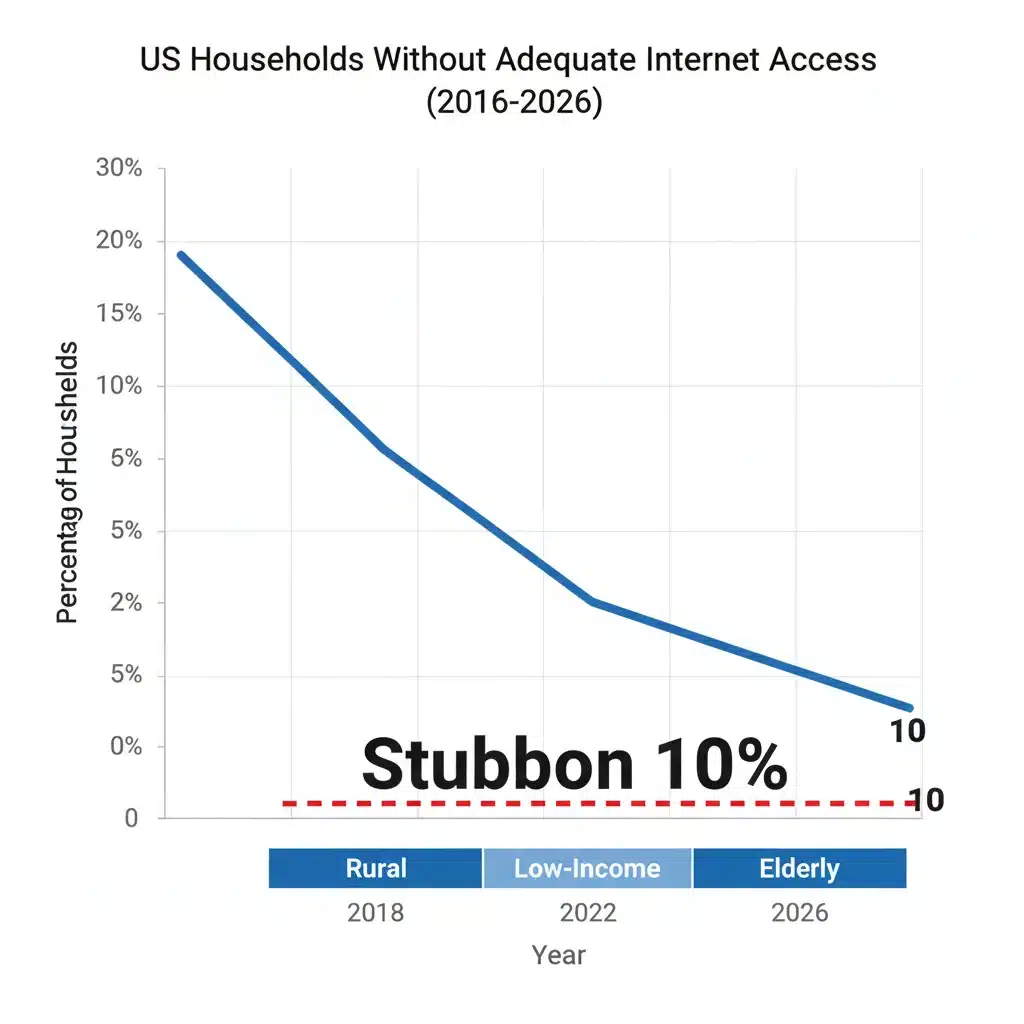
In an era defined by rapid technological advancement and ubiquitous connectivity, it might seem counterintuitive to discuss a significant portion of the population still disconnected. Yet, as we navigate through 2026, the stark reality remains: a persistent digital divide 2026 continues to affect approximately 10% of US households. This isn’t merely an inconvenience; it’s a fundamental barrier to education, economic opportunity, healthcare, and civic participation, impacting millions of lives and casting a long shadow over the nation’s progress towards true digital equity.
The promise of universal broadband, once a distant vision, has been the subject of countless initiatives, billions in investment, and fervent policy debates. While tremendous strides have been made since the early 2000s, and particularly in the wake of the COVID-19 pandemic which starkly highlighted the critical need for home internet, the final mile in bridging this gap proves to be the most challenging. This article delves into the current landscape of the digital divide 2026, examining the demographics most affected, the profound financial and social implications, and the innovative, albeit slow, progress being made to finally connect every American household.
Defining "Adequate Internet Access" in 2026
Before dissecting the statistics, it’s crucial to define what "adequate internet access" means in the context of 2026. The baseline for broadband has continuously evolved. What was considered high-speed a decade ago is now insufficient for the demands of remote work, online learning, telemedicine, and entertainment streaming. In 2026, "adequate" generally refers to reliable access to download speeds of at least 100 Mbps and upload speeds of 20 Mbps, often referred to as 100/20 Mbps. This standard allows for multiple users in a household to simultaneously engage in data-intensive activities without significant degradation in performance.
The 10% of US households without adequate internet access are not necessarily entirely offline. Some may have very slow, unreliable connections (e.g., dial-up, satellite with severe data caps, or mobile-only access with poor coverage) that do not meet the 100/20 Mbps threshold. Others may lack any form of internet access at home, relying solely on public Wi-Fi hotspots or community centers, which are often insufficient for sustained daily use. This nuance is vital, as even "limited" access can be as detrimental as no access at all when it comes to fully participating in modern society.
Who Makes Up the 10%? Demographics of the Unconnected
The digital divide 2026 is not uniformly distributed across the US population. While the overall figure is 10%, certain demographic groups and geographic regions bear a disproportionate burden. Understanding these patterns is key to developing targeted and effective solutions.
Rural Communities: The Persistent Frontier
Rural areas continue to be the epicenter of the connectivity crisis. The economics of deploying high-speed fiber optic or advanced wireless infrastructure to sparsely populated regions are challenging for internet service providers (ISPs). Low population density means a higher cost per subscriber, making these investments less profitable. Consequently, many rural households are left with few, if any, options for reliable broadband. Terrain, distance from central hubs, and geological challenges further complicate deployment, perpetuating the digital divide 2026 in these vital regions.
Low-Income Households: The Affordability Barrier
Even where infrastructure exists, affordability remains a significant hurdle. For low-income households, the cost of monthly internet subscriptions, combined with the expense of necessary devices (computers, tablets), can be prohibitive. Government assistance programs and subsidized internet plans have helped, but they often don’t reach everyone in need, or the available plans may still not meet the "adequate" speed requirements for a multi-user household. This economic disparity is a primary driver of the digital divide 2026 in both urban and rural settings.
Seniors and Individuals with Disabilities: Accessibility and Digital Literacy
A notable segment of the unconnected includes seniors and individuals with disabilities. For many seniors, the perceived complexity of technology, combined with fixed incomes and a lack of digital literacy training, can deter adoption. Similarly, individuals with disabilities may face additional challenges related to accessible hardware, software, and assistive technologies, requiring specialized support that isn’t always readily available or affordable.
Minority Communities: Intersecting Disparities
Minority communities, particularly Black, Hispanic, and Indigenous populations, often experience the digital divide 2026 at higher rates due to a combination of factors, including lower average incomes, historical underinvestment in their communities, and geographic isolation (e.g., tribal lands). These intersecting disparities underscore the complex nature of the problem and the need for culturally competent and community-led solutions.
The Financial Impact of the Digital Divide in 2026
The economic repercussions of the digital divide 2026 are far-reaching, affecting individuals, communities, and the national economy. Lack of internet access is not just an inconvenience; it’s a significant economic disadvantage.
Hindered Educational Attainment
For students in unconnected households, the gap in educational resources is immense. Remote learning, online assignments, and access to digital libraries become impossible without reliable internet. This exacerbates existing educational inequalities, leading to lower academic performance, reduced opportunities for higher education, and ultimately, a less skilled workforce. The long-term financial cost of a less educated populace is substantial, impacting innovation, productivity, and global competitiveness.
Limited Economic Opportunity and Workforce Development
The modern job market is overwhelmingly digital. Job searches, online applications, remote work, and even basic communication with employers often require internet access. Households without adequate connectivity are at a severe disadvantage in finding and retaining employment, particularly in an economy increasingly reliant on digital skills. This perpetuates cycles of poverty and limits upward mobility. Furthermore, small businesses in unconnected areas struggle to compete, unable to leverage e-commerce, online marketing, or cloud-based tools, stifling local economic growth.
Reduced Access to Essential Services
Telemedicine has become a critical component of healthcare delivery, especially in rural areas where access to specialists is limited. Without reliable internet, millions are cut off from vital health consultations, prescription refills, and mental health services. Similarly, access to government services, banking, and civic engagement platforms increasingly requires an online presence. This digital exclusion can lead to poorer health outcomes, financial instability, and disenfranchisement for those on the wrong side of the digital divide 2026.
Decreased Local Tax Revenue and Economic Growth
Communities with pervasive internet access gaps often experience slower economic growth and reduced tax bases. Businesses are less likely to relocate to or expand in areas lacking robust digital infrastructure, leading to fewer jobs and less investment. This creates a vicious cycle where underdevelopment in digital infrastructure contributes to broader economic stagnation, further entrenching the digital divide 2026.
Recent Updates and Ongoing Efforts to Bridge the Gap
Recognizing the severity of the digital divide 2026, significant policy initiatives and investments have been made, particularly in recent years. These efforts aim to address both infrastructure deployment and affordability.
Infrastructure Investment: BEAD Program and Beyond
The Broadband Equity, Access, and Deployment (BEAD) Program, a cornerstone of federal efforts, continues to funnel billions of dollars into states to expand broadband infrastructure, with a particular focus on unserved and underserved areas. By 2026, many states are actively implementing their BEAD-funded projects, targeting rural and remote regions where private investment has historically lagged. This involves laying new fiber optic cables, deploying advanced fixed wireless technologies, and exploring satellite solutions like Starlink for the hardest-to-reach locations.
Affordability Programs: ACP and Its Successors
The Affordable Connectivity Program (ACP), which provided subsidies for internet service and devices, proved immensely successful in connecting millions of low-income households. While its future beyond 2024 was uncertain, advocacy efforts and the undeniable evidence of its impact have led to discussions and, in some cases, the implementation of successor programs or extensions by 2026, either federally or at the state level. These programs are critical for addressing the affordability aspect of the digital divide 2026, ensuring that even where infrastructure exists, it is accessible to all.
Community-Led Initiatives and Digital Navigators
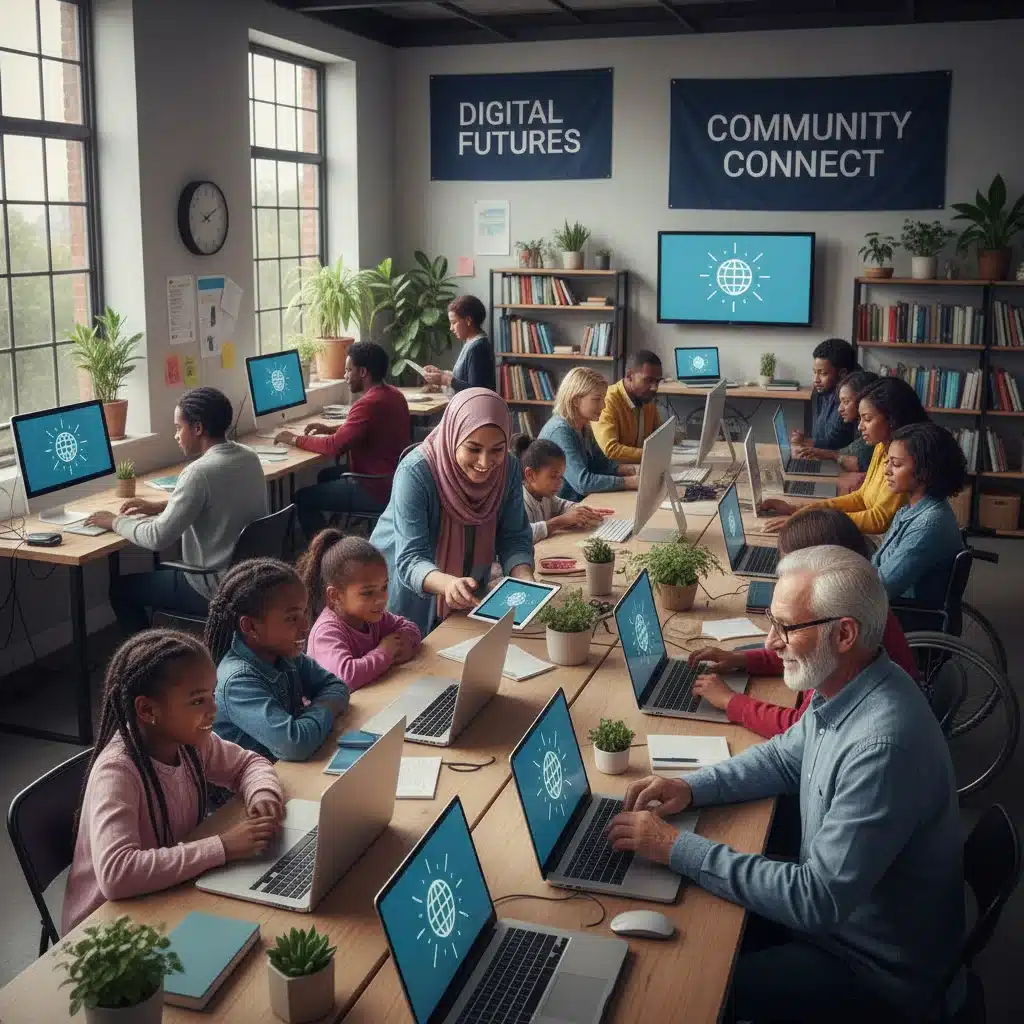
Beyond federal and state programs, numerous local communities and non-profit organizations are playing a vital role. Community mesh networks, public-private partnerships, and digital literacy training programs are empowering residents. "Digital navigators" – trained individuals who assist community members with internet sign-up, device usage, and digital skills – have become increasingly important, especially for seniors and those new to technology. These grassroots efforts are crucial for addressing the multifaceted nature of the digital divide 2026, going beyond just infrastructure to include skill-building and support.
Challenges and Roadblocks to Universal Connectivity
Despite the concerted efforts, several significant challenges continue to impede the complete closure of the digital divide 2026.
The "Last Mile" Problem
Connecting the final 10% often involves addressing the most difficult and expensive "last mile" connections. These are typically in extremely remote areas, mountainous regions, or dense urban environments with complex infrastructure challenges. The cost-effectiveness of deploying infrastructure to these areas remains a major barrier, even with subsidies.
Digital Literacy and Adoption Rates
Laying fiber is only half the battle. If people don’t know how to use the internet, can’t afford devices, or don’t understand its benefits, adoption rates will remain low. Addressing digital literacy, providing affordable devices, and building trust in technology are ongoing challenges that require sustained investment in community programs and educational initiatives.
Evolving Standards and Future-Proofing
The definition of "adequate internet" is constantly changing. As technology advances, what is considered sufficient today may be obsolete tomorrow. This means that infrastructure investments must be future-proofed, designing networks that can scale to meet future demands, which adds to the initial cost and complexity of deployment.
Maintenance and Sustainability
Building infrastructure is one thing; maintaining it and ensuring its long-term sustainability is another. Many rural networks, once built, require ongoing funding for upgrades, repairs, and operational costs. Ensuring the longevity of these investments is crucial to prevent a resurgence of the digital divide 2026 in previously connected areas.
The Path Forward: Strategies for Complete Digital Inclusion
Achieving universal internet access by completely eliminating the digital divide 2026 and beyond requires a multi-pronged, sustained approach that combines policy, technology, and community engagement.
Continued and Flexible Funding
Consistent, long-term federal and state funding is essential. These funds need to be flexible enough to adapt to local needs, supporting a variety of technologies (fiber, fixed wireless, satellite) and business models (public-private partnerships, municipal networks, co-ops). The focus should remain on connecting the truly unserved and underserved, prioritizing areas with the greatest need.
Promoting Competition and Innovation
Encouraging more competition among ISPs, especially in underserved areas, can drive down prices and improve service quality. Policies that reduce barriers to entry for new providers and support innovative deployment methods can accelerate progress. This includes exploring open-access networks where infrastructure is shared, allowing multiple service providers to offer services over the same physical lines.
Strengthening Digital Literacy and Device Access Programs
Investment in digital literacy training, particularly for seniors, low-income individuals, and underserved communities, is paramount. This includes funding for community centers, libraries, and schools to offer free classes, one-on-one assistance, and access to public computers. Programs that facilitate access to affordable devices (laptops, tablets) are also critical, ensuring that connectivity doesn’t just mean a pipe to the home, but also the tools to utilize it.
Data-Driven Policy Making
Accurate and granular data on internet availability and adoption rates is crucial. Policymakers need precise maps of unserved areas and detailed demographic information to target resources effectively. Continuous monitoring and evaluation of programs will ensure that investments are yielding the desired results and adapt strategies as new challenges emerge.
Public Awareness and Advocacy
Maintaining public awareness about the ongoing challenges of the digital divide 2026 is important. Advocacy groups, community leaders, and elected officials must continue to champion digital inclusion, ensuring that it remains a national priority. Highlighting success stories and the tangible benefits of connectivity can galvanize support for continued investment.
Conclusion: The Imperative of Universal Connectivity
As we look at the landscape of 2026, the fact that 10% of US households still lack adequate internet access is a stark reminder that the journey to digital equity is far from over. The digital divide 2026 is not merely a technological problem; it is a profound social and economic justice issue that impacts educational opportunities, healthcare access, economic mobility, and civic participation for millions of Americans.
While the challenges are significant, the progress made through targeted investments, innovative technologies, and dedicated community efforts offers a beacon of hope. The goal of universal, affordable, and reliable internet access for every US household is not just an aspiration but an imperative for a truly inclusive and prosperous future. By understanding the complexities of the digital divide, focusing on the most vulnerable populations, and sustaining our commitment to comprehensive solutions, we can, and must, ensure that no one is left behind in the digital age.