AI Ethics Regulations 2026: U.S. Frameworks Unveiled

The rapid advancement of artificial intelligence (AI) has brought forth unprecedented opportunities and significant challenges. As AI systems become more integrated into every facet of our lives, from healthcare and finance to transportation and national security, the imperative for robust ethical guidelines and regulatory frameworks has never been more pressing. The United States, a global leader in technological innovation, is actively grappling with how to effectively govern AI to ensure its responsible development and deployment. As we look towards 2026, the landscape of U.S. AI ethics regulations is taking a definitive shape, promising a new era of accountability and trust in AI.
This comprehensive article delves into the anticipated U.S. AI ethics regulations for 2026, offering an insider’s perspective on the frameworks currently under development. We will explore the driving forces behind these regulations, the key principles expected to underpin them, and the potential impact on businesses, researchers, and the public. Understanding these evolving AI ethics regulations is not just about compliance; it’s about shaping a future where AI serves humanity ethically and equitably.
The Unfolding Landscape of U.S. AI Ethics Regulations
The journey towards comprehensive AI ethics regulations in the U.S. is a complex tapestry woven from diverse perspectives: technological innovation, civil liberties, economic competitiveness, and national security. While specific legislation is still being hammered out, a clear direction is emerging. The focus is not on stifling innovation but on fostering responsible innovation, ensuring that AI systems are fair, transparent, accountable, and protective of individual rights.
Several key governmental bodies, including the National Institute of Standards and Technology (NIST), the White House Office of Science and Technology Policy (OSTP), and various congressional committees, have been instrumental in laying the groundwork. NIST’s AI Risk Management Framework (AI RMF), published in early 2023, stands as a cornerstone, providing voluntary guidance that many anticipate will form the basis for future mandatory AI ethics regulations. This framework emphasizes a proactive approach to identifying, assessing, and managing risks associated with AI throughout its lifecycle.
The Biden administration has also demonstrated a strong commitment to AI governance, issuing executive orders and national strategies that underscore the importance of ethical AI. These directives often call for interagency collaboration and stakeholder engagement, recognizing that effective regulation requires input from industry, academia, civil society, and the public. The goal is to create a regulatory environment that is adaptable to the fast pace of AI development while providing necessary guardrails.
Driving Forces Behind the 2026 AI Ethics Regulations
Several critical factors are accelerating the push for robust AI ethics regulations in the U.S. by 2026:
- Rapid AI Proliferation: The widespread adoption of AI across sectors has brought to light potential harms, including algorithmic bias, privacy violations, job displacement, and the spread of misinformation. Incidents of AI systems exhibiting discriminatory behavior or making opaque decisions have fueled public demand for oversight.
- International Pressure and Competition: Other nations and blocs, notably the European Union with its comprehensive AI Act, are moving swiftly to establish AI governance frameworks. The U.S. recognizes the need to develop its own coherent approach to remain competitive and ensure interoperability in the global AI landscape.
- National Security Concerns: The use of AI in critical infrastructure, defense, and surveillance raises significant national security implications. Regulations aim to mitigate risks associated with malicious AI use, ensure the integrity of AI systems, and prevent hostile actors from exploiting AI vulnerabilities.
- Public Trust and Confidence: For AI to reach its full potential, the public must trust its deployment. Ethical regulations are seen as essential for building and maintaining this trust, assuring citizens that AI is developed and used responsibly.
- Industry Demand for Clarity: While some in the industry initially resisted regulation, many now recognize the benefits of clear guidelines. A patchwork of state-level regulations or the absence of federal standards creates uncertainty and hinders innovation. A consistent federal framework for AI ethics regulations can provide a predictable environment for businesses to operate and invest.
Key Principles Guiding Future AI Ethics Regulations
While the specifics are still being refined, several core ethical principles are consistently highlighted in discussions and preliminary documents regarding U.S. AI ethics regulations. These principles are expected to form the bedrock of any forthcoming legislation:
1. Fairness and Non-Discrimination
A paramount concern in AI ethics is the potential for algorithms to perpetuate or even amplify existing societal biases. Data used to train AI models often reflects historical inequalities, leading to discriminatory outcomes in areas like hiring, lending, criminal justice, and healthcare. Future AI ethics regulations will likely mandate measures to ensure AI systems are developed and deployed in a fair and non-discriminatory manner. This could include requirements for:
- Bias Detection and Mitigation: Organizations will be expected to actively identify and address biases in training data and algorithmic decision-making processes.
- Representative Data: Emphasizing the use of diverse and representative datasets to train AI models.
- Impact Assessments: Conducting fairness impact assessments before deploying AI systems, especially in high-stakes applications.
2. Transparency and Explainability
The ‘black box’ nature of many advanced AI models makes it difficult to understand how they arrive at their conclusions. This lack of transparency undermines trust and accountability. Upcoming AI ethics regulations are anticipated to push for greater transparency and explainability, particularly for AI systems that have significant impacts on individuals.
- Explainable AI (XAI): Encouraging the development and adoption of techniques that make AI decisions more interpretable to humans.
- Documentation Requirements: Mandating thorough documentation of AI system design, training data, performance metrics, and intended use cases.
- Communication to Users: Ensuring that users are informed when they are interacting with an AI system and understand the basis of its decisions.
3. Accountability and Governance
Establishing clear lines of responsibility for AI systems is crucial. When an AI system causes harm, who is accountable? Future AI ethics regulations will likely address this by requiring robust governance structures.
- Human Oversight: Mandating meaningful human oversight for AI systems, especially those operating in critical domains.
- Risk Management: Requiring organizations to implement comprehensive AI risk management frameworks, similar to NIST’s guidelines.
- Auditing and Reporting: Establishing mechanisms for auditing AI systems and reporting incidents or failures.
4. Privacy and Data Security
AI systems often rely on vast amounts of data, raising significant privacy concerns. Protecting personal data from misuse, unauthorized access, and breaches is a fundamental ethical and legal imperative. The 2026 AI ethics regulations are expected to strengthen existing privacy protections and introduce AI-specific data governance requirements.
- Data Minimization: Encouraging the collection and use of only the data necessary for a specific AI purpose.
- Anonymization and Pseudonymization: Promoting techniques to protect individual identities within datasets.
- Robust Security Measures: Mandating strong cybersecurity protocols to protect AI training data and models from attacks.
5. Safety and Robustness
AI systems must be designed to be safe, reliable, and resilient to errors or malicious manipulation. Regulations will likely address the need for rigorous testing and validation of AI models to ensure they perform as intended and do not pose undue risks.
- Rigorous Testing: Requiring extensive testing of AI systems under various conditions, including stress testing and adversarial attacks.
- Error Handling: Designing AI systems with mechanisms to detect and gracefully handle errors or unexpected inputs.
- Security Against Manipulation: Protecting AI models from data poisoning, adversarial examples, and other forms of manipulation.
Insider Knowledge: What to Expect by 2026

While definitive legislative texts are still being drafted, discussions among policymakers, industry leaders, and legal experts provide strong indications of what the U.S. AI ethics regulations landscape will look like by 2026. Here’s what we can anticipate:
A Sector-Specific and Risk-Based Approach
Unlike the EU’s broad AI Act, which categorizes AI systems by risk level and applies regulations accordingly, the U.S. approach is likely to be more sector-specific and risk-based, at least initially. This means that highly regulated sectors like healthcare, finance, and critical infrastructure will likely see the earliest and most stringent AI ethics regulations. For example, the Food and Drug Administration (FDA) is already developing guidelines for AI in medical devices, and financial regulators are examining AI’s role in lending and credit scoring.
The risk-based element will likely classify AI applications into different tiers based on their potential to cause harm. High-risk AI systems (e.g., those used in hiring, law enforcement, or autonomous vehicles) will face stricter requirements for transparency, testing, and human oversight. Lower-risk applications might be subject to lighter-touch guidance or voluntary best practices.
Emphasis on Existing Agencies and Enforcement
Instead of creating a single, overarching AI regulatory body, the U.S. is expected to leverage and empower existing federal agencies to oversee AI within their respective jurisdictions. The Federal Trade Commission (FTC) is already active in addressing deceptive or unfair AI practices, while the Equal Employment Opportunity Commission (EEOC) is focusing on AI’s impact on workplace discrimination. By 2026, these agencies will likely have clearer mandates, increased resources, and specific rules tailored to AI governance within their domains.
This distributed approach aims to utilize existing expertise and avoid regulatory duplication, though it also presents challenges in ensuring consistency and preventing regulatory gaps. Interagency coordination will be paramount.
Voluntary Frameworks Becoming De Facto Standards
The NIST AI RMF, while currently voluntary, is rapidly gaining traction as a de facto standard for responsible AI development. By 2026, it’s highly probable that adherence to components of the AI RMF will become a prerequisite for government contracts involving AI, and increasingly, a benchmark for private sector best practices. Companies that proactively align with the AI RMF and similar frameworks will be better positioned to meet future mandatory AI ethics regulations.
Focus on Algorithmic Auditing and Impact Assessments
Expect a significant push for independent algorithmic auditing and mandatory impact assessments for high-risk AI systems. This means companies deploying AI will need to demonstrate that their systems have been rigorously tested for bias, privacy implications, and overall safety. Third-party auditors specializing in AI ethics and security are likely to become an integral part of the AI ecosystem.
Potential for New Federal Legislation
While a comprehensive federal AI law similar to GDPR or the EU AI Act might not be fully enacted by 2026 due to the complexities of the U.S. legislative process, several targeted pieces of legislation are highly probable. These could address specific aspects like federal agency use of AI, AI in critical infrastructure, or consumer protection against AI harms. The ongoing discussions in Congress indicate a strong bipartisan interest in addressing AI governance, suggesting that legislative action is indeed on the horizon.
Preparing for the New Era of AI Ethics Regulations
For businesses and organizations leveraging AI, the impending U.S. AI ethics regulations of 2026 represent both a challenge and an opportunity. Proactive preparation is key to navigating this new landscape successfully.
1. Conduct an AI Ethics Audit
Begin by assessing your current AI systems and practices against anticipated ethical principles and regulatory requirements. Identify areas where your AI models might exhibit bias, lack transparency, or pose privacy risks. This internal audit will provide a baseline for improvement.
2. Implement AI Governance Frameworks
Adopt or adapt frameworks like the NIST AI RMF. Establish clear internal policies, roles, and responsibilities for AI development, deployment, and oversight. This includes creating interdisciplinary teams comprising technologists, legal experts, ethicists, and business leaders.
3. Invest in Explainable AI (XAI) and Bias Mitigation Tools
Prioritize tools and techniques that enhance the transparency and fairness of your AI systems. This includes investing in XAI capabilities, robust data governance practices, and bias detection and mitigation software. The ability to explain AI decisions will become a significant competitive advantage and a regulatory necessity.
4. Strengthen Data Privacy and Security
Review and enhance your data privacy practices, ensuring compliance with existing regulations (e.g., CCPA, HIPAA) and anticipating future AI-specific requirements. Implement strong data security measures to protect against breaches and manipulation of AI models and training data.
5. Foster an Ethical AI Culture
Embed ethical considerations into your organization’s AI development lifecycle. Provide training to your teams on responsible AI principles, encourage ethical discussions, and create channels for reporting ethical concerns. A strong ethical culture can prevent many regulatory pitfalls.
6. Engage with Policy Discussions
Stay informed about ongoing legislative and regulatory developments. Participate in industry groups, public consultations, and workshops related to AI governance. Your input can help shape future AI ethics regulations, and early engagement demonstrates a commitment to responsible AI.
7. Partner with Legal and Compliance Experts
As the regulatory landscape evolves, having legal and compliance experts who specialize in AI law will be invaluable. They can help interpret new regulations, advise on compliance strategies, and mitigate legal risks.
The Broader Impact of AI Ethics Regulations
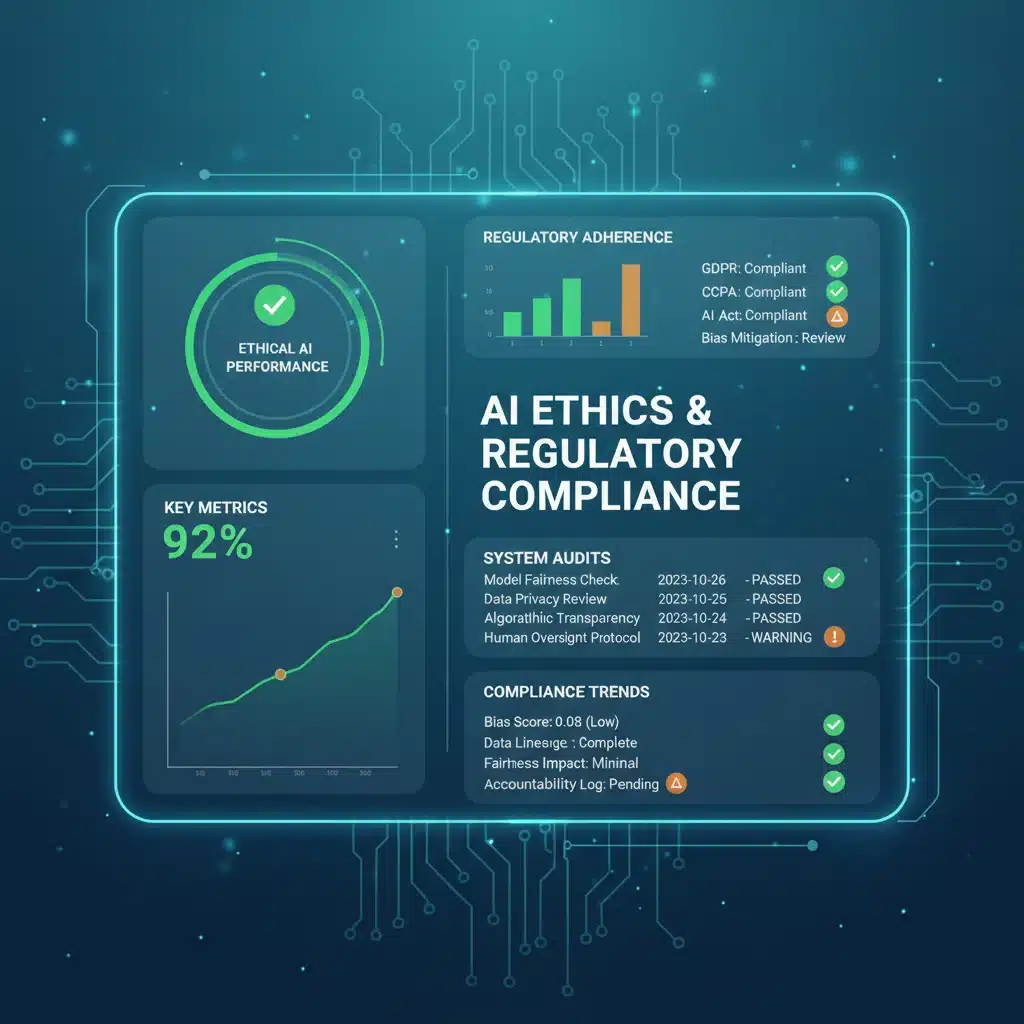
The forthcoming U.S. AI ethics regulations will have far-reaching implications beyond mere compliance. They are poised to reshape the entire AI ecosystem, fostering a more responsible and sustainable path for technological innovation.
Enhanced Public Trust
By establishing clear rules and accountability, these regulations can significantly enhance public trust in AI. When people understand that AI systems are designed with ethical safeguards and that recourse exists for harm, they are more likely to embrace and benefit from AI technologies.
Competitive Advantage for Responsible Innovators
Companies that prioritize ethical AI development and proactively comply with regulations will gain a competitive edge. They will be seen as trustworthy partners, attracting customers, talent, and investors who value responsible innovation. Ethical AI will transition from a ‘nice-to-have’ to a fundamental differentiator.
Standardization and Interoperability
While the U.S. approach might be more fragmented than the EU’s, the development of common principles and frameworks (like NIST’s) will lead to greater standardization. This can facilitate interoperability between AI systems and foster a more coherent global approach to AI governance, even if specific laws differ.
Mitigation of Societal Risks
The core purpose of AI ethics regulations is to mitigate the societal risks associated with AI. By addressing issues like bias, privacy, and safety, these frameworks aim to prevent AI from exacerbating inequalities, eroding democratic processes, or causing widespread harm. This protective function is vital for the long-term health of society.
Encouragement of Ethical AI Research and Development
The regulatory push will also stimulate research and development in ethical AI. There will be increased demand for tools, methodologies, and expertise in areas like algorithmic fairness, explainability, privacy-preserving AI, and AI security. This will create new opportunities for innovators and researchers dedicated to building benevolent AI.
Conclusion: A Future of Responsible AI
The U.S. is on the cusp of a transformative period in AI governance. By 2026, the anticipated AI ethics regulations will provide a more defined framework for the responsible development and deployment of artificial intelligence. These regulations, driven by a confluence of technological advancement, societal concerns, and international developments, aim to strike a delicate balance between fostering innovation and ensuring ethical outcomes.
For businesses, researchers, and policymakers alike, understanding and adapting to this evolving landscape is paramount. Proactive engagement, adherence to emerging standards, and a steadfast commitment to ethical principles will not only ensure compliance but also pave the way for a future where AI truly serves the greater good. The journey towards responsible AI is continuous, and the frameworks taking shape in 2026 will mark a significant milestone in this crucial endeavor, solidifying the U.S.’s commitment to ethical AI leadership on the global stage.