AI in Creative Arts: Cultural Debates & Future Impact 2026
The Impact of AI on Creative Arts: Cultural Debates Heating Up in 2026
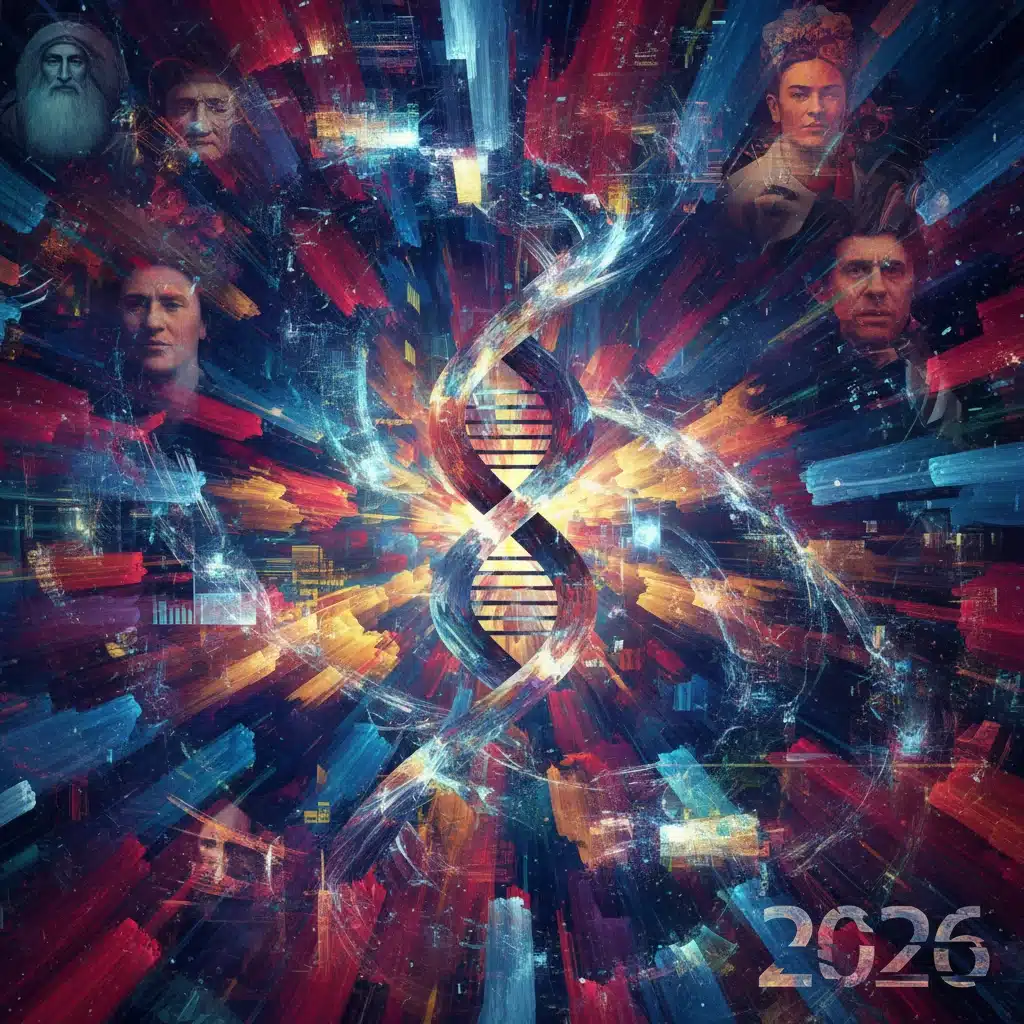
The year 2026 marks a pivotal moment in the ongoing narrative of artificial intelligence and its profound influence on the creative arts. What began as a nascent curiosity a few years prior has blossomed into a full-fledged revolution, sparking fervent AI Creative Arts Debate across every conceivable artistic domain. From visual arts and music composition to literature, film, and performance, AI’s capabilities are not just augmenting human creativity; they are redefining it, challenging long-held notions of authorship, originality, and the very essence of artistic expression.
This article delves deep into the heart of these escalating cultural debates, exploring the multifaceted impacts of AI on the creative landscape. We’ll examine the ethical quandaries, the economic shifts, the philosophical questions, and the exciting new frontiers that AI is opening up for artists and audiences alike. As we navigate this complex terrain, one thing is clear: the conversation around AI in the creative arts is far from settled, and its trajectory will shape the cultural fabric of our future.
Redefining Authorship and Originality: The Core of the AI Creative Arts Debate
Perhaps the most contentious aspect of the AI Creative Arts Debate revolves around the concepts of authorship and originality. When an AI generates a piece of music indistinguishable from a human composition, or paints a portrait with uncanny emotional depth, who is the artist? Is it the programmer who coded the AI, the artist who provided the training data, or the AI itself, acting as a sophisticated tool or an emergent creative entity?
The Human Hand vs. The Algorithmic Touch
Traditional definitions of art place immense value on the human creator—their unique experiences, emotions, and intentions imbue the artwork with meaning. AI, by its very nature, lacks consciousness and personal experience. Yet, it can produce works that evoke powerful responses. This dichotomy forces us to reconsider what we value in art. Is it the process of creation, the intent behind it, or solely the aesthetic and emotional impact of the final product?
In 2026, legal frameworks are struggling to keep pace with technological advancements. Copyright laws, designed for human creators, are being strenuously tested. Who owns the copyright to an AI-generated novel? If an AI is trained on copyrighted material, does its output constitute plagiarism or fair use? These are not merely academic questions; they have profound economic implications for artists, studios, and the entire creative industry.
Originality in an Era of Algorithmic Generation
The notion of originality is also under scrutiny. AI can analyze vast datasets of existing art, identify patterns, and generate novel combinations or styles. While this can lead to breathtakingly new forms of expression, it also raises concerns about derivative works and the potential dilution of truly unique human artistic vision. Some argue that AI, by its nature, is inherently derivative, merely recombining existing elements. Others contend that the sheer scale and complexity of AI-generated permutations can lead to genuinely original outcomes that no human could conceive.
The AI Creative Arts Debate here often boils down to a philosophical question: can something be truly original if it doesn’t originate from a conscious, intentional mind? As AI systems become more sophisticated and capable of learning and evolving, this question becomes even more pressing. The lines between inspiration, replication, and genuine innovation are blurring, forcing a re-evaluation of what it means to create something ‘new’.
Economic Shifts and the Future of Creative Professions
Beyond the philosophical debates, the economic impact of AI on creative professions is a tangible concern. Many artists, writers, musicians, and designers fear that AI will automate their jobs, leading to widespread unemployment or a devaluation of human-made art.
Automation vs. Augmentation
While some tasks, particularly repetitive or data-intensive ones, are indeed susceptible to automation, many proponents of AI in art argue for augmentation rather than replacement. AI can act as a powerful tool, assisting artists with laborious tasks, generating ideas, or providing new perspectives. For instance, an architect might use AI to rapidly generate thousands of design iterations, or a musician might employ AI to create complex orchestral arrangements based on a simple melody.
In this augmented model, the human artist remains at the helm, guiding the AI and making the ultimate creative decisions. The challenge lies in ensuring that artists are adequately trained to utilize these new tools and that the economic benefits of AI are shared equitably, rather than concentrating wealth in the hands of a few tech giants.
The Gig Economy and AI-Powered Platforms
The rise of AI-powered creative platforms is also reshaping the gig economy for artists. While these platforms can offer new avenues for exposure and income, they also raise concerns about fair compensation, intellectual property rights, and the potential for these platforms to exploit artists by devaluing their work through algorithmic pricing. The AI Creative Arts Debate here centers on finding a balance that fosters innovation while protecting the livelihoods of human creators.
By 2026, we are seeing increasing calls for regulation and new business models that ensure artists are compensated fairly for their contributions, whether directly through their original work or indirectly through the data used to train AI models. This includes discussions around universal basic income for artists, new licensing models for AI-generated content, and stronger collective bargaining power for creative professionals.
Ethical Concerns and Bias in AI-Generated Art
The ethical implications of AI in art are profound and extend beyond mere questions of authorship. AI models are trained on vast datasets, and if these datasets contain biases—whether racial, gender, cultural, or historical—those biases can be amplified and perpetuated in the AI’s output. This poses a significant challenge, particularly in an era striving for greater diversity and inclusivity in the arts.
Algorithmic Bias and Representation
An AI trained predominantly on Western art, for example, might struggle to generate authentic representations of non-Western cultures or might inadvertently perpetuate stereotypes. This raises crucial questions about who controls the training data, who develops the algorithms, and how we can ensure that AI art promotes a more diverse and equitable cultural landscape rather than reinforcing existing inequalities. The AI Creative Arts Debate must prioritize addressing these inherent biases.
Efforts are underway to develop more diverse and representative datasets, as well as transparent algorithms that can be audited for bias. However, the sheer scale of data involved makes this a monumental task. Artists and ethicists are increasingly advocating for a human-in-the-loop approach, where human oversight and curation are integral to the AI art generation process, helping to mitigate unintended biases.
Deepfakes and the Erosion of Trust
The ability of AI to generate highly realistic images, videos, and audio also raises concerns about deepfakes and their potential for misuse. While deepfake technology can be used creatively for artistic expression or entertainment, it also presents a significant threat in terms of misinformation, identity theft, and the erosion of trust in digital media. The creative arts, particularly film and photography, are at the forefront of this challenge.
The cultural debates in 2026 are grappling with how to distinguish authentic human creations from sophisticated AI fakes, and how to develop ethical guidelines and technological safeguards to prevent malicious use. This includes watermarking AI-generated content, developing detection tools, and fostering media literacy among the public.
New Artistic Forms and Collaborative Paradigms
Despite the challenges, many artists and innovators view AI not as a threat, but as a powerful catalyst for new artistic forms and collaborative paradigms. AI can open up avenues for creativity that were previously unimaginable, expanding the very definition of what art can be.
Generative Art and Algorithmic Aesthetics
Generative art, where algorithms create autonomous or semi-autonomous artworks, is experiencing a renaissance thanks to advanced AI. Artists are experimenting with AI as a co-creator, designing systems that produce endlessly evolving visual compositions, musical scores, or poetic texts. This moves beyond simply using AI as a tool; it involves collaborating with an intelligent system that can surprise and inspire.
These new forms of art challenge traditional notions of fixed, singular artworks, instead embracing fluidity, unpredictability, and interaction. The aesthetic principles governing algorithmic art are still being defined, adding another layer to the ongoing AI Creative Arts Debate.
AI as a Creative Partner
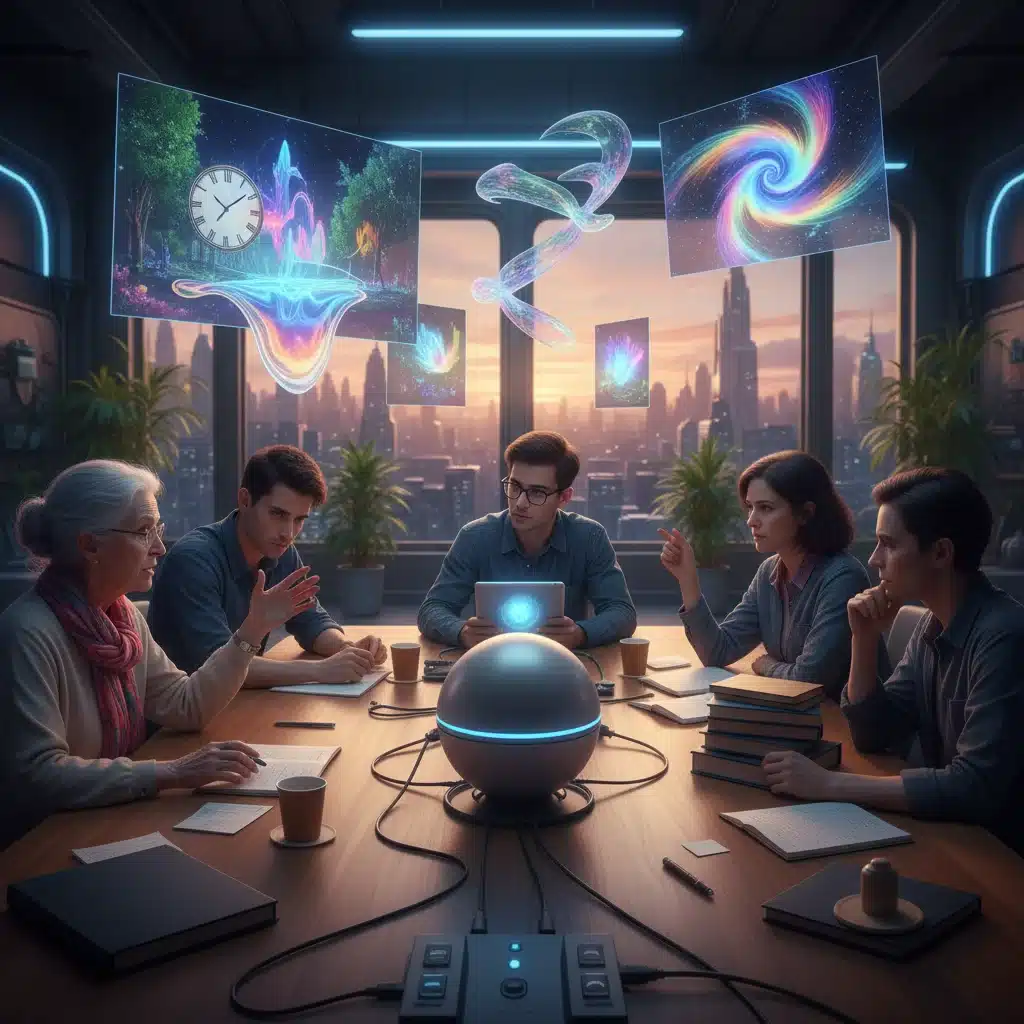
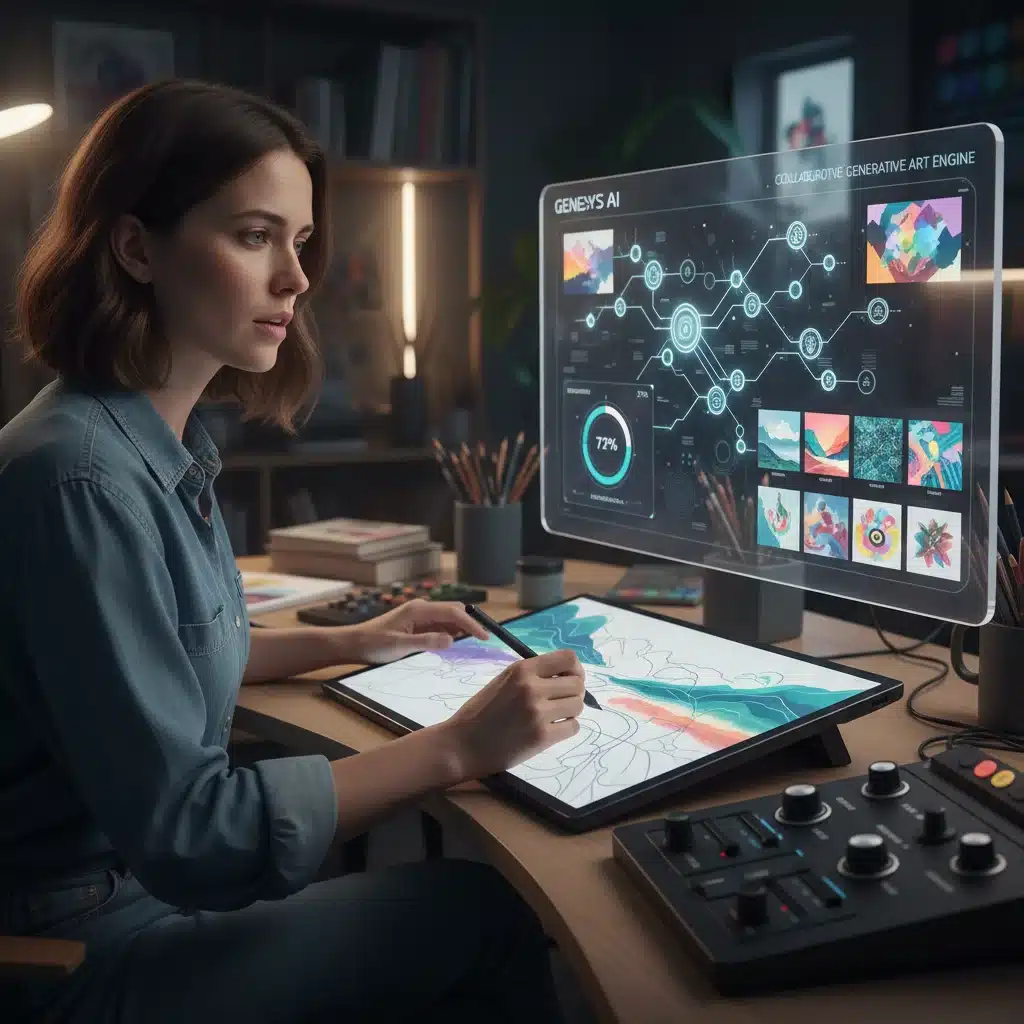
For many artists, AI is becoming a creative partner, offering new perspectives and capabilities. A sculptor might use AI to optimize material usage or explore complex geometries. A writer might employ AI to brainstorm plot ideas, develop character backstories, or even generate different stylistic variations of a text. This collaborative model empowers artists to push the boundaries of their craft, allowing them to focus on conceptualization and curation while the AI handles the execution of intricate details.
The beauty of this partnership lies in the synergy between human intuition and algorithmic power. The artist provides the vision and emotional intelligence, while the AI offers unparalleled computational ability and access to vast knowledge bases. This fusion holds immense promise for unlocking new levels of creative expression.
The Audience Experience: Engagement and Interpretation
The impact of AI in creative arts extends beyond the creators to fundamentally altering the audience experience. How we engage with, interpret, and value art is evolving as AI becomes more integrated into its production and presentation.
Personalized Art Experiences
AI can enable highly personalized art experiences. Imagine a generative music piece that adapts in real-time to a listener’s mood, or a digital art installation that responds to viewer interaction in unique ways. This level of personalization can foster deeper engagement and make art more accessible to diverse audiences.
However, this also raises questions about echo chambers and the potential for AI to narrow artistic exposure if algorithms only recommend what they predict a user will like, rather than introducing them to challenging or unfamiliar works. The AI Creative Arts Debate must consider how to balance personalization with the serendipity and discovery essential to a rich cultural experience.
Interpreting AI-Generated Meaning
When encountering AI-generated art, audiences are often confronted with a new challenge: how to interpret meaning without a clear human authorial intent. Does an AI-generated poem express emotion, or merely mimic it? Is a visually stunning AI painting beautiful in the same way a human-made one is, or is its beauty purely aesthetic without deeper resonance?
These questions invite audiences to engage with art on a different intellectual and emotional level, focusing more on the emergent properties of the work and their own subjective responses. It may even lead to new forms of art criticism and appreciation tailored to the unique characteristics of AI creations.
The Role of Education and Policy in Shaping the Future
As the AI Creative Arts Debate intensifies, the roles of education and public policy become increasingly critical. Preparing future generations of artists and ensuring a thriving, ethical creative ecosystem requires proactive measures.
Rethinking Art Education
Art education must adapt to incorporate AI tools and concepts. This means not just teaching students how to use AI software, but also fostering critical thinking about AI’s ethical implications, its potential biases, and its role in shaping cultural narratives. Future artists will need to be fluent in both traditional artistic skills and computational creativity, understanding how to harness AI as a powerful expressive medium.
Curricula should emphasize interdisciplinary collaboration, bringing together artists, computer scientists, philosophers, and ethicists to explore the complex intersections of technology and creativity. This holistic approach will equip students to navigate the evolving landscape of AI in art.
Developing Ethical Guidelines and Regulations
Governments, cultural institutions, and industry bodies are increasingly recognizing the need for robust ethical guidelines and, potentially, regulatory frameworks for AI in the arts. These might include:
- Transparency Requirements: Mandating disclosure when AI is used in the creation of an artwork.
- Copyright Reform: Updating intellectual property laws to address AI-generated content and the use of copyrighted material in training datasets.
- Artist Rights: Ensuring fair compensation for artists whose work is used to train AI models, and protecting human artists from unfair competition.
- Bias Auditing: Developing standards for auditing AI models for cultural, social, and aesthetic biases.
- Funding for Research: Supporting research into ethical AI development and its impact on the arts.
These policies aim to foster innovation while safeguarding human creativity, protecting artists’ livelihoods, and promoting a diverse and inclusive cultural sphere. The ongoing AI Creative Arts Debate is a crucial input for shaping these future policies.
Looking Ahead: 2026 and Beyond
As we stand in 2026, the discussion around AI in the creative arts is dynamic and multifaceted. It’s a conversation that spans technological innovation, artistic philosophy, economic realities, and ethical responsibilities. The initial shock and awe surrounding AI’s capabilities have given way to more nuanced discussions about integration, collaboration, and control.
The future of art will undoubtedly be shaped by AI, but not necessarily in a way that diminishes human creativity. Instead, it offers an unprecedented opportunity to expand the horizons of artistic expression, to challenge our preconceptions, and to forge new forms of beauty and meaning. The key lies in approaching this transformation with thoughtful consideration, fostering open dialogue, and prioritizing human values in the development and application of AI technologies.
The AI Creative Arts Debate isn’t just about technology; it’s about what it means to be human in an increasingly intelligent world, and how our innate drive to create will continue to evolve alongside our most powerful inventions. The journey is just beginning, and the canvas of the future is vast and exciting.