AI’s Psychological Impact on Consumers: 2026 Trust & Influence Data Revealed
The Psychological Impact of AI in Consumer Decisions: What 2026 Data Reveals About Trust and Influence (INSIDER KNOWLEDGE)
In an era increasingly defined by algorithms and intelligent automation, understanding the AI consumer psychology is no longer a luxury but a necessity. Artificial Intelligence has transcended its initial role as a mere technological tool, embedding itself deeply into the fabric of our daily lives, particularly in how we make purchasing decisions. From personalized recommendations on streaming platforms to AI-powered chatbots guiding our online shopping experiences, AI is a constant, often unseen, companion in our consumer journeys. The year 2026 marks a critical juncture, providing us with a wealth of data that illuminates the profound psychological shifts occurring within the consumer landscape. This article delves into the intricacies of these changes, offering insider knowledge on how AI influences trust, shapes preferences, and ultimately dictates buying behavior.
The ubiquity of AI means that every interaction, every suggestion, and every piece of content presented to a consumer is, in some way, touched by artificial intelligence. This pervasive presence creates a complex interplay between human cognition and algorithmic logic, leading to subtle yet significant alterations in how individuals perceive products, brands, and even their own needs. We are witnessing a fundamental re-calibration of consumer psychology, driven by the relentless evolution of AI capabilities.
The Evolution of Trust in AI-Driven Interactions
Trust, that elusive yet foundational element of any transaction, is undergoing a dramatic redefinition in the age of AI. For decades, consumer trust was built on human-to-human interactions, brand reputation, and verifiable product quality. Now, a significant portion of these interactions is mediated by AI. The 2026 data presents a fascinating, albeit sometimes contradictory, picture of how consumers perceive and extend their trust to AI systems. Early anxieties surrounding AI, often fueled by sensationalized media, are gradually giving way to a more nuanced acceptance, particularly when AI demonstrates tangible benefits.
One of the key findings from 2026 research indicates a bifurcation in consumer trust. On one hand, consumers are increasingly willing to trust AI for tasks requiring efficiency, data analysis, and personalization. For instance, AI-powered recommendation engines for movies, music, or products are largely embraced, with a significant majority reporting satisfaction with the relevance of suggestions. This suggests a functional trust, where the AI’s utility outweighs potential concerns about its autonomy or data handling. Consumers trust AI to optimize their choices, save them time, and present them with options they might not have discovered otherwise.
However, this functional trust often doesn’t translate into full emotional or ethical trust. When it comes to sensitive areas like financial advice, healthcare diagnoses, or highly personalized life decisions, consumer skepticism towards AI remains significantly higher. The fear of algorithmic bias, data breaches, or a lack of human empathy still acts as a considerable barrier. 2026 data shows that while 70% of consumers trust AI for product recommendations, only 35% would fully trust an AI to manage their entire investment portfolio without human oversight. This gap highlights a critical area for AI developers and businesses: understanding the boundaries of consumer comfort and building systems that address these inherent psychological reservations.
Building trust in AI is not merely about technological perfection; it’s about transparency and control. Consumers want to understand *how* AI makes its decisions, even if they don’t fully grasp the underlying algorithms. Explanations for recommendations, clear disclosures when interacting with an AI (e.g., ‘You are speaking with an AI assistant’), and robust data privacy policies are paramount. Brands that prioritize these elements are seeing significantly higher levels of trust and engagement. The psychological impact of AI on consumer decisions is intrinsically linked to how well businesses manage the transparency paradox: providing enough information to foster trust without overwhelming the user.
The Subtle Art of AI Influence: Shaping Preferences and Perceptions
Beyond mere recommendations, AI is becoming a master of subtle influence, shaping consumer preferences and perceptions in ways that were previously unimaginable. This influence operates on multiple psychological fronts, often without the consumer’s conscious awareness. The 2026 data provides compelling evidence of AI’s power to prime, persuade, and even predict consumer desires before they are fully formed.
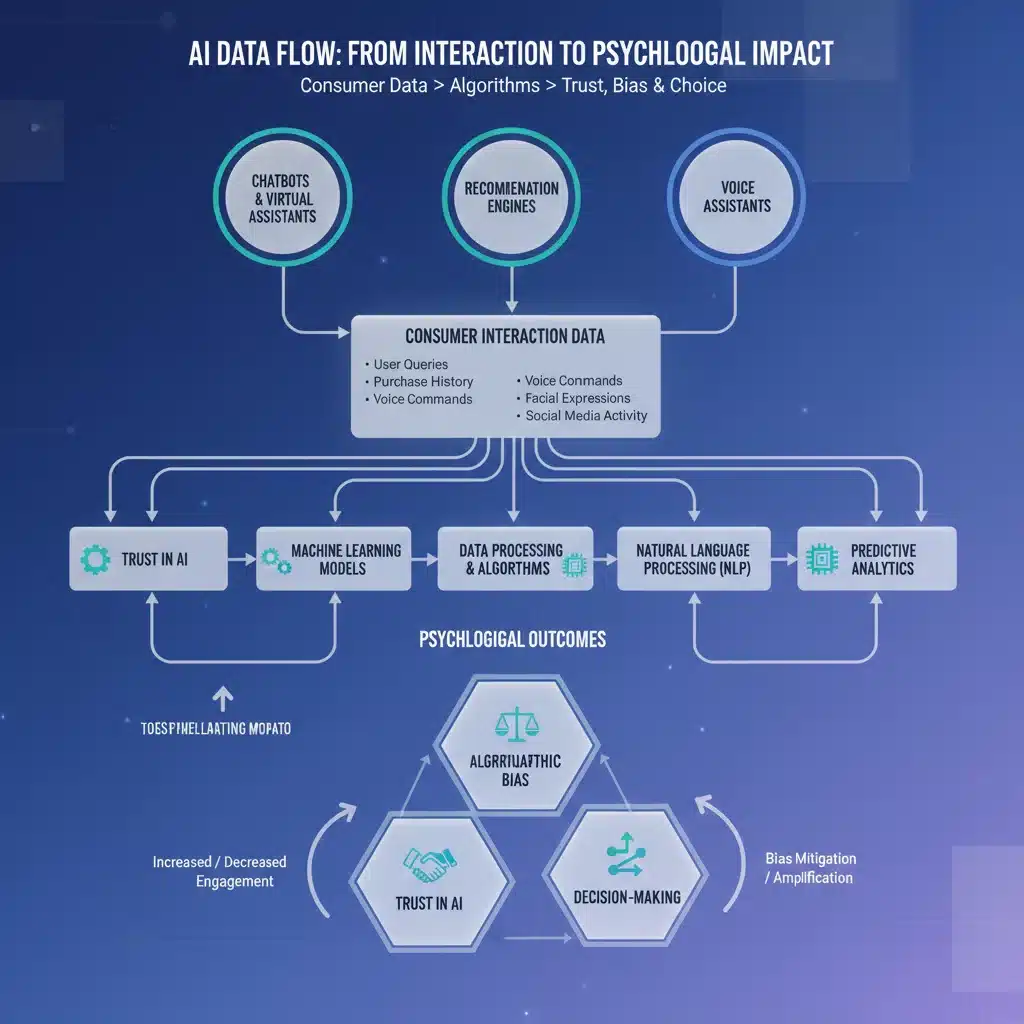
One primary mechanism of influence is personalization. AI algorithms analyze vast datasets of individual behavior – browsing history, purchase patterns, social media activity, even biometric data – to create highly accurate profiles. This allows AI to present products, services, and content that are meticulously tailored to individual tastes. The psychological effect is profound: consumers feel understood, catered to, and that their unique needs are being met. This sense of individualized attention fosters a stronger connection to brands and products, increasing loyalty and perceived value. The data indicates that consumers are more likely to purchase items recommended by AI when they perceive the recommendation as highly relevant and personalized, even if they understand it’s algorithmically generated.
Another powerful aspect of AI influence is its ability to create and reinforce cognitive biases. For example, confirmation bias can be exacerbated by AI systems that predominantly show content aligning with a user’s existing beliefs, creating echo chambers that reinforce preferences. While this can lead to satisfying user experiences in entertainment, it can also limit exposure to diverse options in commerce, subtly guiding consumers towards certain brands or product categories. The 2026 analysis reveals that consumers exposed to highly curated, AI-driven feeds show a statistically significant decrease in exploring alternative brands outside their established preferences.
Furthermore, AI-driven dynamic pricing and personalized promotions exert a strong psychological pull. By understanding a consumer’s price sensitivity, willingness to pay, and even their emotional state (through sentiment analysis of interactions), AI can present offers designed to maximize conversion. This isn’t just about offering discounts; it’s about timing the offer perfectly, framing it in a way that resonates with the individual’s perceived needs, and creating a sense of urgency. The psychological impact of AI on consumer decisions here is about optimizing the moment of truth, leveraging insights into individual motivation and behavior.
The Role of AI in Decision-Making Heuristics and Biases
Human decision-making is often guided by heuristics – mental shortcuts that allow us to make quick judgments without extensive cognitive effort. AI is increasingly interacting with these heuristics, sometimes enhancing them, sometimes exploiting them. Understanding this interaction is crucial for comprehending the full scope of AI consumer psychology.
Consider the availability heuristic, where people overestimate the likelihood of events that are easily recalled. AI-powered search engines and recommendation systems can significantly influence what information is readily available, thereby shaping perceived probabilities and importance. If an AI consistently surfaces certain brands or products, those items become more ‘available’ in the consumer’s mind, increasing their perceived prominence and desirability. 2026 data shows a direct correlation between AI search ranking and consumer recall, demonstrating AI’s power to shape the mental landscape of choice.
The anchoring effect, where an initial piece of information (the ‘anchor’) influences subsequent judgments, is another area where AI exerts considerable power. AI can strategically present a high-priced item first, making subsequent, more reasonably priced options seem like a better deal. Similarly, AI can highlight a ‘most popular’ or ‘best-selling’ label, anchoring consumer perception to these social proofs. The psychological impact of AI on consumer decisions leverages these innate cognitive tendencies to guide choices towards desired outcomes.
However, AI also introduces new forms of bias. Algorithmic bias, stemming from biased training data or flawed algorithms, can perpetuate and amplify existing societal inequalities. If an AI system is trained on data reflecting historical biases in lending, for example, it might unfairly deny loans to certain demographic groups. Consumers interacting with such systems may internalize these biases, leading to skewed perceptions of fairness and access. The 2026 reports emphasize the growing need for ethical AI development and auditing to mitigate these detrimental psychological effects and ensure equitable consumer experiences.
AI and Emotional Resonance: Beyond Rationality
While often perceived as purely logical entities, AI systems are becoming increasingly adept at understanding and even evoking human emotions. This capability adds another layer of complexity to AI consumer psychology, moving beyond rational decision-making into the realm of emotional resonance.
Sentiment analysis, a core AI capability, allows systems to gauge a consumer’s emotional state from text, voice, or even facial expressions. This enables AI to tailor interactions, product suggestions, and customer service responses to match the user’s mood. A consumer expressing frustration might be immediately routed to a human agent or offered a conciliatory gesture, while a happy customer might be encouraged to share their positive experience. The psychological impact of AI on consumer decisions here is about creating a more empathetic and responsive brand experience, fostering positive emotional associations.
Furthermore, AI is being used to craft highly emotionally resonant marketing messages. By analyzing successful campaigns and consumer responses, AI can identify patterns in language, imagery, and narrative that evoke specific emotions – joy, nostalgia, aspiration, or even fear (in a protective context). This allows brands to create hyper-targeted advertising that speaks directly to the emotional core of individual consumers, bypassing purely rational considerations. The 2026 data reveals a significant uplift in conversion rates for emotionally targeted AI-driven campaigns compared to generic ones.
However, this emotional manipulation raises ethical questions. When AI becomes too effective at tapping into our emotional vulnerabilities, there’s a risk of exploitation. Consumers might be nudged into purchases they don’t truly need or want, driven by expertly crafted emotional triggers. The line between helpful personalization and manipulative persuasion becomes increasingly blurred, necessitating robust ethical guidelines and consumer education on how AI influences emotional responses.
The Future of Consumer Autonomy in an AI-Dominated Landscape
As AI continues to evolve, a critical question emerges: what happens to consumer autonomy? If AI is so adept at predicting and influencing our desires, how much free will do we truly exercise in our purchasing decisions? The 2026 data provides initial glimpses into this evolving dynamic, suggesting a complex interplay between convenience and control.
On one hand, AI offers unprecedented convenience. Automated purchasing based on predictive analytics (e.g., smart refrigerators ordering groceries), proactive service delivery, and effortless discovery of products can significantly reduce cognitive load and save time. Many consumers are willing to cede some autonomy for these benefits, especially in routine or low-stakes decisions. The psychological impact of AI on consumer decisions in this context is largely positive, fostering a sense of ease and efficiency.
On the other hand, there’s a growing awareness and concern among a segment of consumers about the potential erosion of choice and critical thinking. If AI consistently curates our options, do we lose the ability to explore, discover, and critically evaluate alternatives independently? Some consumers report feeling ‘stuck’ in algorithmic bubbles, where their preferences are reinforced rather than expanded. This concern is particularly prevalent among younger demographics who are more tech-savvy and aware of algorithmic influence.
The insider knowledge from 2026 indicates that successful businesses in the coming years will be those that strike a delicate balance. They will leverage AI for personalization and efficiency but also empower consumers with tools for greater control and transparency. This might include dashboards that show how AI recommendations are generated, options to ‘reset’ algorithmic profiles, or features that actively introduce diverse product categories. Fostering a sense of agency, even within an AI-driven ecosystem, will be crucial for maintaining long-term consumer trust and loyalty.

Navigating the Ethical Imperatives of AI in Consumer Decisions
The profound psychological impact of AI on consumer decisions brings with it significant ethical imperatives. As AI becomes more sophisticated, the responsibility of developers, businesses, and policymakers to ensure its ethical deployment grows exponentially. The 2026 data highlights several areas where ethical considerations are paramount.
Data Privacy and Security: The foundation of AI’s personalization capabilities is vast amounts of consumer data. Ensuring the privacy and security of this data is not just a regulatory requirement but a psychological prerequisite for trust. Data breaches erode trust immediately and deeply, leading to widespread consumer backlash. Ethical AI practices demand robust encryption, transparent data usage policies, and giving consumers clear control over their data.
Algorithmic Fairness and Bias: As discussed, AI can perpetuate and amplify biases. Ethical AI development requires rigorous testing for fairness across different demographic groups and proactive measures to mitigate bias in training data and algorithms. The psychological harm caused by biased AI – from discriminatory pricing to unequal access to services – can be substantial and long-lasting.
Transparency and Explainability: Consumers deserve to understand when and how AI is influencing their decisions. ‘Black box’ AI systems, where the decision-making process is opaque, foster distrust. Ethical AI strives for explainability, providing insights into why a particular recommendation was made or why a specific price was offered. This transparency empowers consumers and helps them make more informed choices.
Preventing Manipulation vs. Personalization: The fine line between helpful personalization and manipulative persuasion is a constant ethical challenge. Ethical AI usage means focusing on enhancing the consumer experience and providing value, rather than exploiting cognitive vulnerabilities for short-term gains. This requires careful consideration of the psychological effects of AI designs and a commitment to not intentionally mislead or coerce consumers.
Consumer Education: Empowering consumers to navigate an AI-driven world is also an ethical imperative. Educating the public about how AI works, its benefits, its limitations, and how to protect their data and autonomy is crucial. Informed consumers are better equipped to make conscious decisions and interact with AI more critically.
Conclusion: The Future of AI Consumer Psychology
The psychological impact of AI on consumer decisions is a dynamic and ever-evolving field. The 2026 data provides invaluable insights, revealing a landscape where AI is not just a tool for efficiency but a powerful force shaping trust, preferences, and fundamental decision-making processes. As AI continues its relentless march forward, understanding AI consumer psychology will be the bedrock upon which successful businesses are built and ethical frameworks are established.
For businesses, the message is clear: embrace AI not just for its technological prowess, but with a deep understanding of its psychological implications. Prioritize transparency, build trust through responsible data handling, and aim for personalization that truly serves the consumer, rather than merely extracting value from them. For consumers, the challenge lies in cultivating critical awareness, understanding the subtle influences at play, and actively seeking control over their digital experiences.
The future of commerce, and indeed society, will be profoundly shaped by how we navigate this complex interplay between human psychology and artificial intelligence. The insights from 2026 are not just data points; they are a roadmap for a future where AI can enhance, rather than diminish, the human experience of consumption.