Hyper-Personalization 2026: Boost Engagement 20% with Data-Driven Strategies

In the rapidly evolving digital landscape, the phrase “one size fits all” has become a relic of the past. Today’s consumers expect, and indeed demand, experiences tailored specifically to their individual needs, preferences, and behaviors. This isn’t just about addressing them by name; it’s about anticipating their next move, understanding their unspoken desires, and delivering exactly what they need, often before they even realize they need it. This profound shift is encapsulated by the concept of hyper-personalization, a strategic imperative that is no longer a luxury but a necessity for businesses aiming to thrive in 2026 and beyond.
The promise of hyper-personalization strategies 2026 is not merely incremental improvement; it’s about achieving transformative growth. Industry leaders and forward-thinking businesses are setting ambitious targets, with many aiming for a staggering 20% increase in customer engagement through sophisticated, data-driven hyper-personalization efforts. This isn’t a pipe dream; it’s an achievable goal, grounded in advancements in artificial intelligence (AI), machine learning (ML), big data analytics, and real-time processing. The journey to unlocking this potential requires a deep dive into practical solutions, a strategic overhaul of existing customer interaction models, and a commitment to continuous innovation.
This comprehensive guide will explore the multifaceted world of hyper-personalization strategies 2026. We will dissect the core components that drive its success, illuminate the cutting-edge technologies enabling its implementation, and provide actionable insights for businesses to not only meet but exceed their engagement targets. From leveraging predictive analytics to crafting dynamic content and orchestrating seamless omnichannel experiences, we will chart the course for achieving that coveted 20% boost in customer engagement. Prepare to transform your understanding of customer relationships and equip your business with the tools to dominate the personalized experience economy.
What is Hyper-Personalization and Why Does it Matter for 2026?
Before we delve into the practicalities of hyper-personalization strategies 2026, it’s crucial to define what hyper-personalization truly entails and distinguish it from traditional personalization. While personalization focuses on tailoring experiences based on broad segments or basic user data (like name or past purchases), hyper-personalization takes this to an entirely new level. It involves leveraging real-time data, advanced analytics, AI, and machine learning to deliver highly relevant, individualized content, products, and services at every single customer touchpoint, often proactively.
The Evolution from Personalization to Hyper-Personalization
- Basic Personalization: “Hello [Customer Name]!” or product recommendations based on a single past purchase.
- Advanced Personalization: Segmenting customers into groups based on demographics, browsing history, or purchase behavior, and sending targeted emails or showing relevant ads.
- Hyper-Personalization: Understanding the individual customer’s context, intent, emotional state (where discernible), and predicting their needs in real-time. This includes dynamic website content, personalized product bundles, tailored offers, and proactive customer service interventions based on a holistic view of their journey.
Why the Urgency for 2026?
The shift towards hyper-personalization strategies 2026 is driven by several critical factors:
- Exploding Data Volume: The sheer amount of customer data available today is unprecedented. Businesses that can effectively collect, process, and act on this data gain a significant competitive edge.
- Rising Customer Expectations: Consumers, accustomed to highly personalized experiences from tech giants, now expect the same level of individual attention from every brand they interact with. Generic experiences leads to disengagement and churn.
- Competitive Differentiation: In crowded markets, hyper-personalization is a powerful differentiator. It fosters deeper customer relationships, builds loyalty, and creates a unique brand identity that resonates with individuals.
- Technological Advancements: The maturation of AI, machine learning, predictive analytics, and cloud computing has made hyper-personalization scalable and economically viable for a wider range of businesses.
- Increased ROI: Studies consistently show that hyper-personalized experiences lead to higher conversion rates, increased customer lifetime value (CLTV), and reduced marketing spend wastage. The 20% engagement increase target is a direct reflection of this potential.
By 2026, businesses that fail to adopt robust hyper-personalization strategies 2026 will find themselves struggling to compete, losing market share to agile, customer-centric organizations. The time to invest in and implement these strategies is now.
The Data Foundation: Fueling Hyper-Personalization
At the heart of any successful hyper-personalization strategy 2026 lies a robust and intelligent data foundation. Without high-quality, comprehensive, and actionable data, hyper-personalization remains an elusive goal. It’s not just about collecting data; it’s about unifying it, cleaning it, analyzing it, and extracting meaningful insights that can drive personalized interactions.
Key Data Sources for Hyper-Personalization
To build a 360-degree view of your customer, you need to integrate data from various sources:
- Behavioral Data: Website clicks, page views, search queries, app usage, video consumption, time spent on pages, scroll depth, shopping cart abandonment.
- Transactional Data: Purchase history, order frequency, average order value, product categories purchased, returns, payment methods.
- Demographic Data: Age, gender, location, income level (where available and ethically sourced).
- Psychographic Data: Interests, hobbies, values, lifestyle choices, opinions (often inferred from behavioral data or surveys).
- Interaction Data: Email opens and clicks, chat transcripts, customer service interactions, social media engagement, survey responses.
- Contextual Data: Device type, operating system, browser, time of day, weather (for location-based services), current events.
Unifying and Managing Customer Data
The challenge often isn’t collecting data, but rather unifying it from disparate systems. This is where Customer Data Platforms (CDPs) become indispensable for hyper-personalization strategies 2026.
- Customer Data Platforms (CDPs): CDPs are designed to ingest, unify, and store customer data from all sources to create a persistent, unified customer profile. Unlike CRMs (which focus on managing customer relationships) or DMPs (which focus on anonymous audience segments), CDPs build a comprehensive, individual-level customer record that can be activated across various marketing and service channels.
- Data Warehousing & Lakehouses: For larger enterprises, data warehouses or modern data lakehouses provide the infrastructure to store vast amounts of structured and unstructured data, enabling complex analytical queries essential for hyper-personalization.
- Data Governance and Privacy: With increased data collection comes increased responsibility. Adhering to regulations like GDPR, CCPA, and future privacy laws is paramount. Ethical data collection, transparent usage policies, and robust security measures build trust and prevent reputational damage.
The Role of First-Party Data
As third-party cookies face deprecation, first-party data becomes the gold standard for hyper-personalization strategies 2026. This data, collected directly from your customers with their consent, is more accurate, reliable, and provides deeper insights into their behavior and preferences on your owned properties. Strategies for maximizing first-party data include:
- Encouraging account creation.
- Implementing loyalty programs.
- Offering valuable content in exchange for email sign-ups.
- Conducting surveys and polls.
- Utilizing website analytics and CRM systems effectively.
A solid data foundation is not just about quantity; it’s about quality, accessibility, and the ability to translate raw data into actionable intelligence. This intelligence is what powers the next generation of hyper-personalized experiences.
Leveraging AI and Machine Learning for Predictive Hyper-Personalization
The true power of hyper-personalization strategies 2026 is unleashed through the intelligent application of Artificial Intelligence (AI) and Machine Learning (ML). These technologies move beyond reactive personalization to proactive, predictive personalization, anticipating customer needs and delivering solutions before they are explicitly requested.
Predictive Analytics: Knowing Your Customer’s Next Move
Predictive analytics, powered by ML algorithms, is the cornerstone of advanced hyper-personalization. By analyzing historical data and identifying patterns, these algorithms can forecast future customer behavior, such as:
- Purchase Propensity: Predicting which products a customer is likely to buy next, when they might purchase, and at what price point.
- Churn Prediction: Identifying customers at risk of leaving, allowing for proactive retention efforts.
- Customer Lifetime Value (CLTV) Prediction: Estimating the long-term value of a customer, enabling businesses to allocate resources effectively.
- Next Best Action (NBA): Recommending the most appropriate action or offer for a customer at any given moment, across any channel.
Dynamic Content and Product Recommendations
AI-driven engines are crucial for delivering dynamic content and highly relevant product recommendations in real-time. These systems go beyond simple ‘customers who bought this also bought…’ to consider a multitude of factors:
- Contextual Relevance: Adjusting recommendations based on time of day, location, device, and even current events.
- Behavioral History: Deep analysis of past browsing, search, and purchase patterns.
- Similarity to Other Users: Collaborative filtering identifies users with similar tastes and recommends items they have enjoyed.
- Real-time Interactions: Modifying recommendations instantly based on a customer’s current session activity.
Examples include:
- E-commerce sites displaying personalized homepages and product grids.
- Streaming services suggesting movies and shows based on viewing habits and mood.
- News outlets curating article feeds based on reading preferences.
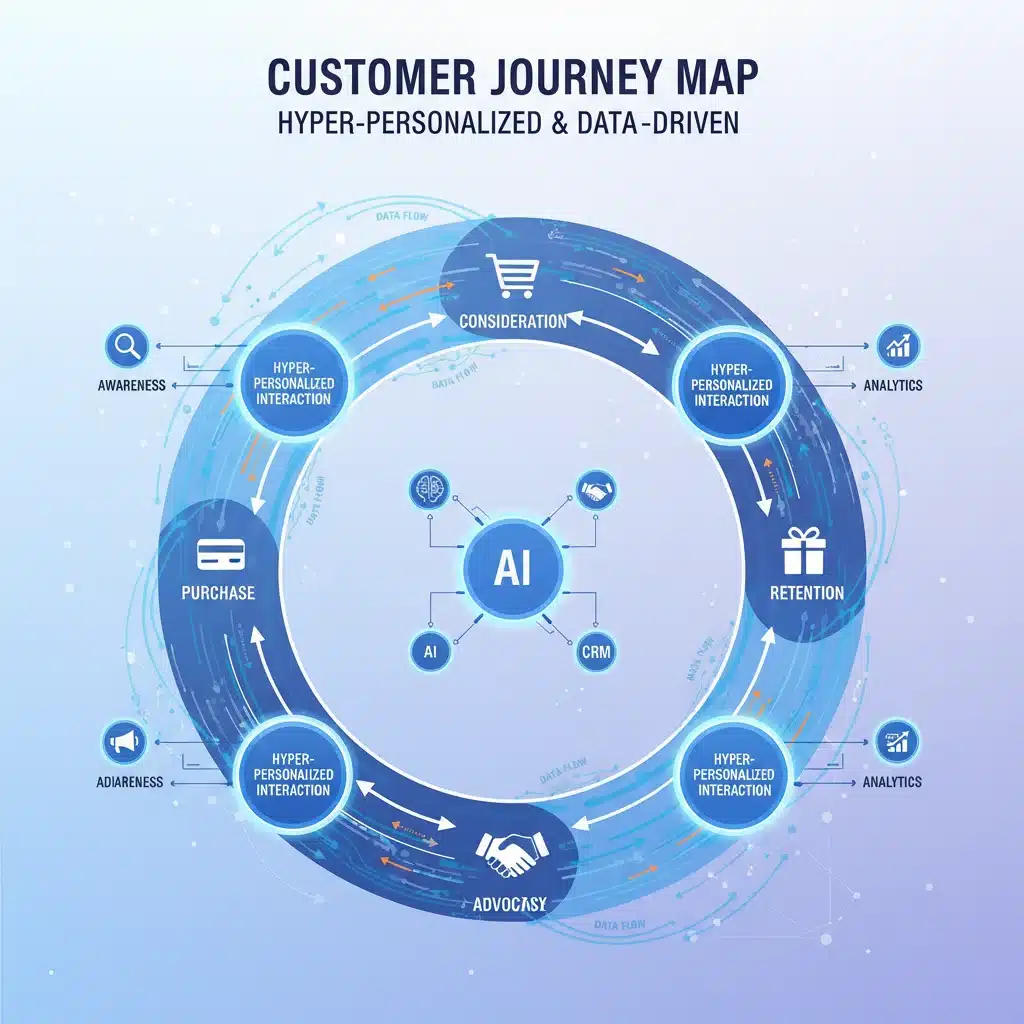
AI-Powered Personalization in Marketing Automation
Marketing automation platforms, integrated with AI, can orchestrate complex hyper-personalized journeys:
- Personalized Email Campaigns: Sending emails with subject lines, content, and offers tailored to individual recipients, triggered by specific behaviors (e.g., cart abandonment, product view, milestone).
- Dynamic Landing Pages: Presenting different versions of a landing page to visitors based on their source, previous interactions, or demographic profile.
- Optimized Ad Targeting: Using AI to identify the most receptive audiences for specific ad creatives and delivering them at the optimal time on the most effective platforms.
Natural Language Processing (NLP) for Enhanced Interactions
NLP, a branch of AI, plays a vital role in understanding and generating human language, enabling more natural and personalized interactions:
- Chatbots and Virtual Assistants: AI-powered chatbots can provide instant, personalized support, answer complex queries, and even guide customers through purchasing decisions, learning from each interaction.
- Sentiment Analysis: Analyzing customer feedback (reviews, social media posts, chat transcripts) to gauge sentiment and quickly address negative experiences or capitalize on positive ones.
- Personalized Content Generation: In the future, AI might even assist in generating personalized content at scale, adapting tone and style to individual preferences.
Embracing AI and ML is not just about adopting new tools; it’s about fundamentally changing how businesses understand and interact with their customers, making hyper-personalization strategies 2026 truly intelligent and impactful.
Practical Solutions for Implementing Hyper-Personalization
Moving from theory to practice requires a structured approach and the right toolkit. Implementing hyper-personalization strategies 2026 demands careful planning, technological investment, and a cultural shift within the organization.
1. Build a Unified Customer Profile with a CDP
As discussed, a Customer Data Platform (CDP) is foundational. It acts as the central nervous system for all customer data. Invest in a CDP that offers:
- Real-time Data Ingestion: Ability to collect data from all online and offline touchpoints as it happens.
- Identity Resolution: Advanced capabilities to stitch together fragmented customer identities across devices and channels into a single, persistent profile.
- Segmentation & Activation: Tools to create dynamic segments and activate these segments across various marketing and service platforms.
- Integration Capabilities: Seamless integration with your existing CRM, marketing automation, e-commerce, and analytics tools.
2. Implement Real-time Analytics and Decisioning Engines
Hyper-personalization thrives on immediacy. Real-time analytics platforms and decisioning engines are crucial for acting on insights instantly:
- Event Streaming Platforms: Technologies like Apache Kafka can process vast streams of data in real-time, enabling immediate reactions to customer behaviors.
- Recommendation Engines: Deploy AI-powered recommendation engines on your website, app, and email platforms to deliver relevant product/content suggestions in milliseconds.
- Personalization Platforms: Utilize dedicated personalization platforms that can dynamically alter website content, offers, and calls-to-action based on individual user profiles and real-time context.
3. Develop Dynamic Content and Offer Strategies
Generic content is the enemy of hyper-personalization. Focus on creating modular, adaptable content that can be assembled and delivered dynamically:
- Content Atomization: Break down content into smaller, reusable components (e.g., product descriptions, images, testimonials, blog snippets) that can be dynamically combined.
- A/B Testing and Multivariate Testing: Continuously test different personalized elements (headlines, images, CTAs, offers) to understand what resonates best with specific customer segments.
- Personalized Product Bundling: Use AI to suggest complementary products or services that align with a customer’s past purchases and predicted future needs.
- Tiered Loyalty Programs: Create personalized loyalty programs with rewards and benefits tailored to individual customer value and preferences.
4. Orchestrate Omnichannel Experiences
Customers interact with brands across multiple channels. Hyper-personalization strategies 2026 must ensure a consistent, personalized experience regardless of the touchpoint:
- Seamless Handoffs: Ensure that customer context and preferences are carried over from one channel to another (e.g., from website chat to phone support, or from email to in-app notification).
- Personalized Notifications: Deliver timely and relevant notifications via email, SMS, push notifications, or in-app messages based on user behavior and preferences.
- In-Store Personalization: Integrate online and offline data to offer personalized experiences in physical stores, such as targeted promotions via mobile apps or personalized assistance from sales associates equipped with customer profiles.
5. Embrace AI-Powered Customer Service
Customer service is a critical touchpoint for hyper-personalization:
- Intelligent Chatbots: Deploy chatbots that can not only answer FAQs but also proactively offer solutions, suggest relevant products, and escalate complex issues to human agents with full context.
- Agent Assist Tools: Provide customer service agents with AI-powered tools that offer real-time customer insights, recommended responses, and next best actions during interactions.
- Personalized Self-Service: Offer knowledge bases and FAQs that are dynamically personalized based on a customer’s profile and past queries.
6. Foster a Data-Driven Culture
Technology alone isn’t enough. For hyper-personalization strategies 2026 to succeed, your organization needs to embrace a data-driven mindset:
- Cross-Functional Collaboration: Break down silos between marketing, sales, customer service, and product development to ensure a unified view of the customer.
- Training and Upskilling: Invest in training employees on data literacy, AI tools, and the principles of hyper-personalization.
- Leadership Buy-in: Secure strong leadership commitment to champion hyper-personalization as a core business strategy.
By systematically implementing these practical solutions, businesses can lay the groundwork for achieving and sustaining a 20% increase in customer engagement through hyper-personalization.
Measuring Success: KPIs for 20% Engagement Increase
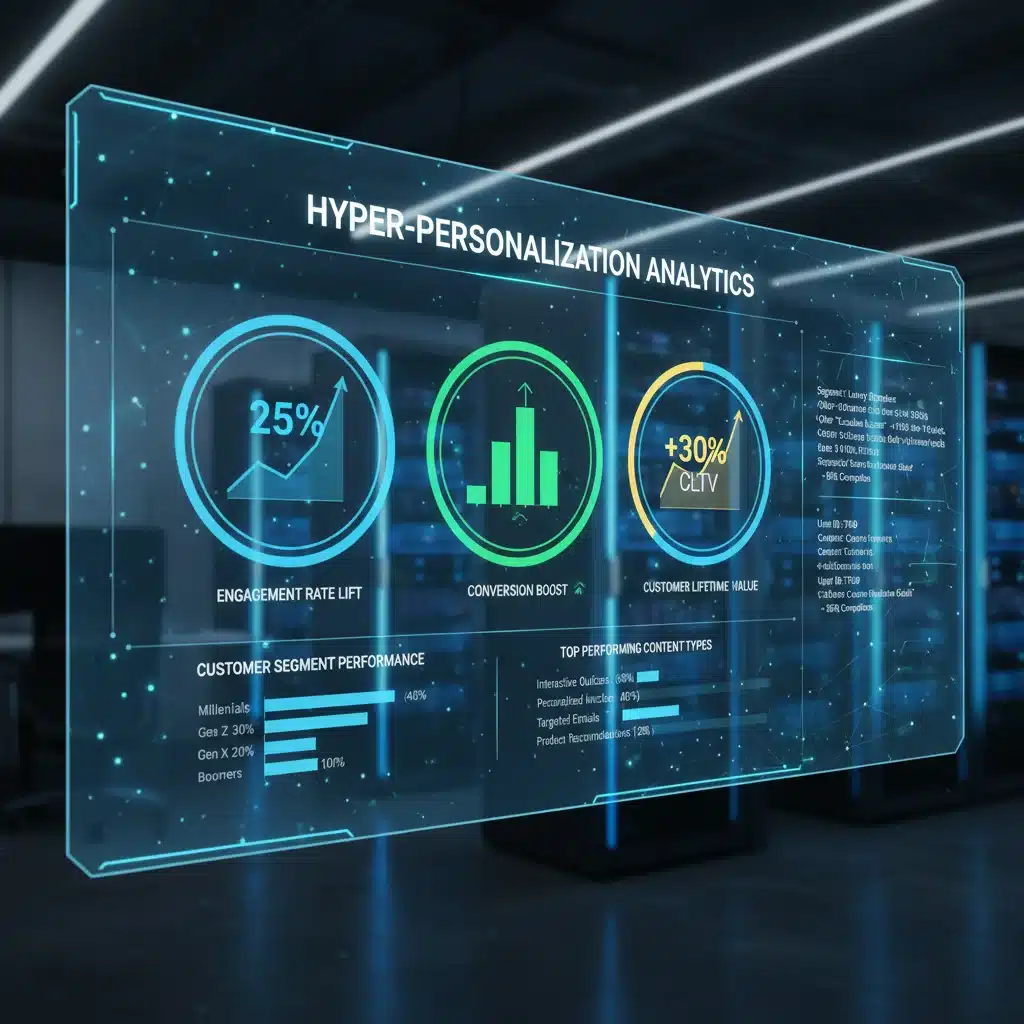
Setting an ambitious goal of a 20% increase in customer engagement through hyper-personalization strategies 2026 requires a robust framework for measurement. Without clear Key Performance Indicators (KPIs) and continuous monitoring, it’s impossible to gauge effectiveness and optimize efforts.
Core Engagement Metrics to Track
- Increased Click-Through Rates (CTR): For personalized emails, ads, and website elements. A higher CTR indicates that the content is more relevant and appealing.
- Higher Conversion Rates: For personalized product recommendations, offers, and calls-to-action. This is a direct measure of the impact on revenue.
- Reduced Bounce Rate/Increased Time on Site: On personalized landing pages and website sections, indicating that users are finding the content more relevant and engaging.
- Improved Email Open Rates: For personalized email campaigns, showing that subject lines and sender reputation are resonating.
- Increased Repeat Purchases/Order Frequency: A key indicator of customer loyalty and satisfaction driven by personalized experiences.
- Higher Customer Lifetime Value (CLTV): The ultimate measure of long-term customer relationships, directly influenced by sustained engagement and satisfaction.
- Reduced Customer Churn Rate: Hyper-personalization can proactively address customer pain points and provide tailored solutions, thereby reducing the likelihood of customers leaving.
- Increased Social Media Engagement: If personalized content is shared or discussed more frequently.
- Positive Sentiment & Brand Perception: Measured through sentiment analysis of reviews, social media, and direct feedback.
Attribution and A/B Testing
To definitively link your hyper-personalization efforts to engagement increases, you need strong attribution models and rigorous testing:
- Multi-Touch Attribution: Understand how different personalized touchpoints contribute to the overall customer journey and conversion.
- A/B Testing and Control Groups: Always run experiments comparing personalized experiences against generic ones. This allows you to quantify the uplift generated by your hyper-personalization strategies 2026. For example, show a personalized product recommendation to one group and a generic one to another, then compare conversion rates.
- Cohort Analysis: Track the behavior of customer cohorts (groups of customers acquired around the same time or under similar conditions) to see how personalization impacts their long-term engagement.
The 20% Engagement Goal: A Holistic View
Achieving a 20% engagement increase isn’t about moving one metric by 20%; it’s about a holistic improvement across multiple KPIs that collectively signify deeper customer relationships. This might mean:
- A 5% increase in email CTR.
- A 10% increase in website conversion rates for specific personalized sections.
- A 15% reduction in churn for at-risk segments.
- A 25% increase in repeat purchase frequency for top-tier customers.
When aggregated and analyzed, these individual improvements contribute to the overarching goal. Regular reporting, dashboard visualization, and iterative optimization based on these metrics are essential for sustained success in your hyper-personalization strategies 2026.
Challenges and Ethical Considerations in Hyper-Personalization
While the benefits of hyper-personalization strategies 2026 are immense, businesses must navigate several challenges and ethical considerations to build trust and ensure long-term success.
Technical and Implementation Challenges
- Data Silos and Integration: Unifying data from disparate systems remains a significant hurdle for many organizations.
- Data Quality and Accuracy: Hyper-personalization is only as good as the data it’s built upon. Inaccurate or incomplete data can lead to irrelevant or even offensive experiences.
- Scalability: Delivering hyper-personalized experiences to millions of customers in real-time requires robust, scalable infrastructure and advanced processing capabilities.
- Talent Gap: A shortage of skilled data scientists, AI engineers, and personalization strategists can hinder implementation.
- Cost of Technology: Investing in CDPs, AI/ML platforms, and real-time decisioning engines can be substantial.
Ethical and Privacy Concerns
The line between helpful personalization and intrusive surveillance is fine. Businesses must tread carefully to avoid alienating customers:
- Data Privacy: Adhering to evolving global data privacy regulations (GDPR, CCPA, etc.) is non-negotiable. Transparency in data collection and usage is paramount.
- Transparency and Consent: Customers should understand what data is being collected and how it’s being used. Explicit consent, especially for sensitive data, is crucial.
- Algorithmic Bias: AI algorithms can inadvertently perpetuate or amplify existing biases present in the training data, leading to discriminatory or unfair personalized experiences. Regular auditing and ethical AI development are essential.
- “Creepy” Factor: Overly precise personalization can feel intrusive or unsettling. Businesses must find the right balance, focusing on adding value rather than demonstrating an uncanny knowledge of personal details.
- Filter Bubbles and Echo Chambers: While tailoring content, ensure that hyper-personalization doesn’t inadvertently limit customers’ exposure to diverse ideas or products, potentially stifling discovery.
- Security Breaches: Holding vast amounts of customer data makes businesses prime targets for cyberattacks. Robust cybersecurity measures are vital to protect sensitive information.
Building Trust through Responsible Personalization
To overcome these challenges and build trust, businesses should:
- Prioritize Privacy by Design: Integrate privacy considerations into every stage of your hyper-personalization strategy.
- Offer Control: Give customers easy-to-understand options to manage their data preferences and opt-out of certain types of personalization.
- Focus on Value Exchange: Ensure that the personalized experience genuinely benefits the customer, making the data exchange feel worthwhile.
- Communicate Clearly: Explain how personalization enhances their experience and what data is used to achieve this.
- Regular Audits: Continuously review your personalization algorithms and data practices for fairness, bias, and compliance.
Addressing these challenges head-on will not only mitigate risks but also strengthen customer loyalty, making your hyper-personalization strategies 2026 more sustainable and impactful.
The Future of Hyper-Personalization: Beyond 2026
As we look beyond 2026, the trajectory of hyper-personalization strategies 2026 points towards even more sophisticated, immersive, and ethically conscious experiences. The goal of a 20% engagement increase is just a stepping stone towards a future where every customer interaction is uniquely crafted and deeply meaningful.
Emerging Technologies and Trends
- Emotional AI and Sentiment Analysis: More advanced AI will be able to detect and respond to customer emotions in real-time, tailoring interactions to their current mood or state. This could lead to more empathetic customer service and adaptive content.
- Metaverse and Immersive Experiences: As the metaverse matures, hyper-personalization will extend to virtual worlds. Avatars, virtual environments, and digital products will be dynamically customized based on individual preferences and behaviors within these immersive spaces.
- Edge AI and On-Device Personalization: Processing data closer to the source (on devices) will enable faster, more private, and highly localized personalization, reducing reliance on cloud-based systems for some functions.
- Proactive and Anticipatory Services: The ultimate frontier is moving from predicting needs to proactively fulfilling them. Imagine a smart home system ordering groceries when supplies are low, or a car pre-heating based on your typical departure time and weather conditions, all tailored to your personal habits.
- Ethical AI and Trust by Design: As personalization becomes more pervasive, the emphasis on ethical AI frameworks, transparent algorithms, and user control over data will intensify. Trust will be the most valuable currency.
- Hyper-Personalized Product Development: Beyond marketing and service, hyper-personalization will increasingly influence product development itself, leading to highly customized products and services built-to-order based on individual specifications.
The Human Element Remains Crucial
Despite the technological advancements, the human element will remain vital. AI and data are tools to enhance human connection, not replace it. Businesses that excel will be those that:
- Combine AI with Human Empathy: Use AI to handle routine tasks and provide insights, freeing human agents to focus on complex, emotionally nuanced interactions.
- Foster Creativity: Leverage AI to generate ideas and insights, but rely on human creativity to craft compelling narratives and truly innovative experiences.
- Maintain Personal Touchpoints: Understand when a human interaction is more valuable than an automated one, even in a hyper-personalized world.
The future of hyper-personalization strategies 2026 and beyond is not just about technology; it’s about a philosophical commitment to understanding and serving the individual customer at an unprecedented level. Those who master this art and science will redefine customer engagement and build enduring relationships in the digital age.
Conclusion: Embracing the Hyper-Personalization Imperative for 2026
The journey to achieving a 20% increase in customer engagement by 2026 through hyper-personalization strategies 2026 is both challenging and immensely rewarding. It demands a strategic vision, a robust data infrastructure, the intelligent application of AI and machine learning, and a steadfast commitment to ethical practices. This isn’t merely an upgrade to existing marketing tactics; it’s a fundamental reimagining of the customer relationship.
We’ve explored the critical components: building a unified customer profile with CDPs, leveraging predictive analytics and AI for dynamic content and recommendations, orchestrating seamless omnichannel experiences, and integrating AI into customer service. Crucially, we’ve also emphasized the importance of measuring success through a suite of relevant KPIs and navigating the ethical landscape with transparency and trust.
The businesses that embrace this hyper-personalization imperative will not only meet their ambitious engagement targets but will also cultivate deeper loyalty, higher customer lifetime value, and a significant competitive advantage. The future of customer engagement is personalized, proactive, and profoundly intelligent. Are you ready to lead the charge?