5G Innovations 2026: Small Business Growth in the US

Unpacking the Latest 5G Innovations for Small Businesses Across the US: What’s New for 2026?
The digital landscape is in a constant state of flux, and at its forefront, 5G technology continues to evolve at an unprecedented pace. For small businesses across the United States, the upcoming year 2026 promises a wave of transformative 5G innovations that will redefine operational efficiency, customer engagement, and competitive advantage. This comprehensive guide will delve into the cutting-edge advancements in 5G and how these 5G Business Innovations are poised to empower small enterprises, enabling them to not only survive but thrive in an increasingly connected world.
As we approach 2026, the widespread deployment and maturation of 5G infrastructure are unlocking capabilities far beyond faster download speeds. We’re talking about a paradigm shift that integrates artificial intelligence (AI), the Internet of Things (IoT), edge computing, and enhanced cybersecurity into a seamless, hyper-connected ecosystem. For small businesses, understanding and strategically adopting these 5G Business Innovations will be crucial for sustainable growth and market relevance. This article aims to provide a clear roadmap, highlighting the key areas where 5G will make the most significant impact and how small businesses can prepare to leverage these opportunities.
The journey into the future of business is intrinsically linked with technological advancement, and 5G stands as a cornerstone of this evolution. From streamlining supply chains to delivering personalized customer experiences, the potential of 5G Business Innovations is vast and largely untapped. Let’s explore what’s new and what small businesses can expect in the coming years.
The Evolution of 5G: Beyond Speed and Towards True Transformation
Initially, 5G was largely marketed on its promise of blistering fast speeds. While impressive, this was merely the tip of the iceberg. By 2026, the true power of 5G will be realized through its foundational capabilities: ultra-low latency, massive connectivity, and enhanced reliability. These attributes are not just incremental improvements; they are game-changers that enable entirely new applications and business models. Small businesses, often agile and adaptable, are perfectly positioned to capitalize on these advancements.
Ultra-Low Latency: Real-Time Operations and Responsiveness
The near-instantaneous response times offered by 5G’s ultra-low latency (down to 1 millisecond) will revolutionize operations requiring real-time data processing. Imagine a small manufacturing plant where machinery can communicate instantly, allowing for predictive maintenance and immediate adjustments to production lines, minimizing downtime and waste. Retail businesses can implement augmented reality (AR) experiences for customers with no lag, creating immersive shopping environments. For service-based businesses, this means seamless remote collaboration, virtual consultations, and highly responsive customer support systems. This capability is paramount for 5G Business Innovations that demand immediate feedback and control.
Massive Connectivity: The Era of Pervasive IoT
5G’s ability to support an exponentially greater number of connected devices per square kilometer compared to 4G is a cornerstone for the widespread adoption of the Internet of Things (IoT). For small businesses, this translates into the ability to deploy vast networks of smart sensors and devices without performance degradation. Think about smart inventory management systems that track every item in real-time, environmental sensors ensuring optimal conditions in agricultural settings, or connected fleet vehicles providing constant updates on location and diagnostics. This massive connectivity fuels countless 5G Business Innovations, offering unprecedented levels of data collection and operational insight.
Enhanced Reliability: Critical Communications and Business Continuity
For many small businesses, consistent and reliable connectivity is non-negotiable. 5G’s enhanced reliability ensures that critical business operations, from payment processing to cloud-based applications, remain uninterrupted. This is particularly vital for businesses operating in remote areas or those heavily reliant on mobile connectivity. The robust nature of 5G networks provides a stable foundation for advanced applications, giving small business owners peace of mind and enabling them to focus on their core competencies. This reliability underpins the successful implementation of all 5G Business Innovations.
Key 5G Innovations Shaping Small Businesses by 2026
Beyond the foundational capabilities, specific technological advancements driven by 5G are set to directly impact small businesses. These innovations promise to streamline processes, enhance customer experiences, and open new revenue streams.
Edge Computing Integration: Faster Processing, Closer to the Source
Edge computing, when combined with 5G, brings data processing closer to the source of data generation, reducing latency and bandwidth usage. For small businesses, this means faster insights and more efficient operations. Consider a small restaurant using AI-powered cameras for real-time inventory management. With edge computing, the video analysis happens locally, providing instant alerts on low stock without sending massive video files to a distant cloud server. This localized processing is a powerful enabler of 5G Business Innovations, particularly for data-intensive applications.
Private 5G Networks: Tailored Connectivity for Specific Needs
While public 5G networks offer broad coverage, private 5G networks provide dedicated, secure, and customizable connectivity for specific business environments. Small businesses, particularly those in manufacturing, logistics, or even large retail spaces, can deploy their own private 5G networks. This offers unparalleled control over network performance, security, and capacity, making it ideal for mission-critical applications and sensitive data. The ability to tailor network resources precisely to business needs represents a significant step forward in 5G Business Innovations.
AI and Machine Learning at the Edge: Intelligent Automation
The synergy between 5G, edge computing, and artificial intelligence (AI) will empower small businesses with intelligent automation capabilities previously reserved for large enterprises. AI algorithms running on edge devices can analyze data in real-time, enabling proactive decision-making. For instance, a small agricultural business could use AI-powered drones connected via 5G to monitor crop health, identify pests, and optimize irrigation with immediate feedback. In retail, AI can analyze customer foot traffic and purchase patterns in real-time to optimize store layouts and product placement. These intelligent applications are at the core of advanced 5G Business Innovations.
Enhanced Cybersecurity Features: Protecting Small Business Data
As connectivity expands, so do cybersecurity threats. Fortunately, 5G networks are designed with enhanced security protocols, offering more robust protection against cyberattacks compared to previous generations. Features like network slicing, which allows for isolated and secure network segments, and enhanced authentication mechanisms, contribute to a safer digital environment. For small businesses, this means a more secure foundation for their digital operations, protecting sensitive customer data and intellectual property. Strong cybersecurity is a non-negotiable aspect of responsible 5G Business Innovations adoption.
Transformative Applications for Small Businesses Enabled by 5G
Let’s move from the theoretical to the practical. How will these 5G Business Innovations manifest in tangible benefits for small businesses across various sectors?
Retail and E-commerce: Immersive Experiences and Smart Operations
In retail, 5G will blur the lines between physical and digital shopping. Augmented Reality (AR) mirrors will allow customers to virtually try on clothes, while virtual reality (VR) tours can showcase products in 3D. Small boutiques can offer personalized shopping experiences based on real-time customer data analyzed at the edge. Smart shelves powered by IoT and 5G can monitor inventory levels, detect misplaced items, and even suggest complementary products. For e-commerce, 5G facilitates faster loading times, richer multimedia content, and seamless integration with AR/VR applications, leading to higher conversion rates and reduced bounce rates.

Manufacturing and Logistics: Precision, Automation, and Efficiency
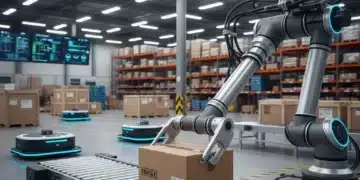
Small-scale manufacturers can leverage 5G for smart factories. Connected sensors on machinery can provide predictive maintenance alerts, reducing costly breakdowns. Robotic automation, guided by 5G’s low latency, can perform intricate tasks with high precision, increasing production efficiency. In logistics, 5G-enabled IoT devices can track shipments in real-time, monitor environmental conditions (temperature, humidity), and optimize delivery routes, leading to significant cost savings and improved customer satisfaction. The precision and automation offered by these 5G Business Innovations are game-changers for these sectors.
Healthcare and Wellness: Remote Care and Connected Devices
For small healthcare providers, 5G will enable advanced telehealth solutions, allowing for high-definition video consultations and remote monitoring of patients with wearable devices. Rural clinics can benefit immensely from reliable, high-speed connectivity to access specialist consultations and large medical databases. IoT-enabled medical devices can transmit real-time patient data securely over 5G networks, facilitating proactive care and emergency response. This will democratize access to quality healthcare, a critical aspect of 5G Business Innovations in the health sector.
Agriculture: Smart Farming and Resource Optimization
Small farms can become ‘smart farms’ with 5G. Drones equipped with high-resolution cameras can monitor crop health, identify disease outbreaks, and manage irrigation systems with pinpoint accuracy. Soil sensors can provide real-time data on nutrient levels, allowing for optimized fertilization and water usage, reducing waste and increasing yields. Livestock monitoring systems can track animal health and location, improving welfare and operational efficiency. These 5G Business Innovations are vital for sustainable and profitable agriculture.
Professional Services: Enhanced Collaboration and Data Management
For small law firms, accounting practices, or marketing agencies, 5G means seamless cloud integration, faster access to large datasets, and enhanced collaboration tools. High-definition video conferencing with multiple participants will be lag-free, fostering better remote teamwork. Secure 5G connectivity is crucial for accessing and managing sensitive client data in cloud-based applications, ensuring compliance and data integrity. The efficiency gains from these 5G Business Innovations can significantly boost productivity.
Preparing Your Small Business for the 5G Era
The promise of 5G Business Innovations is compelling, but preparation is key. Small businesses need to take proactive steps to leverage these advancements effectively.
Assess Your Current Infrastructure
Before diving into new technologies, understand your existing IT infrastructure. Are your current devices 5G-compatible? Do you have the necessary network hardware to support increased data flow? A thorough assessment will help identify gaps and prioritize upgrades. This foundational step is crucial for integrating 5G Business Innovations seamlessly.
Identify Key Business Needs and Use Cases
Don’t adopt 5G just for the sake of it. Identify specific pain points or opportunities within your business that 5G can address. Do you need better inventory tracking? Enhanced customer engagement? More efficient remote operations? Focusing on clear use cases will guide your investment and ensure a tangible return. Strategic application of 5G Business Innovations yields the best results.
Invest in 5G-Compatible Devices and Applications
As 2026 approaches, ensure your business is acquiring 5G-enabled smartphones, tablets, routers, and IoT devices. Additionally, explore software solutions and cloud services that are optimized for 5G’s capabilities. Many vendors are already developing applications specifically designed to harness the power of 5G. Upgrading your toolkit is essential for embracing 5G Business Innovations.
Prioritize Cybersecurity
While 5G offers enhanced security, the expanded attack surface due to massive connectivity necessitates a robust cybersecurity strategy. Invest in firewalls, intrusion detection systems, and employee training on best security practices. Consider partnering with cybersecurity experts to protect your data and network. Security is paramount when implementing any 5G Business Innovations.
Consider Private 5G or Network Slicing
For businesses with specific security, performance, or regulatory requirements, exploring private 5G networks or utilizing network slicing (a feature of public 5G that allocates dedicated network resources) can provide tailored solutions. This allows for greater control and optimization of your 5G environment. Tailored connectivity solutions are a powerful aspect of 5G Business Innovations.
Stay Informed and Adaptable
The 5G landscape is continuously evolving. Stay updated on the latest advancements, industry trends, and successful case studies. Be prepared to adapt your strategies and operations as new 5G Business Innovations emerge. Flexibility and continuous learning are vital for long-term success.

Challenges and Considerations for Small Businesses
While the benefits of 5G Business Innovations are clear, small businesses may encounter certain challenges:
Cost of Adoption
Upgrading infrastructure and acquiring new 5G-compatible devices can represent a significant upfront investment. Small businesses need to carefully budget and explore financing options to make these transitions feasible. However, the long-term ROI often justifies the initial expenditure.
Technical Expertise
Implementing and managing advanced 5G solutions may require specialized technical expertise. Small businesses might need to invest in training existing staff or hiring new talent with relevant skills. Alternatively, partnering with managed service providers can help bridge this knowledge gap.
Coverage Availability
While 5G deployment is expanding rapidly, full nationwide coverage, especially for the higher-frequency millimeter-wave (mmWave) bands that offer the fastest speeds, may still be limited in some rural or less populated areas. Small businesses should verify 5G availability in their specific locations before making significant investments.
Data Management and Privacy
The increased data flow facilitated by 5G and IoT demands robust data management strategies and strict adherence to privacy regulations. Small businesses must ensure they have processes in place to handle, store, and protect sensitive data ethically and legally.
The Economic Impact of 5G on US Small Businesses
The widespread adoption of 5G Business Innovations is not just about individual business growth; it has broader economic implications. By 2026, 5G is expected to be a significant driver of economic growth across the US, with small businesses playing a crucial role. Increased productivity, new service offerings, and enhanced competitiveness will lead to job creation and stimulate local economies. The ability of small businesses to innovate and scale efficiently will contribute to a more resilient and dynamic national economy.
Furthermore, 5G can help bridge the digital divide, offering high-speed internet access to underserved communities, fostering entrepreneurship, and enabling small businesses in rural areas to compete on a more level playing field with their urban counterparts. This democratizing effect of 5G Business Innovations is a powerful force for equitable economic development.
Case Studies: Early Adopters and Success Stories
While 2026 is still a couple of years away, early adopters are already demonstrating the potential of 5G Business Innovations. Consider a small construction company that uses 5G-enabled drones for site surveys and progress monitoring, reducing manual labor costs and improving safety. A local bakery might deploy 5G-connected sensors in its ovens to precisely control baking conditions, ensuring consistent quality and reducing waste. A mobile veterinary service could use 5G for real-time remote diagnostics and consultations, expanding its reach and improving animal care.
These examples, while nascent, illustrate the diverse applications and tangible benefits that small businesses can expect. The key is to identify areas where 5G’s unique attributes—speed, low latency, and massive connectivity—can solve existing problems or create new opportunities.
Conclusion: The Future is Connected
The landscape for small businesses in the US is on the cusp of a profound transformation, driven by the relentless march of 5G technology. By 2026, the advanced capabilities and widespread adoption of 5G Business Innovations will empower enterprises of all sizes to operate with unprecedented efficiency, deliver superior customer experiences, and unlock entirely new avenues for growth. From intelligent automation in manufacturing to immersive retail environments and advanced remote healthcare, 5G is not just an upgrade; it’s a fundamental shift in how businesses will operate and interact with the world.
For small business owners, the message is clear: the time to understand and plan for these changes is now. By assessing current infrastructure, identifying strategic use cases, investing wisely in compatible technologies, and prioritizing cybersecurity, small businesses can position themselves to fully harness the power of 5G. The future is connected, intelligent, and brimming with opportunities for those ready to embrace the next wave of 5G Business Innovations. Don’t be left behind; start preparing your business today for the hyper-connected tomorrow.