Quantum Internet Development: A 5-Year Roadmap for US Research and Infrastructure Progress
Quantum Internet Development: A 5-Year Roadmap for US Research and Infrastructure Progress
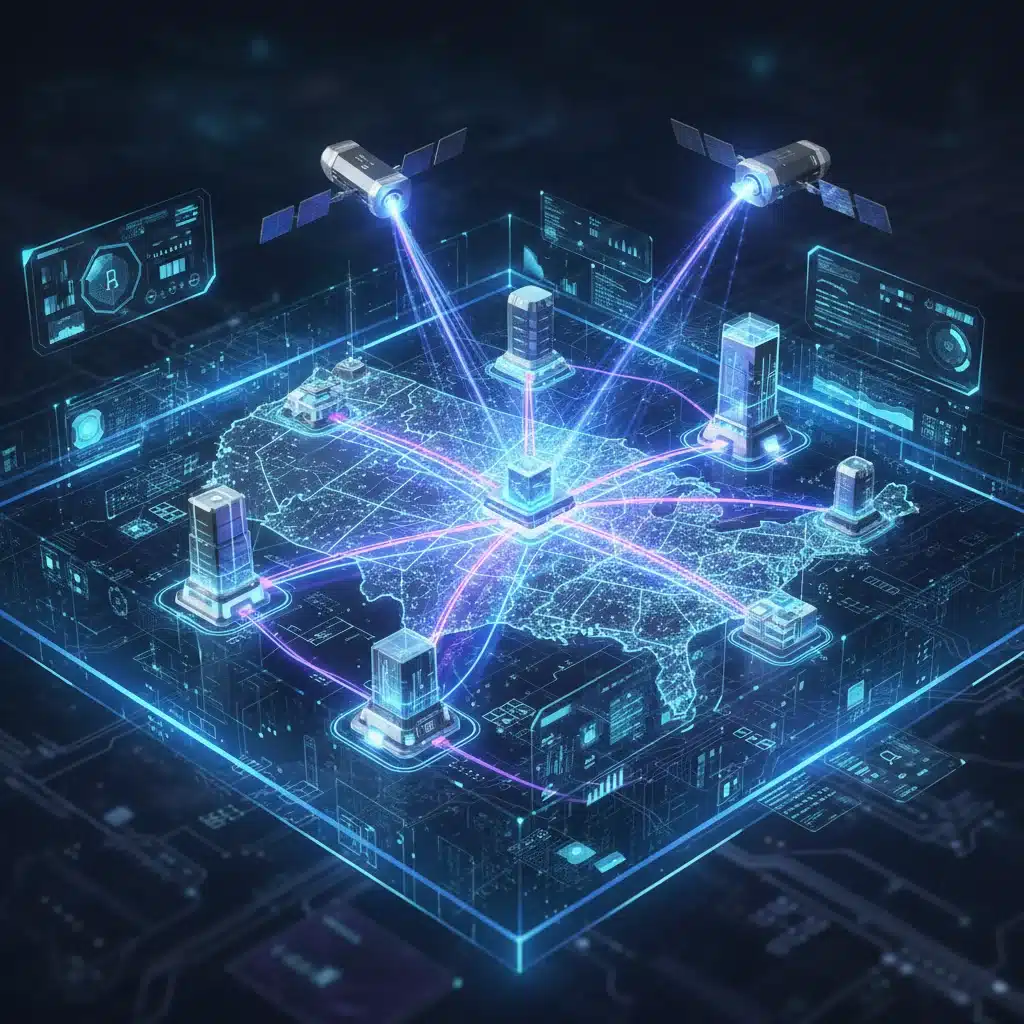
The dawn of the quantum era promises to revolutionize nearly every aspect of our digital lives, from impenetrable cybersecurity to unprecedented computational power. At the heart of this transformation lies the quantum internet, a network capable of transmitting quantum information, enabling applications far beyond the reach of classical networks. Recognizing its immense potential and strategic importance, the United States has embarked on an ambitious journey to lead the development of this groundbreaking technology. This article delves into a comprehensive 5-year roadmap for quantum internet development in the US, outlining key objectives, strategic investments, and anticipated milestones in research and infrastructure progress.
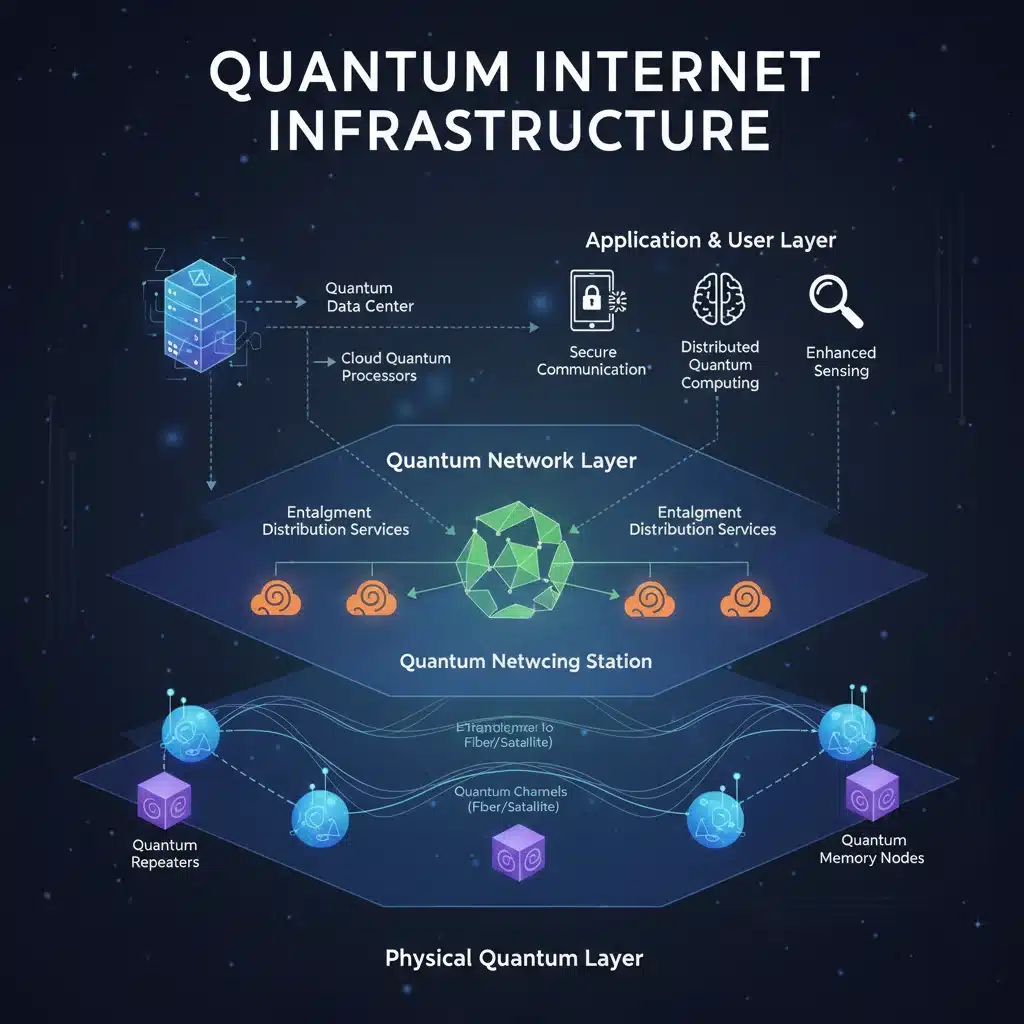
The concept of a quantum internet is built upon the fundamental principles of quantum mechanics, such as superposition and entanglement. Unlike the classical internet, which transmits information as bits (0s and 1s), the quantum internet uses qubits, which can exist in multiple states simultaneously. More importantly, it leverages quantum entanglement, a phenomenon where two or more particles become linked, sharing the same fate regardless of the distance separating them. This intrinsic connection allows for truly secure communication and forms the basis for distributed quantum computing and enhanced sensing capabilities. The implications are profound, offering solutions to problems currently intractable for even the most powerful supercomputers and providing communication security guaranteed by the laws of physics.
The strategic imperative for the US to lead in quantum internet development is multi-faceted. Economically, it represents a trillion-dollar industry in the making, promising new markets, job creation, and technological superiority. From a national security perspective, a robust quantum internet offers unparalleled protection against cyber threats, safeguarding critical infrastructure and sensitive government communications. Furthermore, it fosters scientific discovery, pushing the boundaries of our understanding of the universe and enabling new frontiers in research. The global race for quantum supremacy is underway, with nations worldwide investing heavily. The US roadmap is designed to ensure the nation remains at the forefront of this critical technological revolution.
The current state of quantum internet technology is analogous to the early days of the classical internet in the 1960s. While foundational research has demonstrated the feasibility of quantum communication over limited distances, a scalable and robust quantum internet is still years away. Existing quantum networks are primarily experimental, connecting a few nodes within a laboratory or across short metropolitan distances using fiber optics. Challenges include the fragility of quantum states, the need for efficient quantum memory, and the development of quantum repeaters to extend communication distances beyond what is currently possible. However, significant progress is being made, driven by concerted efforts from government agencies, academic institutions, and private industry.
Year 1: Laying the Foundational Pillars for Quantum Internet Development
The initial year of the quantum internet roadmap is dedicated to strengthening foundational research, fostering collaboration, and establishing key national testbeds. A primary focus will be on advancing the core components necessary for a functional quantum network. This includes significant investment in quantum repeaters, essential devices that can extend the reach of quantum communication by “boosting” quantum signals without destroying their delicate states. Research will concentrate on developing more efficient and robust quantum repeaters capable of operating over longer distances and at higher fidelities.
Another critical area is the development of quantum memories. These devices are crucial for storing quantum information for extended periods, enabling asynchronous communication and allowing for the synchronization of quantum operations across a network. Research efforts will explore various platforms for quantum memory, including atomic ensembles, trapped ions, and solid-state systems, aiming for longer coherence times and improved storage efficiencies. Furthermore, the first year will see the expansion of existing quantum network testbeds, primarily within national laboratories and university research centers. These testbeds will serve as experimental platforms for integrating different quantum technologies and testing network protocols in controlled environments.
Collaborative initiatives will be paramount. The National Quantum Initiative Act, passed in 2018, provides a framework for coordinating federal quantum efforts. Year one will leverage this framework to establish new multi-institutional research partnerships, bringing together expertise from physics, engineering, computer science, and materials science. Funding opportunities will be directed towards projects that bridge fundamental research with engineering challenges, aiming to translate laboratory breakthroughs into deployable technologies. Education and workforce development will also be a priority, initiating programs to train a new generation of quantum scientists and engineers through specialized university courses, internships, and workshops. The goal is to build a skilled workforce capable of driving future advancements in quantum internet development.
Year 2: Expanding Testbeds and Quantum Component Integration
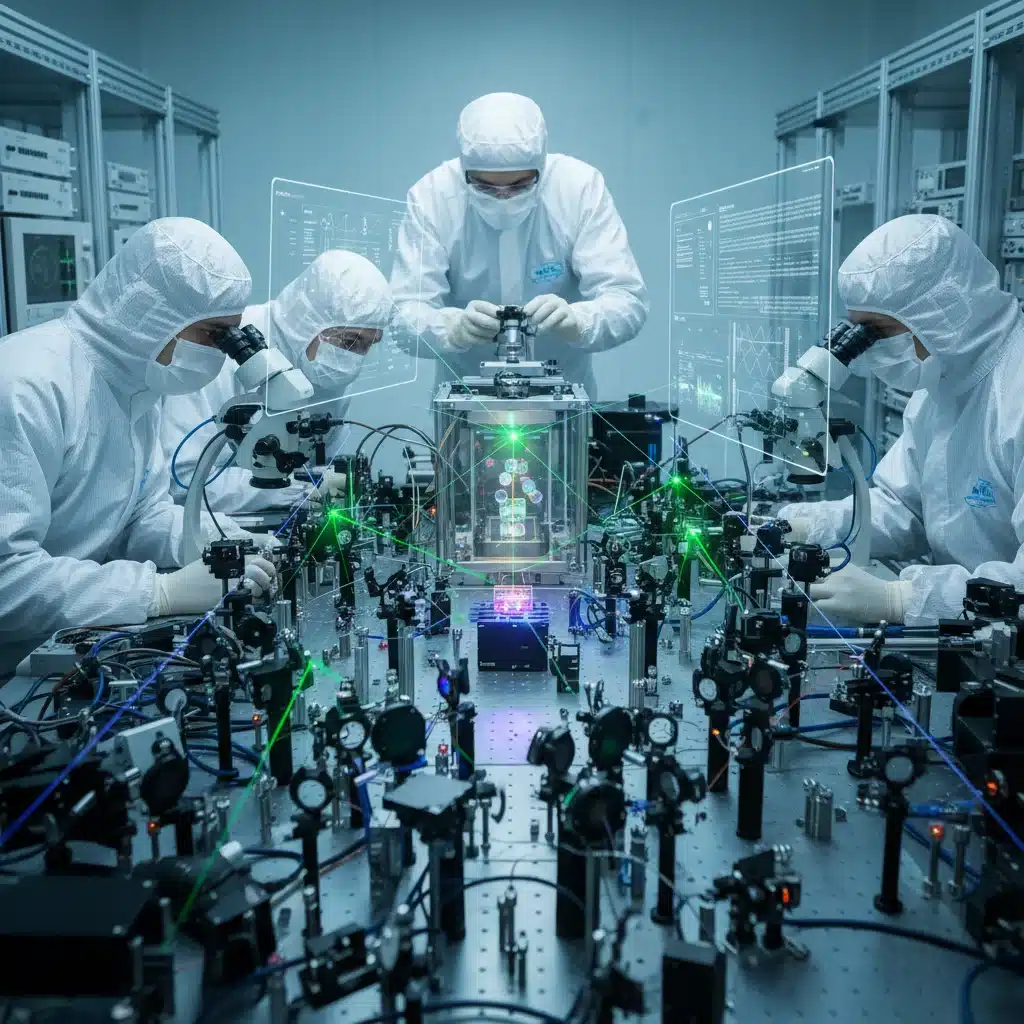
Building on the foundational work of year one, the second year of the quantum internet roadmap will focus on expanding the scope and complexity of quantum network testbeds. The objective is to move beyond single-link demonstrations to multi-node networks, connecting several research institutions within a metropolitan area. This will involve the deployment of early-stage quantum repeaters and memory nodes in real-world fiber optic infrastructure, allowing for testing under more realistic conditions. The focus will be on integrating various quantum components – sources of entangled photons, detectors, quantum memories, and repeaters – into cohesive systems.
A significant effort will be dedicated to developing standardized protocols and interfaces for quantum network components. Just as the classical internet relies on TCP/IP, the quantum internet will require its own set of protocols to ensure interoperability between different hardware and software systems. Research will explore various quantum network architectures, including those based on quantum key distribution (QKD) for secure communication and those designed for distributed quantum computing. Field trials of metropolitan-scale quantum networks will commence, allowing researchers to gather valuable data on performance, stability, and reliability in operational environments. These trials will be crucial for identifying bottlenecks and refining designs.
International collaboration will also gain momentum in Year 2. Recognizing that the quantum internet will ultimately be a global infrastructure, the US will actively seek partnerships with allied nations and international research organizations. This includes sharing best practices, coordinating research efforts, and potentially establishing joint testbeds. Policy development will begin to address regulatory frameworks, spectrum allocation, and ethical considerations surrounding quantum technologies. Workshops and conferences will bring together stakeholders from government, industry, and academia to discuss these evolving challenges and opportunities in quantum internet development.
Year 3: Developing Long-Haul Capabilities and Satellite Links
Year three marks a critical transition in the quantum internet roadmap, shifting focus towards extending quantum communication beyond metropolitan areas to regional and potentially inter-state distances. This will necessitate significant advancements in quantum repeater technology, particularly those capable of reliable operation over hundreds of kilometers. Research will explore different repeater architectures, including those based on atomic ensembles and solid-state systems, and investigate strategies for mitigating fiber loss and noise.
A major milestone will be the initiation of satellite-based quantum communication experiments. Satellites offer a promising avenue for long-distance quantum communication, as they can bypass the atmospheric attenuation and fiber loss that limit terrestrial links. Initial experiments will focus on ground-to-satellite and satellite-to-ground quantum key distribution (QKD) links, demonstrating the feasibility of establishing entangled connections over vast distances. This will involve developing robust quantum payloads for satellites and advanced ground stations capable of receiving fragile quantum signals. The integration of satellite links with terrestrial fiber networks will be a key research area, aiming to create hybrid quantum networks.
The development of quantum network software and control systems will also accelerate. As networks grow in complexity, sophisticated software will be needed to manage quantum resources, route quantum information, and perform error correction. Research will delve into quantum network operating systems, programming languages for quantum applications, and security protocols tailored for quantum communication. Furthermore, the roadmap envisions the engagement of private industry in a more substantial way. Incentives and partnerships will be established to encourage private sector investment in quantum hardware manufacturing, network deployment, and the development of commercial quantum internet applications. The goal is to stimulate a vibrant quantum technology ecosystem.
Year 4: Towards a National Quantum Internet Backbone
By year four, the vision of a national quantum internet development backbone will begin to take shape. This year will focus on connecting multiple regional quantum networks, creating a rudimentary inter-state quantum network. This will involve the deployment of advanced quantum repeaters and memory nodes at strategic locations, forming a distributed network of quantum nodes. The emphasis will be on increasing the number of entangled links and the overall network capacity.
Field demonstrations of distributed quantum computing will become a reality. This involves connecting multiple quantum processors at different locations to perform a single, more powerful computation. Such demonstrations will showcase the true potential of the quantum internet for solving complex problems that are beyond the reach of individual quantum computers. Applications could include enhanced sensor networks, secure cloud computing, and advanced materials design. The robustness and security of these distributed quantum systems will be rigorously tested under various conditions.
Cybersecurity implications will be a paramount concern. While quantum communication offers unprecedented security advantages, the development of quantum computers also poses a threat to current encryption standards. Year four will see increased efforts in developing post-quantum cryptography (PQC) solutions – cryptographic algorithms designed to resist attacks from quantum computers. The quantum internet will play a crucial role in distributing and verifying these PQC keys, creating a layered defense against future cyber threats. Policy frameworks will be refined to address data privacy, intellectual property, and international governance of quantum networks.
Year 5: Enabling Early Quantum Internet Applications and Commercialization
The final year of this 5-year quantum internet roadmap aims to demonstrate practical applications and pave the way for early commercialization. The national quantum internet backbone will be further expanded and refined, offering a more robust and reliable platform for quantum communication and distributed quantum computing. The focus will be on showcasing the tangible benefits of the quantum internet to a wider audience, including government agencies, critical infrastructure operators, and potential commercial users.
Early quantum internet applications will be deployed and tested in real-world scenarios. This could include ultra-secure communication channels for financial institutions, quantum-enhanced sensor networks for defense applications, and distributed quantum computing for scientific research. These demonstrations will serve as proof-of-concept for the transformative power of the quantum internet, attracting further investment and accelerating adoption. The development of user-friendly interfaces and application programming interfaces (APIs) for accessing quantum network resources will also be a priority, making the technology more accessible to developers and researchers.
Commercialization strategies will be solidified. This involves fostering a vibrant ecosystem of quantum technology companies, from hardware manufacturers to software developers and service providers. Government incentives, venture capital, and public-private partnerships will be critical in driving this commercial growth. The roadmap envisions the establishment of national quantum internet user facilities, providing access to cutting-edge quantum network infrastructure for researchers and businesses. Standard-setting bodies will play an increasingly important role in ensuring global interoperability and driving widespread adoption of quantum internet technologies. The goal is to transition quantum internet from a purely research endeavor to a foundational technology with significant societal and economic impact.
Challenges and Opportunities in Quantum Internet Development
While the 5-year roadmap for quantum internet development in the US is ambitious and promising, it is not without significant challenges. Technical hurdles remain, including the need for more efficient quantum repeaters, longer-lived quantum memories, and robust methods for generating and detecting entangled photons. The fragility of quantum states means that environmental noise and imperfections in hardware can easily destroy quantum information, leading to errors and reduced performance. Overcoming these technical challenges will require sustained research and engineering innovation.
Workforce development is another critical challenge. The field of quantum information science is highly specialized, and there is a significant shortage of skilled professionals. The roadmap emphasizes the need for comprehensive education and training programs to cultivate a new generation of quantum scientists, engineers, and technicians. Attracting and retaining top talent will be crucial for maintaining US leadership in this field. Furthermore, the cost of developing and deploying quantum internet infrastructure is substantial. Significant long-term investment from both government and private sectors will be necessary to realize the full potential of this technology.
Despite these challenges, the opportunities presented by the quantum internet are immense. Beyond ultra-secure communication and distributed quantum computing, the quantum internet could enable entirely new applications that we cannot yet conceive. It could revolutionize fields such as medicine, materials science, and artificial intelligence. The development of a robust quantum internet infrastructure will also strengthen national security, providing an unhackable communication layer for critical systems. Moreover, it will foster a new era of scientific discovery, allowing researchers to explore fundamental questions about the nature of reality and unlock new insights into the universe.
Conclusion: A Vision for US Leadership in the Quantum Era
The 5-year roadmap for quantum internet development in the US represents a bold and necessary step towards securing the nation’s technological future. By strategically investing in foundational research, expanding testbeds, developing long-haul capabilities, and fostering commercialization, the US aims to establish a leading position in this transformative field. The journey will be complex, requiring sustained effort, interdisciplinary collaboration, and significant resources. However, the potential rewards – in terms of economic prosperity, national security, and scientific advancement – are unparalleled.
As we move through each year of this roadmap, the quantum internet will gradually transition from a theoretical concept to a tangible reality. The progress made in developing quantum repeaters, memories, and satellite links will lay the groundwork for a truly global quantum network. The integration of distributed quantum computing and advanced sensing capabilities will unlock new applications that promise to reshape industries and solve some of humanity’s most pressing challenges. The US commitment to this roadmap signifies a clear vision for leadership in the quantum era, ensuring that the nation remains at the forefront of innovation and technological progress. The future of communication is quantum, and the US is actively building the pathways to get there.