Unlocking 5G Potential: New Use Cases and Network Slicing Strategies for US Businesses in 2026

Unlocking 5G Potential: New Use Cases and Network Slicing Strategies for US Businesses in 2026
The dawn of 5G has been heralded with much fanfare, promising a revolution in connectivity that transcends mere speed upgrades. For US businesses, 2026 is poised to be a pivotal year where these promises transition into tangible, transformative realities. The convergence of ultra-low latency, massive connectivity, and unprecedented bandwidth offered by 5G is not just an incremental improvement; it’s a foundational shift that will redefine operational paradigms, customer experiences, and competitive landscapes. This article delves deep into the 5G Business Strategies 2026 that US enterprises must embrace to capitalize on this technological wave, focusing on innovative use cases and the critical role of network slicing.
In the rapidly evolving digital economy, staying ahead requires more than just adopting new technologies; it demands a strategic understanding of how these technologies can be leveraged to create new value. 5G, with its inherent capabilities, offers a unique opportunity for businesses to innovate at an unprecedented pace. From enhancing existing services to creating entirely new business models, the potential is vast. However, realizing this potential requires a clear roadmap, an understanding of the underlying technical enablers like network slicing, and a proactive approach to implementation.
The Foundational Pillars of 5G: Speed, Latency, and Capacity
Before diving into specific use cases and strategies, it’s crucial to reiterate the core characteristics that set 5G apart from its predecessors and make it a game-changer for businesses:
- Enhanced Mobile Broadband (eMBB): This is the most commonly understood aspect of 5G, offering significantly higher speeds (up to 10 Gbps) and greater bandwidth. For businesses, this translates to faster data transfer, seamless cloud access, and improved performance for bandwidth-intensive applications.
- Ultra-Reliable Low-Latency Communications (URLLC): This capability is perhaps the most revolutionary for industrial and mission-critical applications. With latency as low as 1 millisecond, URLLC enables real-time control, autonomous systems, and highly responsive interactions, crucial for sectors like manufacturing, healthcare, and transportation.
- Massive Machine-Type Communications (mMTC): Designed to support a vast number of connected devices (up to 1 million devices per square kilometer), mMTC is the backbone for the Internet of Things (IoT). This allows businesses to deploy extensive sensor networks for monitoring, automation, and data collection across various environments.
These three pillars form the technical foundation upon which the future of business innovation will be built. Understanding their interplay is key to developing effective 5G Business Strategies 2026.
Revolutionary 5G Use Cases for US Businesses in 2026
By 2026, 5G will move beyond initial deployments to power a wide array of transformative applications across diverse industries. Here are some of the most compelling use cases:
1. Smart Manufacturing and Industry 4.0
The manufacturing sector stands to gain immensely from 5G. With URLLC, factories can implement:
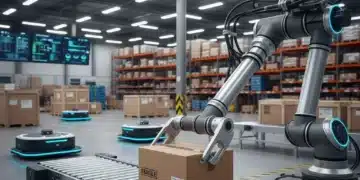
- Real-time Industrial Automation: Wireless control of robotic arms, automated guided vehicles (AGVs), and production lines, leading to greater flexibility, efficiency, and reduced downtime.
- Predictive Maintenance: IoT sensors connected via 5G can continuously monitor machinery, detecting anomalies and predicting failures before they occur, optimizing maintenance schedules and preventing costly disruptions.
- Augmented Reality (AR) for Workers: AR headsets powered by 5G can provide real-time instructions, maintenance guides, and data overlays to factory workers, enhancing training, productivity, and safety.
- Digital Twins: Creating virtual replicas of physical assets and processes, enabling simulations and optimizations in a controlled environment, all fed by real-time 5G data.
2. Enhanced Healthcare and Telemedicine
5G will revolutionize healthcare delivery, particularly in remote areas and for critical care:
- Remote Surgery and Diagnostics: URLLC enables surgeons to perform complex procedures remotely with specialized robotic instruments, guided by real-time high-definition video feeds. Similarly, remote diagnostics can be greatly enhanced.
- Connected Ambulances and Emergency Services: Real-time transmission of patient data, vital signs, and high-resolution imaging from ambulances to hospitals, allowing medical teams to prepare for arrival and initiate treatment sooner.
- Wearable Health Devices: mMTC supports a vast ecosystem of connected health wearables that continuously monitor patient health, sending data to healthcare providers for proactive intervention and personalized care.
- AR/VR for Medical Training: Immersive training simulations for medical students and professionals, offering realistic experiences without risk.
3. Autonomous Vehicles and Smart Transportation
The vision of fully autonomous vehicles relies heavily on 5G’s capabilities:
- Vehicle-to-Everything (V2X) Communication: Enabling vehicles to communicate with each other (V2V), with infrastructure (V2I), and with pedestrians (V2P), sharing real-time data on traffic conditions, hazards, and navigation.
- Intelligent Traffic Management: 5G-connected sensors and cameras can optimize traffic flow, reduce congestion, and improve safety in urban areas.
- Logistics and Fleet Management: Real-time tracking and management of delivery fleets, optimizing routes, monitoring driver behavior, and ensuring timely deliveries.
4. Immersive Experiences: AR/VR and Entertainment
Consumer and enterprise entertainment, as well as collaborative work, will be transformed:
- High-Fidelity AR/VR: Low latency and high bandwidth enable truly immersive augmented and virtual reality experiences, from gaming and entertainment to remote collaboration and product design.
- Cloud Gaming: Stream high-quality games directly from the cloud to mobile devices and other platforms, eliminating the need for powerful local hardware.
- Live Event Streaming: High-definition multi-angle streaming of sports and concerts, offering unparalleled viewer experiences.
5. Smart Cities and Public Safety
5G will be the nervous system of future smart cities:
- Smart Grids: Real-time monitoring and control of energy distribution, optimizing consumption and improving grid resilience.
- Environmental Monitoring: Networks of 5G-connected sensors to monitor air quality, water levels, and other environmental factors.
- Public Safety and Surveillance: High-definition video surveillance and real-time data analytics for emergency response and crime prevention.
These are just a few examples of the myriad possibilities. The key for US businesses is to identify which of these use cases align with their strategic goals and offer the greatest potential for competitive advantage and return on investment.
The Game-Changer: Network Slicing Strategies for US Businesses
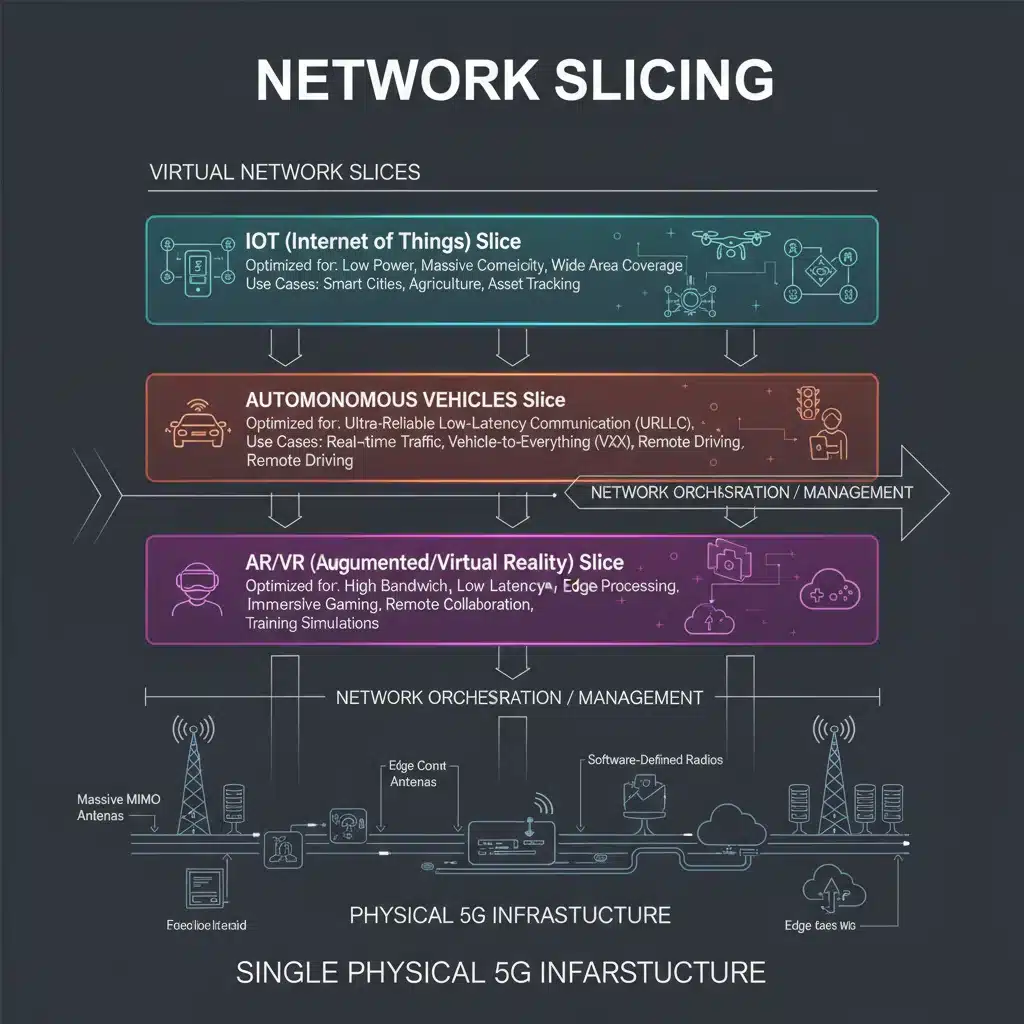
While 5G’s raw capabilities are impressive, its true power for businesses lies in network slicing. This innovative feature allows mobile network operators (MNOs) to create multiple virtual, isolated, and customized networks on top of a single physical 5G infrastructure. Each ‘slice’ can be tailored to meet the specific performance requirements (e.g., bandwidth, latency, security) of different applications or industries.
What is Network Slicing and Why is it Critical for 5G Business Strategies 2026?
Imagine a highway where different lanes are dynamically configured for different types of vehicles – one for emergency services, another for heavy transport, and a third for high-speed passenger cars. Network slicing works similarly, allowing businesses to:
- Guaranteed Quality of Service (QoS): Unlike previous generations where all traffic competed for the same resources, network slicing ensures that critical applications receive their guaranteed share of bandwidth and latency, preventing performance degradation.
- Enhanced Security: Each slice is isolated, providing a higher level of security compared to a shared network. This is crucial for sensitive data and mission-critical operations.
- Customization and Flexibility: Businesses can request slices tailored to their exact needs, optimizing for specific use cases. This flexibility allows for rapid deployment of new services and agile adaptation to changing demands.
- Cost Efficiency: By sharing the underlying physical infrastructure, network slicing can be more cost-effective than building dedicated private networks for every application.
Strategic Applications of Network Slicing for Businesses
For US businesses aiming to leverage 5G Business Strategies 2026, understanding how to utilize network slicing is paramount:
1. Manufacturing & Logistics: Private 5G Networks on Demand
Manufacturers can deploy private 5G network slices within their factories or warehouses. These slices can be optimized for URLLC to control robots, AGVs, and production lines with millisecond precision, ensuring operational continuity and safety. They can also support mMTC for thousands of IoT sensors collecting data for predictive maintenance and quality control. This allows for complete control over their network environment, ensuring security and performance.
2. Healthcare: Dedicated Slices for Critical Services
Hospitals and healthcare providers can utilize dedicated 5G slices for critical applications. For remote surgery, a slice with extremely low latency and high reliability is essential. For connected ambulances, a slice prioritizing real-time video and patient data transmission ensures emergency teams have the information they need. Separate slices could handle administrative traffic or patient entertainment, preventing congestion of critical services.
3. Retail: Personalized Customer Experiences and Efficient Operations
Retailers can use network slicing to enhance both customer experience and operational efficiency. A dedicated slice could power in-store AR experiences, smart mirrors, and personalized promotions delivered in real-time. Another slice could manage inventory tracking, smart shelves, and point-of-sale systems, ensuring seamless operations even during peak hours. This ensures that customer-facing applications always have the necessary bandwidth and performance.
4. Media & Entertainment: High-Bandwidth Event Coverage
Broadcasters and event organizers can lease temporary, high-bandwidth 5G slices for live streaming from remote locations, ensuring crystal-clear video and audio transmission without interruptions. This is particularly valuable for major sporting events, concerts, or breaking news coverage.
5. Energy & Utilities: Resilient Smart Grid Management
Utility companies can use highly reliable and secure 5G slices to manage smart grids, enabling real-time monitoring of infrastructure, remote control of assets, and rapid response to outages. The isolation provided by slicing is critical for protecting national infrastructure from cyber threats.
The ability to dynamically provision and manage these slices will be a key differentiator for businesses in 2026, allowing them to adapt quickly to new market demands and technological advancements.
Challenges and Considerations for US Businesses
While the opportunities are immense, US businesses must also navigate several challenges on their 5G journey:
1. Infrastructure Investment
Deploying and upgrading 5G infrastructure requires significant capital investment. Businesses will need to work closely with MNOs or consider private 5G deployments where feasible. The cost-benefit analysis of such investments is crucial for developing sound 5G Business Strategies 2026.
2. Security and Privacy
With massive connectivity comes an expanded attack surface. Businesses must implement robust cybersecurity measures to protect their 5G networks and the vast amounts of data they transmit. Network slicing helps compartmentalize risks, but end-to-end security remains paramount.
3. Skill Gap
The specialized knowledge required to design, implement, and manage 5G networks and applications, especially those leveraging network slicing, is scarce. Businesses will need to invest in training their workforce or collaborating with external experts.
4. Regulatory Landscape
The regulatory environment for 5G, spectrum allocation, and data privacy continues to evolve. Businesses must stay informed and ensure compliance with all relevant regulations.
5. Interoperability and Ecosystem Development
The full potential of 5G relies on a robust ecosystem of devices, applications, and platforms that can seamlessly interoperate. Businesses must consider compatibility and work towards open standards.
Developing Your 5G Business Strategies for 2026
To successfully integrate 5G into their operations by 2026, US businesses should consider the following strategic steps:
1. Assess Your Current Infrastructure and Needs
Conduct a thorough audit of existing IT and operational technology (OT) infrastructure. Identify areas where current connectivity limitations hinder innovation or efficiency. Pinpoint specific business challenges that 5G’s unique capabilities (e.g., low latency for automation, massive connectivity for IoT) could address.
2. Identify Key Use Cases and Prioritize
Based on your assessment, research and identify the most impactful 5G use cases for your industry and specific business. Prioritize those that offer the highest potential ROI, competitive advantage, or address critical pain points. Start small with pilot projects to test and validate concepts.
3. Engage with 5G Providers and Ecosystem Partners
Collaborate with mobile network operators to understand their 5G rollout plans and network slicing capabilities. Explore partnerships with technology vendors, system integrators, and application developers who specialize in 5G solutions. Early engagement can lead to tailored solutions and strategic advantages.
4. Invest in Talent and Training
Develop an internal strategy to upskill your workforce in 5G technologies, network architecture, and data analytics. This includes IT teams, engineers, and even business strategists who need to understand the possibilities 5G unlocks. Consider hiring specialists if internal training is insufficient.
5. Develop a Phased Implementation Roadmap
Instead of a ‘big bang’ approach, plan a phased rollout of 5G initiatives. Start with non-critical applications or specific departments, gather learnings, and then scale. This allows for agile adjustments and minimizes disruption.
6. Focus on Data Strategy and Analytics
5G will generate unprecedented volumes of data. Businesses must have a robust data strategy in place to collect, process, analyze, and secure this data effectively. Leverage edge computing capabilities enabled by 5G to process data closer to its source, reducing latency and improving real-time decision-making.
7. Consider Private 5G Networks for Critical Operations
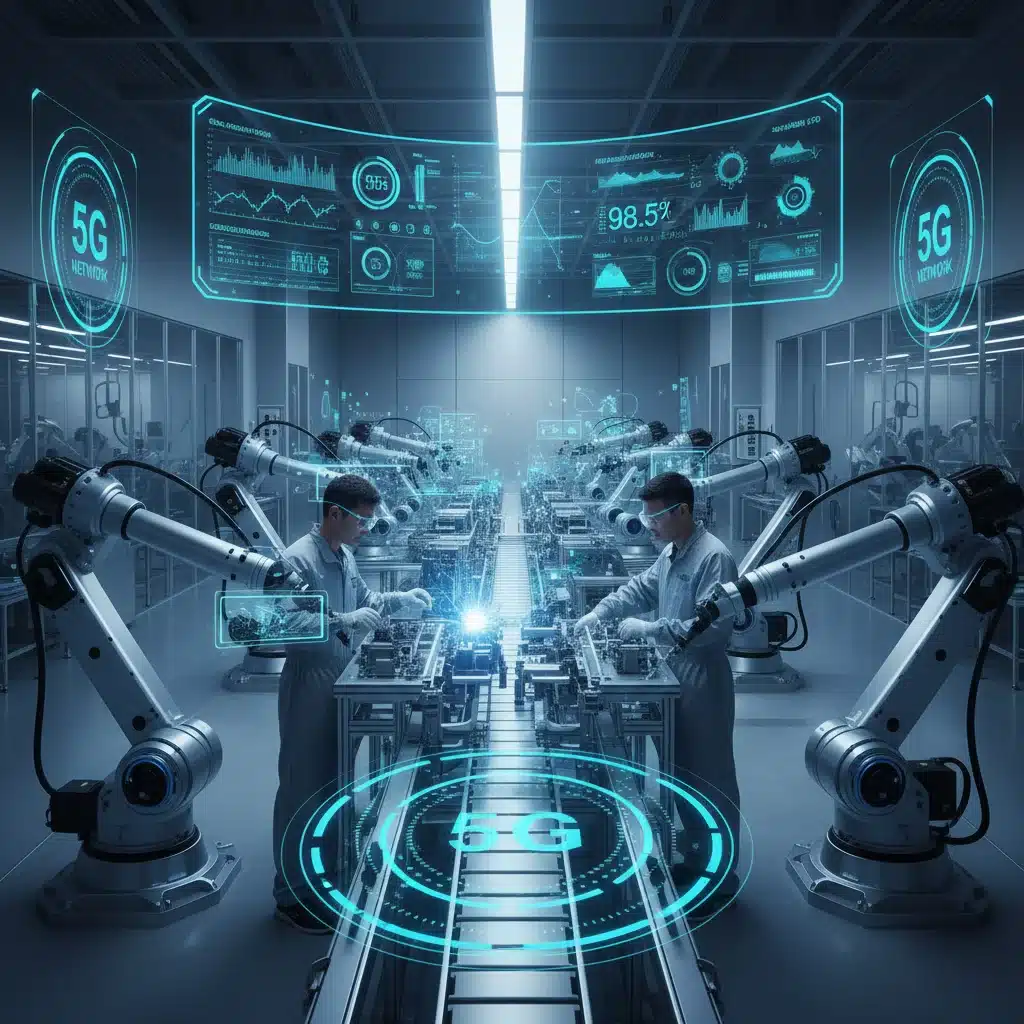
For operations requiring extremely high security, reliability, and control (e.g., manufacturing plants, logistics hubs, defense facilities), explore the option of deploying a private 5G network. This offers dedicated resources and enhanced customization, often leveraging network slicing capabilities from MNOs or independent vendors.
8. Stay Agile and Adaptable
The 5G landscape is dynamic. Businesses must foster a culture of agility and continuous learning to adapt to new technological advancements, evolving use cases, and changing market conditions. Regular review of your 5G Business Strategies 2026 will be crucial.
The Future is Connected: Embracing 5G’s Transformative Power
The year 2026 is not just a point on the calendar; it represents a significant milestone in the adoption and maturation of 5G technologies for US businesses. The combination of 5G’s foundational capabilities and the strategic flexibility offered by network slicing will empower enterprises to achieve levels of efficiency, innovation, and customer engagement previously unimaginable.
From revolutionizing manufacturing floors with real-time automation and predictive maintenance to enabling life-saving remote healthcare and creating immersive customer experiences, the impact of 5G will be pervasive. Businesses that proactively develop and implement robust 5G Business Strategies 2026, focusing on strategic use cases and leveraging network slicing, will be best positioned to thrive in this new era of hyper-connectivity.
The journey to fully harness 5G’s potential is complex, requiring careful planning, investment, and collaboration. However, the rewards for early adopters and strategic innovators are substantial, promising a future where connectivity is not just a utility, but a powerful engine for growth and competitive differentiation. The time to act and lay the groundwork for your 5G future is now.