Metaverse Business Applications: Beyond Gaming for US Companies

The Metaverse: Practical Applications for US Businesses Beyond Gaming, Expected in Early 2026
The term ‘metaverse’ has, for many, conjured images of fantastical gaming worlds and social hangouts. While these aspects certainly contribute to its nascent identity, the true transformative power of the metaverse extends far beyond entertainment. For US businesses, a new frontier of practical, impactful metaverse business applications is rapidly emerging, poised to redefine operations, customer engagement, and innovation by early 2026. This isn’t science fiction; it’s the next evolution of digital interaction, and forward-thinking companies are already positioning themselves to harness its potential.
The metaverse, in its broadest sense, refers to a persistent, interconnected set of virtual spaces where users can interact with each other, digital objects, and AI-driven entities in real-time. It leverages technologies such as virtual reality (VR), augmented reality (AR), artificial intelligence (AI), blockchain, and 5G connectivity to create immersive and interactive experiences. While the initial hype often centered on consumer-facing applications like gaming and virtual concerts, the enterprise sector is now recognizing the profound implications for productivity, training, product development, and customer service. Understanding these practical metaverse business applications is crucial for any US company looking to maintain a competitive edge in the coming years.
As we approach early 2026, the technological infrastructure for a robust enterprise metaverse is becoming more mature. High-speed internet is more pervasive, VR/AR hardware is becoming more accessible and sophisticated, and development platforms are becoming more user-friendly. This confluence of factors means that what was once aspirational is now becoming actionable. Businesses that fail to explore and implement these new digital strategies risk being left behind in an increasingly virtualized global economy. This article will delve into the specific, non-gaming metaverse business applications that US companies can and should prepare for, providing a roadmap for navigating this exciting new landscape.
Redefining Workplace Collaboration and Remote Work
One of the most immediate and impactful metaverse business applications for US companies lies in transforming how employees collaborate, especially in an era of distributed and remote workforces. Traditional video conferencing, while effective, often lacks the sense of presence and spontaneity crucial for deep collaboration. The metaverse offers an immersive alternative.
Immersive Virtual Workspaces
Imagine a virtual office where colleagues from across the globe can gather as avatars, share virtual whiteboards, manipulate 3D models in real-time, and engage in spontaneous conversations as if they were physically together. Companies like Meta (with Horizon Workrooms) and Microsoft (with Mesh for Teams) are already pioneering these immersive environments. By early 2026, we expect to see widespread adoption of these virtual workspaces, allowing teams to conduct meetings, brainstorm sessions, and project reviews with an unprecedented level of engagement. This is particularly beneficial for complex design tasks, architectural reviews, or any process requiring spatial understanding and collaborative manipulation of digital assets. The ability to ‘feel’ present with colleagues, even when miles apart, significantly boosts team cohesion and productivity.
Enhanced Training and Onboarding
Training new employees or upskilling existing ones can be costly and time-consuming. The metaverse provides an unparalleled platform for highly effective, experiential learning. Instead of reading manuals or watching videos, new hires can practice complex procedures in a safe, simulated virtual environment. For example, a manufacturing company could train technicians on operating new machinery without risking damage to expensive equipment or personnel. A retail chain could onboard new sales associates by simulating various customer scenarios, allowing them to practice sales techniques and problem-solving in a low-stakes virtual setting. This hands-on approach to learning, a key metaverse business application, leads to higher knowledge retention and faster skill acquisition, significantly reducing the time and resources traditionally allocated to training programs.

Revolutionizing Product Development and Design
The entire lifecycle of product development, from conceptualization to prototyping and testing, stands to be dramatically transformed by metaverse business applications. For US companies, this means faster innovation cycles, reduced costs, and more refined products.
Virtual Prototyping and Testing
Before the metaverse, creating physical prototypes was an expensive and time-consuming necessity. Now, designers and engineers can create highly detailed digital twins of products within a virtual environment. They can then interact with these virtual prototypes, test their functionality, and make iterative design changes in real-time. An automotive company, for instance, could design a new car model, test its aerodynamics in a simulated virtual wind tunnel, and even allow potential customers to ‘sit’ inside the car and experience its interior before a single physical component is manufactured. This significantly accelerates the design process, minimizes material waste, and allows for more extensive testing under various simulated conditions, leading to superior final products. This capability is a game-changer for industries from aerospace to consumer electronics.
Collaborative Design Reviews
Design reviews, often involving multiple stakeholders from different departments and even external partners, can be cumbersome. The metaverse facilitates immersive, collaborative design reviews where all participants can simultaneously view, discuss, and annotate 3D models. This eliminates geographical barriers and enhances understanding, as everyone is interacting with the same virtual object in a shared virtual space. Imagine architects, engineers, and clients walking through a virtual building design together, identifying potential issues or improvements before construction even begins. This level of collaborative immersion offered by metaverse business applications ensures that all perspectives are considered, leading to more cohesive and functional designs.
Enhanced Customer Engagement and Retail Experiences
The retail sector, in particular, is ripe for disruption by metaverse business applications. Moving beyond simple e-commerce, the metaverse offers immersive shopping experiences and novel ways to connect with customers.
Immersive Retail Stores and Showrooms
Imagine a customer being able to virtually ‘walk into’ a brand’s flagship store from the comfort of their home, browse products in 3D, try on virtual clothing with their avatar, and even consult with a virtual sales assistant. Luxury brands, in particular, are exploring this, creating exclusive virtual showrooms that offer a premium, personalized shopping experience. Furniture retailers can allow customers to place virtual furniture in their own homes using AR, or browse entire collections in a beautifully rendered virtual showroom. This not only enhances the shopping experience but also allows brands to showcase their products in innovative and engaging ways, reaching a global audience without the overhead of physical stores. The potential for customer data collection and personalized recommendations within these virtual spaces is also immense.
Virtual Events and Brand Activations
Beyond shopping, the metaverse provides a platform for brands to host immersive events, product launches, and experiential marketing campaigns. Companies can create virtual concert venues, fashion shows, or interactive experiences that allow customers to engage with their brand in entirely new ways. These events can generate significant buzz, foster community, and provide unique opportunities for customer interaction and loyalty building. For example, a tech company could launch a new gadget in a virtual keynote, allowing attendees to interact with a 3D model of the device and ask questions directly to virtual representatives. These innovative metaverse business applications create memorable brand touchpoints that traditional digital channels cannot replicate.
Advanced Data Visualization and Analytics
For data-rich US businesses, the metaverse offers unprecedented opportunities for visualizing and interacting with complex datasets. Moving beyond 2D dashboards, the metaverse enables truly immersive data exploration.
3D Data Environments
Imagine financial analysts navigating a virtual cityscape where each building represents a market segment, and its height or color fluctuates with real-time stock performance. Or a logistics manager walking through a 3D representation of their global supply chain, instantly identifying bottlenecks and inefficiencies by observing virtual traffic flows. These immersive data environments make complex information more intuitive and actionable. Instead of sifting through spreadsheets, users can literally ‘step into’ their data, gaining insights that might be missed in traditional formats. This is a powerful metaverse business application for decision-makers in finance, operations, and strategic planning.
Predictive Modeling and Simulation
The metaverse can host sophisticated simulations that allow businesses to test various scenarios and predict outcomes with greater accuracy. For example, urban planners could simulate the impact of new infrastructure projects on traffic flow and population density in a virtual city. Retailers could simulate different store layouts or product placements to optimize sales. These predictive models, powered by real-world data and advanced algorithms, provide invaluable insights for strategic planning and risk mitigation. The ability to run ‘what-if’ scenarios in a safe, virtual environment before committing resources in the physical world is a significant advantage offered by these advanced metaverse business applications.
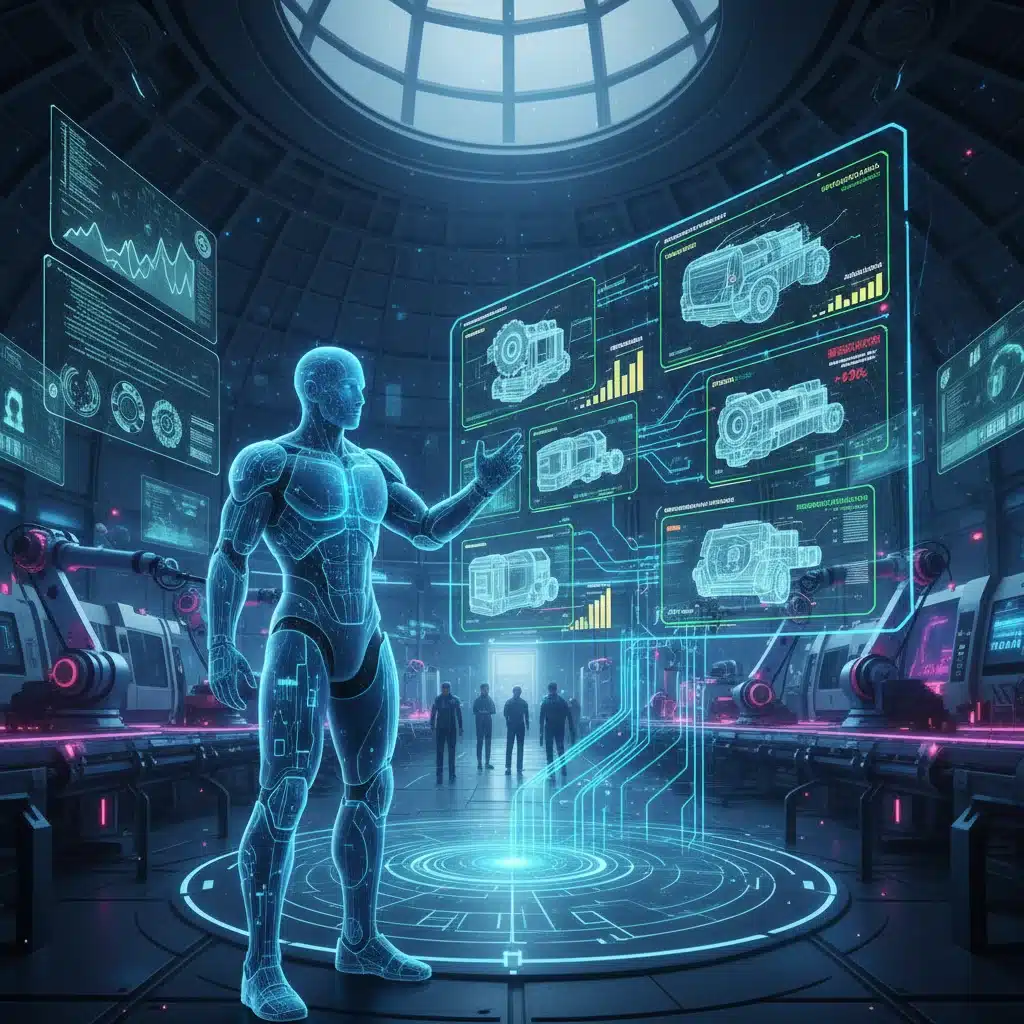
Manufacturing and Industrial Applications: Digital Twins
The industrial sector stands to gain immensely from metaverse business applications, particularly through the concept of ‘digital twins’.
Real-time Monitoring and Optimization
A digital twin is a virtual replica of a physical asset, process, or system. In the metaverse, these digital twins can be constantly updated with real-time data from sensors in the physical world. This allows engineers and operators to monitor the performance of machinery, factory floors, or even entire supply chains in an immersive 3D environment. They can identify potential issues before they cause downtime, optimize operational efficiency, and perform predictive maintenance. For instance, an oil rig operator could monitor the health of remote equipment from a virtual control room, seeing exactly how each component is performing and anticipating failures. This level of real-time insight and control is a critical metaverse business application for maintaining uptime and reducing operational costs.
Remote Assistance and Maintenance
When physical repairs or complex procedures are needed, the metaverse can facilitate remote assistance. A skilled technician in one location can guide an on-site worker through a repair using AR overlays, showing them exactly where to place tools or what steps to take. This reduces the need for expensive travel and ensures that specialized expertise can be deployed instantly, regardless of geographical distance. Furthermore, new equipment can be virtually commissioned and tested before physical installation, streamlining the entire manufacturing process. These industrial metaverse business applications are set to redefine maintenance protocols and operational efficiency across various heavy industries.
Challenges and Considerations for US Businesses
While the potential of metaverse business applications is vast, US companies must also be aware of the challenges and considerations involved in adoption. These include technological hurdles, ethical implications, and the need for strategic planning.
Technological Infrastructure and Interoperability
The metaverse, in its ideal form, requires robust technological infrastructure, including high-speed internet, powerful computing capabilities, and sophisticated hardware. While these are advancing rapidly, ensuring seamless experiences across different platforms and devices remains a challenge. Interoperability – the ability for assets and identities to move freely between different virtual worlds – is also a crucial factor that is still under development. Companies investing in the metaverse need to consider open standards and flexible platforms to avoid vendor lock-in and ensure future compatibility.
Data Privacy and Security
As with any emerging digital technology, data privacy and security are paramount. The metaverse will generate vast amounts of personal and behavioral data, raising concerns about how this data is collected, stored, and used. US businesses must adhere to stringent data protection regulations (like GDPR and CCPA) and implement robust cybersecurity measures to protect user identities and sensitive information within virtual environments. Building trust with users will be critical for widespread adoption of metaverse business applications.
User Adoption and Training
While younger generations may be naturally adept at navigating virtual worlds, widespread enterprise adoption will require significant user training and change management. Employees will need to be educated on how to use new VR/AR hardware and software, and companies will need to demonstrate the clear benefits of these new tools to overcome resistance to change. A well-planned rollout strategy that includes comprehensive training and support will be essential for successful integration of metaverse business applications into daily workflows.
Ethical Considerations and Digital Ethics
The immersive nature of the metaverse also brings forth new ethical considerations. Issues such as digital identity, virtual harassment, content moderation, and the potential for digital addiction need to be addressed proactively. Companies building in the metaverse have a responsibility to create safe, inclusive, and equitable virtual spaces. Establishing clear codes of conduct and implementing effective moderation tools will be vital for fostering positive user experiences and ensuring the responsible use of metaverse business applications.
The Road Ahead: Preparing for Early 2026
The metaverse is not a distant future; it’s an evolving present that will profoundly impact US businesses by early 2026. Companies that begin exploring and investing in these practical metaverse business applications now will be best positioned to capitalize on the opportunities it presents.
Getting started doesn’t necessarily mean building a complex virtual world from scratch. It can begin with smaller, focused initiatives:
- Pilot Programs: Experiment with immersive training modules or virtual collaboration spaces for specific teams.
- Strategic Partnerships: Collaborate with metaverse technology providers or specialized agencies to explore potential use cases.
- Talent Development: Invest in upskilling employees in VR/AR development, 3D design, and metaverse strategy.
- Research and Development: Dedicate resources to understanding how metaverse technologies can solve specific business challenges within your industry.
- Customer Insights: Gauge customer interest and readiness for immersive digital experiences.
The ultimate goal for US businesses should be to move beyond viewing the metaverse solely as a marketing gimmick and to recognize its potential as a powerful tool for operational efficiency, innovation, and competitive advantage. By focusing on practical, problem-solving metaverse business applications, companies can unlock new revenue streams, optimize existing processes, and build more resilient and future-proof enterprises.
The shift towards a more immersive and interconnected digital landscape is inevitable. Early adopters who strategically integrate metaverse technologies into their core business functions will not only thrive but will also shape the very fabric of the future economy. The time to explore these transformative possibilities is now.