The Great Resignation’s 2026 Echo: How 15% of US Workers Are Redefining Career Paths

The Great Resignation’s 2026 Echo: How 15% of US Workers Are Redefining Career Paths
The seismic shifts in the global workforce, famously dubbed "The Great Resignation," were initially perceived by many as a temporary anomaly, a fleeting consequence of the pandemic’s immediate aftermath. Yet, as we navigate deeper into the 2020s, it’s becoming unequivocally clear that these shifts were not just a blip on the radar but rather the harbinger of a fundamentally transformed employment landscape. Fast forward to 2026, and the echoes of this movement are still resonating powerfully across the United States. A staggering 15% of American workers are not merely considering a job change; they are actively in the process of redefining their entire career paths, spurred by a complex interplay of factors that have fundamentally altered their perceptions of work, purpose, and well-being. This ongoing phenomenon, often referred to as "The Great Resignation 2.0" or "The Great Reimagination," signals a profound and lasting evolution in how individuals approach their professional lives. It’s a movement characterized by a deeper introspection into what truly constitutes a fulfilling career, extending far beyond the traditional metrics of salary and title. Workers are increasingly prioritizing autonomy, flexibility, work-life integration, and a sense of belonging and contribution, leading to a dynamic and often unpredictable labor market.
This article delves into the persistent momentum of the Great Resignation in 2026, exploring the multifaceted reasons behind this sustained re-evaluation of career trajectories. We’ll examine the key drivers, from technological advancements and evolving societal values to the enduring impact of remote work and the growing emphasis on mental health and well-being. Furthermore, we will uncover the latest trends and provide insider knowledge on how both employees and employers are adapting to this new reality. For employees, understanding these trends is crucial for making informed decisions about their professional futures, identifying emerging opportunities, and strategically navigating career transitions. For employers, grasping the nuances of this ongoing shift is paramount for attracting and retaining top talent, fostering resilient organizational cultures, and developing innovative strategies that align with the evolving expectations of the modern workforce. The companies that thrive in this environment will be those that move beyond reactive measures and proactively embrace a future-oriented approach to talent management, recognizing that the traditional employer-employee contract has been irrevocably altered. This involves not only offering competitive compensation and benefits but also cultivating environments that champion employee growth, psychological safety, and a meaningful connection to organizational purpose. The Great Resignation’s 2026 echo is not a challenge to be overcome, but an opportunity to forge a more equitable, flexible, and ultimately more human-centric world of work.
The Enduring Drivers of the Great Resignation 2026
The initial wave of the Great Resignation was largely fueled by a confluence of factors: burnout from pandemic-induced pressures, a re-evaluation of priorities during lockdowns, and a sudden surge in remote work opportunities. While some of these immediate triggers have subsided, the underlying currents that propelled the movement have only strengthened, evolving into more sophisticated and deeply ingrained motivations. In 2026, the decision to redefine a career path is rarely impulsive; it’s often the culmination of months, if not years, of careful consideration and strategic planning. This sustained momentum is attributed to several key drivers that continue to shape the aspirations and decisions of the American workforce.
The Quest for Purpose and Meaningful Work
One of the most significant and enduring drivers is the profound quest for purpose and meaningful work. The pandemic served as a stark reminder of life’s fragility, prompting many to question whether their current roles aligned with their personal values and long-term aspirations. In 2026, this introspection has translated into a demand for work that offers more than just a paycheck. Employees are actively seeking roles where they can make a tangible impact, contribute to a cause they believe in, and feel a sense of fulfillment beyond mere transactional tasks. This often means pivoting to industries with a stronger social or environmental mission, taking on roles that leverage their unique skills for greater good, or even starting their own ventures rooted in personal passions. The "purpose economy" is no longer a niche concept but a mainstream expectation, with workers increasingly willing to forego higher salaries for roles that offer greater intrinsic rewards. Companies that can articulate a compelling mission and demonstrate a genuine commitment to social responsibility are finding themselves at a distinct advantage in attracting and retaining talent. Conversely, organizations perceived as lacking in purpose or ethical grounding are struggling to resonate with a workforce that is more values-driven than ever before. This shift is also influencing educational choices, with more individuals pursuing degrees and certifications in fields like sustainable development, social entrepreneurship, and community organizing, reflecting a desire to align their professional pursuits with broader societal needs. The Great Resignation 2026 is fundamentally a movement towards a more conscious capitalism, where individual well-being and collective good are inextricably linked to economic activity.
Flexibility and Autonomy as Non-Negotiables
The "work-from-anywhere" experiment initiated during the pandemic has evolved into a deeply ingrained expectation for flexibility and autonomy. In 2026, the traditional 9-to-5, in-office model is increasingly seen as an outdated relic by a significant portion of the workforce. Employees, having experienced the benefits of remote or hybrid arrangements – including improved work-life balance, reduced commuting stress, and greater control over their schedules – are unwilling to revert to less flexible paradigms. This demand extends beyond just location; it encompasses flexibility in hours, project choice, and even career progression. The rise of the "gig economy" and freelance work further exemplifies this desire for self-determination, as individuals opt for contractual roles that offer greater control over their professional lives. Companies that insist on rigid, in-person attendance without a compelling rationale are facing significant challenges in attracting and retaining talent, especially in competitive sectors. The most successful organizations are those that have embraced hybrid work models, invested in robust remote work infrastructure, and empowered employees with greater autonomy over how and when they perform their duties. This doesn’t mean the death of the office, but rather its redefinition as a hub for collaboration, innovation, and community building, rather than a mere place for individual task execution. The concept of "results-only work environments" (ROWE) is gaining traction, where performance is measured by output rather than hours spent, fostering a culture of trust and accountability. The Great Resignation 2026 is a testament to the fact that flexibility is no longer a perk but a fundamental expectation, a cornerstone of modern employment that significantly impacts job satisfaction and retention.
Mental Health and Well-being Prioritization
Another critical driver in 2026 is the heightened prioritization of mental health and well-being. The stresses of the past few years have brought mental health to the forefront of workplace discussions, shattering previous stigmas. Employees are no longer willing to sacrifice their mental or physical health for their careers. They are seeking employers who genuinely support their well-being through comprehensive benefits, mental health resources, and a culture that encourages healthy boundaries and prevents burnout. This includes access to therapy, stress management programs, adequate paid time off, and an overall environment that promotes psychological safety. The "always-on" culture that once permeated many industries is now being actively resisted, with workers demanding clear distinctions between work and personal life. Companies that fail to address these concerns risk high turnover and disengagement. Conversely, organizations that actively invest in employee well-being, from offering mindfulness programs to implementing policies that protect personal time, are seeing higher levels of employee loyalty and productivity. This shift also reflects a broader societal recognition that mental health is as important as physical health, and that a holistic approach to well-being is essential for sustained performance and happiness. The Great Resignation 2026 is a powerful indicator that the human cost of relentless productivity is no longer sustainable, and that a more compassionate and supportive approach to work is not just desirable, but necessary for a thriving workforce.
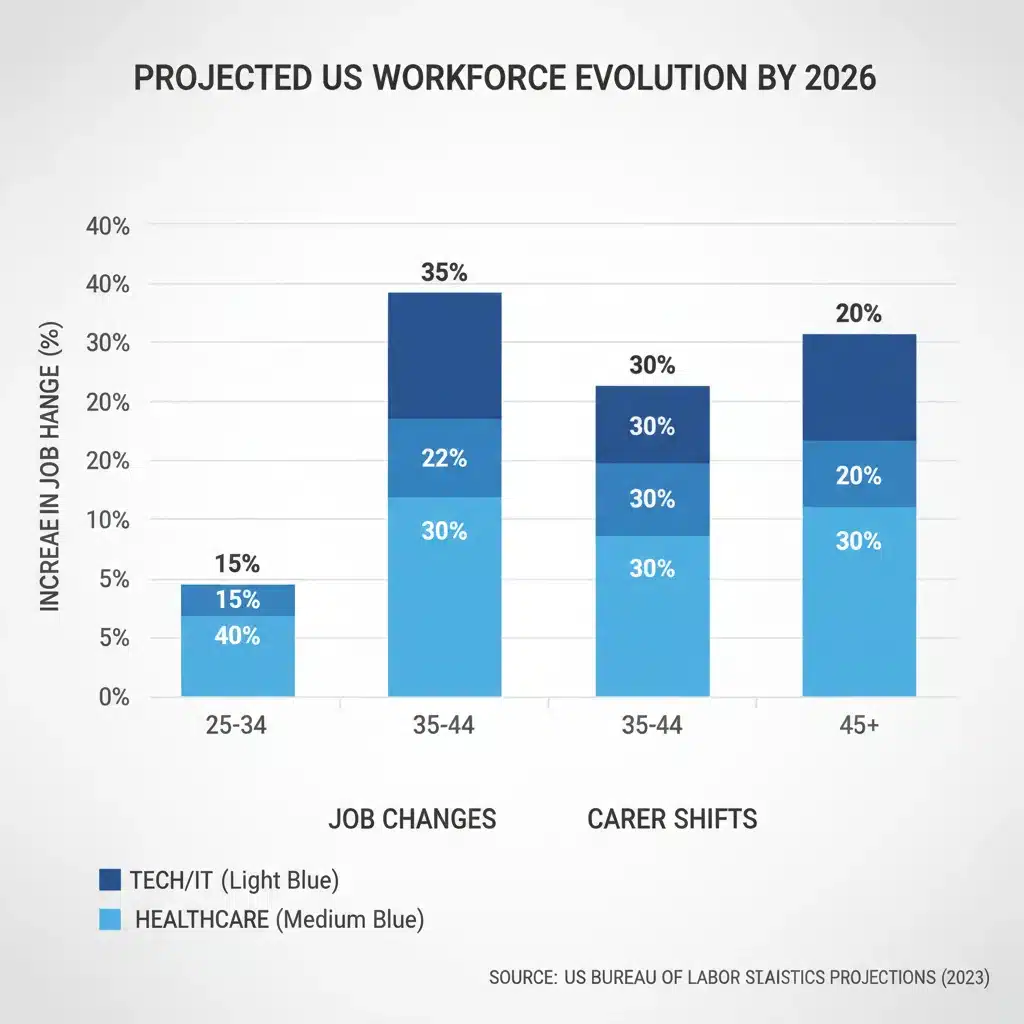
Key Trends Shaping Career Redefinition in 2026
The ongoing redefinition of career paths by 15% of US workers in 2026 is not a monolithic movement; rather, it’s characterized by several distinct and powerful trends. These trends are reshaping industries, creating new opportunities, and challenging conventional notions of professional development. Understanding them is crucial for anyone navigating the modern labor market, whether as an employee seeking growth or an employer striving for talent retention.
Upskilling and Reskilling for the Future of Work
One of the most prominent trends is the widespread embrace of upskilling and reskilling. As technological advancements accelerate and industries evolve, workers recognize the imperative to acquire new competencies to remain relevant and competitive. This isn’t just about learning a new software program; it’s about developing entirely new skill sets that align with emerging demands. There’s a significant surge in demand for skills related to artificial intelligence, data analytics, cybersecurity, green technologies, and digital marketing. Many individuals are leveraging online learning platforms, vocational training programs, and employer-sponsored initiatives to bridge skill gaps and position themselves for future roles. This proactive approach to learning is driven by a desire for greater career security and a longing to pivot into higher-growth sectors. The "lifelong learning" paradigm is no longer a theoretical concept but a practical necessity, with individuals investing significant time and resources in continuous professional development. Employers, in turn, are recognizing the importance of internal mobility and talent development, creating pathways for employees to transition into new roles within the organization, often through dedicated training academies and mentorship programs. This trend underscores a fundamental shift from a static career model to a dynamic, adaptive one, where continuous learning is the bedrock of professional longevity. The Great Resignation 2026 highlights that workers are not just leaving jobs; they are strategically investing in their future capabilities.
The Rise of the "Portfolio Career"
The concept of a "portfolio career," where individuals juggle multiple roles, projects, or income streams simultaneously, is gaining considerable traction. This model offers greater diversity in work, enhanced flexibility, and reduced reliance on a single employer. For many, it’s a way to explore different passions, develop a broader range of skills, and create a more resilient financial foundation. A significant portion of the 15% redefining their careers are not necessarily seeking a single, full-time equivalent role but rather curating a collection of part-time positions, freelance gigs, consulting contracts, and entrepreneurial ventures. This approach allows them to piece together a career that perfectly aligns with their interests, values, and desired lifestyle. The portfolio career is particularly appealing to those seeking autonomy and a break from corporate hierarchies. It also enables individuals to experiment with different industries or roles without the full commitment of a traditional job change. For employers, this trend presents both challenges and opportunities. While it necessitates a rethinking of traditional employment structures and benefits, it also opens up access to a wider pool of specialized talent who may not be seeking full-time engagement. Companies are increasingly engaging with "fractional" executives and project-based consultants to tap into this flexible workforce. The Great Resignation 2026 is accelerating the normalization of non-traditional career structures, emphasizing agility and self-directed professional journeys.
Geographic Relocation and "Digital Nomadism"
With the widespread adoption of remote and hybrid work models, geographic location has become less of a constraint for many professionals. This has led to a notable trend of relocation, with individuals moving away from expensive urban centers to more affordable, lifestyle-friendly areas. This "digital nomadism" or "location independence" allows workers to optimize their living costs, improve their quality of life, and pursue experiences that were previously out of reach. Entire communities are emerging in areas that offer attractive amenities, strong internet infrastructure, and a welcoming environment for remote workers. This trend has significant implications for local economies, housing markets, and talent distribution across the country. Companies that embrace a remote-first or remote-friendly culture are finding it easier to attract talent from a broader geographic pool, leading to more diverse and globally representative teams. However, it also presents challenges related to time zone management, team cohesion, and regulatory compliance across different states or even countries. The Great Resignation 2026 underscores a desire among workers for greater freedom in choosing where and how they live, integrating their professional and personal lives in ways that were once unimaginable. The ability to work from anywhere has become a powerful bargaining chip for employees, and companies that restrict this freedom risk losing out on top talent.
Emphasis on "Quiet Quitting" and Healthy Boundaries
While not a direct "redefinition" in the sense of a job change, the widespread phenomenon of "quiet quitting" is an intrinsic part of the Great Resignation’s ongoing echo. Quiet quitting refers to employees doing the bare minimum required by their job description, without going above and beyond or engaging in extra tasks. This isn’t about laziness; it’s a conscious decision to establish healthy boundaries, prevent burnout, and reclaim personal time. It signifies a rejection of the hustle culture and the expectation of constant availability. Many workers, rather than outright resigning, are choosing to redefine their engagement with their current roles, prioritizing their mental well-being over career advancement at all costs. This trend forces employers to re-evaluate their expectations and foster a culture that respects work-life balance. It highlights a demand for clearly defined roles, fair workloads, and recognition for contributions, rather than an implicit expectation of unpaid overtime or constant "extra mile" efforts. The emphasis on quiet quitting is a strong signal that employees are taking control of their professional lives, even within their existing roles, and are no longer willing to sacrifice their personal lives for their careers. The Great Resignation 2026 shows that employees are not just leaving, but also strategically disengaging from unhealthy work practices, forcing a re-evaluation of productivity metrics and employee engagement strategies across the board.

Insider Knowledge: Navigating the 2026 Landscape
For both employees and employers, the persistent echoes of the Great Resignation in 2026 demand a strategic and informed approach. Insider knowledge, gleaned from expert analysis and emerging best practices, can provide a significant advantage in navigating this dynamic professional landscape. This isn’t just about reacting to changes, but proactively shaping a more resilient and fulfilling future of work.
For Employees: Strategic Career Redefinition
If you’re among the 15% of US workers considering or actively engaging in career redefinition, a thoughtful strategy is paramount. Haphazard changes can lead to frustration and missed opportunities. First, conduct a thorough self-assessment. What are your core values, strengths, passions, and non-negotiables? Go beyond surface-level desires and delve into what truly brings you satisfaction and purpose. Consider what aspects of past roles you enjoyed and disliked, and identify transferable skills that can be leveraged in new directions. Networking remains incredibly powerful. Connect with individuals in fields or roles that pique your interest. Informational interviews can provide invaluable insights into day-to-day realities, industry trends, and potential challenges. Don’t underestimate the power of a strong online professional presence; ensure your LinkedIn profile accurately reflects your aspirations and skills. Invest in continuous learning. As highlighted by the upskilling trend, acquiring new certifications, taking online courses, or even pursuing a new degree can significantly enhance your marketability and open doors to new career paths. Look for micro-credentials and bootcamps that offer targeted skills in high-demand areas. Finally, consider a phased approach to career change. Instead of a complete jump, explore opportunities for part-time work, freelancing, or volunteering in your desired new field. This allows you to gain experience, build a network, and test the waters before making a full commitment. Remember, the Great Resignation 2026 is about empowerment; take control of your professional narrative.
For Employers: Attracting and Retaining Talent
In this era of ongoing career redefinition, employers face the dual challenge of attracting new talent while retaining existing valuable employees. The traditional playbook is no longer sufficient. First and foremost, cultivate a culture of empathy, trust, and psychological safety. Employees need to feel valued, heard, and supported. This means actively listening to feedback, addressing concerns transparently, and fostering an environment where mistakes are seen as learning opportunities, not career-ending failures. Implement flexible work policies that are genuinely responsive to employee needs. This could include hybrid models, fully remote options, compressed workweeks, or flexible scheduling. The "one-size-fits-all" approach to work arrangements is obsolete. Communicate clearly about career progression and development opportunities. Employees are looking for growth, not just stability. Invest in robust upskilling and reskilling programs, create mentorship initiatives, and provide clear pathways for internal mobility. Show employees how they can build a fulfilling career within your organization. Prioritize employee well-being by offering comprehensive mental health resources, promoting healthy boundaries, and ensuring reasonable workloads. Burnout is a primary driver of turnover, and proactive measures to prevent it are critical. Finally, articulate and live your organizational purpose. The modern workforce is increasingly values-driven; demonstrate how your company contributes positively to society and how employees’ work aligns with a larger, meaningful mission. The Great Resignation 2026 demands that employers move beyond transactional relationships and build genuine partnerships with their workforce, recognizing that talent is an organization’s most valuable asset.
The Long-Term Impact and Future Outlook
The Great Resignation’s 2026 echo is not a temporary phenomenon; it represents a fundamental and lasting transformation of the labor market. Its long-term impacts will reverberate for decades, reshaping economic structures, educational systems, and societal norms around work. Understanding these potential outcomes is crucial for strategic planning at both individual and organizational levels.
Economic Restructuring and Innovation
The ongoing career redefinition is intrinsically linked to economic restructuring. As workers pivot towards high-growth sectors and demand for specific skills intensifies, industries will continue to transform. We can expect accelerated innovation in areas where talent is concentrated and where new business models emerge to meet evolving employee and consumer expectations. This could lead to a more distributed and agile economy, with a greater emphasis on specialized services and project-based work. The rise of the portfolio career, for example, could foster a more entrepreneurial ecosystem, sparking new business creations and disrupting traditional corporate structures. Regional economies will also be impacted, as talent migrates to areas offering a better quality of life and more affordable living, potentially revitalizing smaller towns and creating new economic hubs outside of established metropolitan centers. This dynamic redistribution of talent and capital will necessitate adaptive policies from governments and local authorities, focusing on infrastructure development, housing solutions, and support for new business ventures. The challenge for policymakers will be to ensure equitable access to these new opportunities and to mitigate potential disparities arising from these shifts. The Great Resignation 2026 is, in essence, a catalyst for a more dynamic and potentially more resilient economic landscape, driven by individual agency and technological advancement.
Educational System Adaptation
The demands of the evolving workforce will place immense pressure on educational institutions to adapt. Traditional four-year degrees may become less universally prescriptive, with a greater emphasis on modular learning, micro-credentials, and continuous professional development. Universities and colleges will need to collaborate more closely with industries to ensure their curricula are aligned with current and future skill requirements. Vocational training and technical schools will likely experience a resurgence, offering fast-tracked pathways to in-demand careers. Furthermore, the concept of "re-skilling for life" will become a norm, necessitating accessible and affordable learning opportunities for adults throughout their careers. Online learning platforms will continue to grow in importance, offering flexible and personalized educational experiences. The focus will shift from front-loading education at the beginning of a career to integrating learning throughout one’s professional journey. This will also require a re-evaluation of funding models and accreditation processes to support a more fluid and responsive educational ecosystem. The Great Resignation 2026 is a clear signal that the linear path from education to a lifelong career is becoming a relic of the past, replaced by a continuous cycle of learning, adaptation, and re-invention.
Societal Shifts in Work-Life Integration
Perhaps the most profound long-term impact will be the reshaping of societal norms around work-life integration. The strict separation between professional and personal lives is blurring, giving way to a more integrated approach where work is just one component of a holistic life. This shift will likely lead to a greater societal value placed on leisure, family time, community engagement, and personal well-being. Companies that embrace this integration will foster more loyal and productive workforces, while those that resist will struggle to attract and retain talent. Policy changes, such as enhanced parental leave, flexible working hours, and the potential for a four-day workweek, could become more widespread as societies adapt to these new expectations. The emphasis on mental health and well-being will continue to grow, influencing urban planning, healthcare systems, and public policy. This transformation reflects a deeper cultural shift where individuals are prioritizing quality of life over relentless pursuit of material success alone. The Great Resignation 2026 is not just about changing jobs; it’s about changing the very fabric of how we perceive and integrate work into our lives, moving towards a future where human flourishing is at the center of economic and social design.
Conclusion: Embracing the Evolving World of Work
The Great Resignation’s 2026 echo is a powerful testament to the enduring transformation of the American workforce. With 15% of US workers actively redefining their career paths, we are witnessing a fundamental shift in priorities, values, and expectations regarding professional life. This is not a transient trend but a deeply embedded cultural and economic evolution, driven by a quest for purpose, a demand for flexibility, and an unwavering commitment to personal well-being.
For employees, this era presents unprecedented opportunities for growth, self-discovery, and the creation of truly fulfilling careers. It empowers individuals to take agency over their professional narratives, leveraging continuous learning, strategic networking, and a willingness to embrace non-traditional career models. The key lies in thoughtful self-assessment, proactive skill development, and a strategic approach to navigating a dynamic labor market.
For employers, the challenge is clear: adapt or risk obsolescence. Attracting and retaining top talent in 2026 requires more than just competitive salaries; it demands a genuine commitment to fostering empathetic cultures, offering meaningful flexibility, investing in employee development, and prioritizing well-being. Organizations that embrace these principles, articulate a compelling purpose, and build authentic partnerships with their workforce will be the ones that thrive in this new landscape.
The long-term impact of this movement extends beyond individual careers and organizational strategies. It signals a broader economic restructuring, a necessary adaptation of educational systems, and a profound societal re-evaluation of work-life integration. The Great Resignation 2026 is not merely a historical event; it is an ongoing force shaping a more conscious, flexible, and human-centric future of work. By understanding its drivers, recognizing its trends, and applying insider knowledge, both individuals and organizations can navigate this evolving world with confidence, seizing the opportunities it presents to build a more resilient and fulfilling professional existence for all.