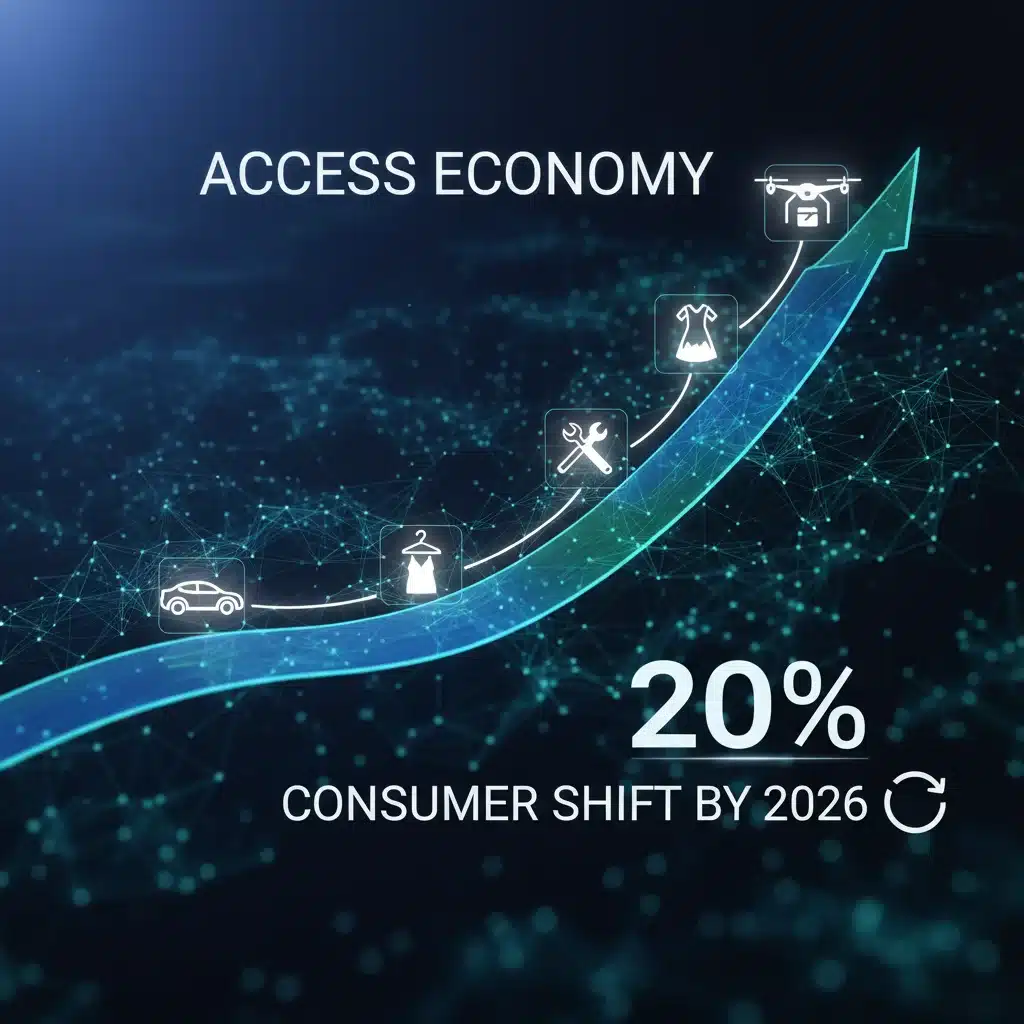
Access Economy: 20% Consumer Shift by 2026

The Rise of the Access Economy: How 20% of Consumers Will Embrace Rental and Sharing Models by 2026
In an era defined by rapid technological advancement, shifting consumer values, and a growing emphasis on sustainability, a fundamental transformation is sweeping across global markets. The traditional paradigm of ownership, long considered the cornerstone of economic activity, is gradually giving way to a new model: the access economy. This isn’t merely a fleeting trend; it’s a profound behavioral shift, and by 2026, experts predict that a significant 20% of consumers will actively engage with rental and sharing models, fundamentally altering how we consume goods and services. This article delves deep into the fascinating world of the Access Economy Growth, exploring its drivers, its multifaceted benefits, the challenges it presents, and its undeniable impact on both businesses and individuals.
The concept of the access economy, often used interchangeably with the sharing economy or collaborative consumption, revolves around the idea of gaining temporary access to goods and services rather than outright ownership. From car-sharing services like Zipcar and Turo to fashion rentals like Rent the Runway, tool libraries, and even co-working spaces, the options for accessing what we need, when we need it, are proliferating at an unprecedented rate. This isn’t just about cost-saving; it’s about convenience, flexibility, reduced environmental impact, and a redefinition of value itself.
Understanding the Core Drivers of Access Economy Growth
Several powerful forces are converging to fuel the impressive Access Economy Growth we are witnessing and will continue to see through 2026. These drivers are not isolated but rather interconnected, creating a powerful ecosystem that encourages consumers to rethink their relationship with possessions.
Economic Imperatives: Cost-Effectiveness and Financial Flexibility
Perhaps the most immediate and tangible driver is economic. In an increasingly volatile global economy, consumers are constantly seeking ways to optimize their spending. Owning many items, particularly those used infrequently or with high depreciation rates, can be a significant financial burden. The access economy offers a compelling alternative: pay for usage, not ownership. This is particularly attractive for high-value items like luxury vehicles, specialized equipment, or designer clothing, which might otherwise be out of reach for many. Renting allows consumers to experience these goods without the substantial upfront investment, maintenance costs, insurance, and storage associated with ownership. For businesses, this translates into a broader customer base and increased utilization of assets.
Environmental Consciousness: Sustainability at the Forefront
A growing global awareness of environmental issues is undeniably shaping consumer choices. The linear ‘take-make-dispose’ model of consumption is proving unsustainable. The access economy offers a more circular approach, promoting resource efficiency and reducing waste. By sharing or renting items, fewer new products need to be manufactured, leading to a decrease in raw material extraction, energy consumption, and landfill waste. Consumers, especially younger generations, are increasingly prioritizing brands and services that align with their eco-conscious values. The ability to participate in a system that promotes sustainability without sacrificing convenience is a powerful motivator for embracing rental and sharing models.
Technological Advancements: The Enabler of Seamless Access
The proliferation of smartphones, sophisticated mobile applications, and robust digital platforms has been instrumental in the explosive Access Economy Growth. These technologies facilitate seamless transactions, enable real-time tracking of assets, simplify booking and payment processes, and build trust through transparent rating and review systems. Geospatial technology allows users to locate nearby available items, while secure payment gateways ensure smooth financial exchanges. Without these technological enablers, the complex logistics of managing shared resources on a large scale would be nearly impossible. The ease of access, often just a few taps away on a smartphone, is a critical factor in consumer adoption.
Changing Lifestyles and Shifting Values: Prioritizing Experience Over Possession
Modern lifestyles, especially in urban areas, often involve smaller living spaces, frequent relocation, and a desire for minimalism. Owning a vast array of possessions can feel like a burden rather than a benefit. Furthermore, there’s a discernible shift in consumer values from accumulating possessions to prioritizing experiences. People are increasingly valuing travel, unique adventures, and personal growth over material wealth. The access economy perfectly caters to this shift, providing access to experiences (e.g., adventure gear for a weekend trip, a specific outfit for a special event) without the long-term commitment of ownership. This desire for flexibility and adaptability is a strong undercurrent driving the move towards rental and sharing.
Urbanization and Population Density
As more of the global population congregates in urban centers, the practicalities of ownership become more challenging. Parking is scarce and expensive, storage space is at a premium, and the need for personal transport might be intermittent. Car-sharing, bike-sharing, and scooter-sharing services thrive in such environments, offering convenient and flexible alternatives to personal vehicle ownership. The density of urban populations also creates a critical mass of users, making sharing models economically viable and efficient.
The Multifaceted Benefits of the Access Economy
The widespread adoption of rental and sharing models brings a host of benefits that extend beyond individual convenience and cost savings. These advantages contribute significantly to the overall appeal and long-term viability of the Access Economy Growth.
For Consumers: Enhanced Flexibility and Variety
Consumers gain unparalleled flexibility. They can access a wider array of products and services without the financial commitment or responsibility of ownership. Need a specialized tool for a one-off home repair? Rent it. Want to try a new hobby without investing in expensive equipment? Rent it. Desire to wear a high-fashion item for a special occasion? Rent it. This model allows for experimentation, reduces clutter, and frees up disposable income for other priorities. The ability to try new things without significant upfront investment lowers the barrier to entry for many activities and products.
For Businesses: New Revenue Streams and Asset Optimization
For businesses, the access economy opens up entirely new revenue streams. Manufacturers can move from a purely transactional sales model to a service-oriented model, offering their products for rent or subscription. This can lead to more stable, recurring revenue and deeper customer relationships. Furthermore, businesses can optimize the utilization of their assets. Instead of equipment sitting idle, it can be generating income through rental. This not only improves profitability but also extends the lifecycle of products, aligning with sustainable business practices. It also allows businesses to collect valuable data on product usage, informing future design and development.
For Society: Resource Efficiency and Reduced Waste
At a societal level, the access economy promotes a more efficient allocation of resources. Items that would traditionally be owned by one individual and used infrequently can now be shared by many, maximizing their utility. This reduces the overall demand for new manufactured goods, leading to less resource depletion and a smaller environmental footprint. It also fosters a sense of community and collaboration, as individuals engage in shared resource pools. This collective approach to consumption is a powerful step towards building more sustainable and resilient communities.
Innovation and Entrepreneurship
The access economy has also spurred a wave of innovation and entrepreneurship. New platforms, business models, and technological solutions are constantly emerging to address the diverse needs of sharing and rental markets. This dynamic environment encourages creativity and competition, leading to better services and more efficient resource allocation. Startups can enter markets with lower capital requirements by focusing on access rather than manufacturing, fostering a vibrant ecosystem of new businesses.
Challenges and Considerations for Sustained Access Economy Growth
While the trajectory for the Access Economy Growth looks promising, it is not without its challenges. Addressing these issues will be crucial for the continued expansion and acceptance of rental and sharing models.
Trust and Reliability: The Foundation of Sharing
Trust is paramount in any sharing system. Consumers need to trust that the items they rent will be in good condition, that the service will be reliable, and that their personal data will be protected. Platforms must implement robust verification processes, clear terms of service, and effective dispute resolution mechanisms. Building and maintaining a strong reputation for reliability and safety is critical for attracting and retaining users. Without trust, the concept of sharing quickly falters.
Regulation and Legal Frameworks
The rapid evolution of the access economy often outpaces existing regulatory frameworks. Issues such as liability, insurance, taxation, and consumer protection need to be carefully addressed. Governments and policymakers are grappling with how to regulate these new business models without stifling innovation. Clear and consistent regulations are essential to provide certainty for both providers and consumers, ensuring fair competition and responsible operations. Ambiguous legal landscapes can create significant hurdles for expansion.
Quality Control and Maintenance
Maintaining the quality and condition of shared assets is a continuous challenge. Unlike privately owned items, shared goods experience higher usage and wear and tear. Platforms and providers need efficient systems for inspection, cleaning, maintenance, and repair to ensure a consistent user experience. Poorly maintained or damaged items can quickly erode consumer confidence and deter future use. Investing in robust maintenance protocols is crucial for long-term success.
Scalability and Logistics
Scaling access economy models can be complex, especially for physical goods. Managing inventory, logistics, delivery, and collection across a wide geographical area requires sophisticated operational capabilities. Ensuring that items are available where and when consumers need them is a significant logistical undertaking. The efficiency of these logistical operations directly impacts user satisfaction and the economic viability of the service.
Behavioral Change and Education
Despite the growing trend, a significant portion of consumers still adheres to the traditional ownership mindset. Overcoming ingrained habits and educating consumers about the benefits and mechanics of rental and sharing models requires ongoing effort. Marketing and communication strategies must effectively highlight the value proposition, address potential concerns, and simplify the user journey to encourage broader adoption. The shift from ownership to access is a cultural one, requiring time and consistent reinforcement.
Key Sectors Driving the Access Economy Growth Towards 2026
The 20% consumer shift by 2026 won’t be evenly distributed across all sectors. Certain industries are particularly well-suited for rental and sharing models and are expected to be at the forefront of this transformation.
Transportation: Leading the Charge
The transportation sector has been a pioneer in the access economy with car-sharing, ride-sharing, bike-sharing, and scooter-sharing services becoming ubiquitous in many cities. The high cost of vehicle ownership, coupled with parking challenges and environmental concerns, makes these models highly attractive. The advent of autonomous vehicles is poised to further accelerate this trend, potentially making personal car ownership a niche choice for many urban dwellers. The future of urban mobility is increasingly about access to transportation, not ownership of a vehicle.
Fashion and Apparel: Sustainable Style
The fast fashion industry’s environmental impact has driven a surge in fashion rental services. Consumers can access high-end designer wear for special occasions or regularly refresh their wardrobes without the expense and environmental footprint of constant purchasing. This sector appeals to a desire for variety, sustainability, and affordability in personal style. As consumer awareness of ethical consumption grows, fashion rental is set to become an even more significant component of the access economy.
Tools and Equipment: Practicality and Efficiency
From DIY enthusiasts to small businesses, the need for specialized tools and equipment is often intermittent. Rental services for power tools, gardening equipment, construction machinery, and even party supplies offer a practical and cost-effective solution. Tool libraries and equipment rental companies are seeing increased demand as people realize the financial and storage benefits of accessing rather than owning these items. This sector exemplifies the economic efficiency inherent in the access economy.
Electronics and Technology: Staying Current Without Commitment
The rapid pace of technological innovation means that personal electronics can quickly become outdated. Rental or subscription models for smartphones, laptops, and other gadgets are emerging, allowing consumers to always have access to the latest technology without the full purchase price or the burden of obsolescence. This model is particularly appealing to businesses that need to equip their employees with cutting-edge devices without constant capital expenditure. It transforms a depreciating asset into a manageable operational expense.
Accommodation: The Airbnb Effect
While often categorized differently, platforms like Airbnb are prime examples of the access economy in action, allowing individuals to access temporary living spaces without ownership. This model has revolutionized the travel and hospitality industry, offering diverse options and often more authentic experiences than traditional hotels. The success of Airbnb demonstrates the immense potential for peer-to-peer sharing of underutilized assets.

The Future Landscape: What 20% Consumer Adoption Means
The projection of 20% consumer engagement with rental and sharing models by 2026 signifies a mature and deeply integrated access economy. This level of adoption will have profound implications:
Redefined Consumer Expectations
Consumers will increasingly expect access as a standard option alongside ownership. Businesses that fail to offer flexible access models for their products or services may find themselves at a competitive disadvantage. The expectation of convenience, instant gratification, and sustainability will drive purchasing decisions.
Business Model Transformation
More traditional businesses will be compelled to adapt their strategies, exploring product-as-a-service (PaaS) models, subscription services, and joint ventures with sharing platforms. This shift could lead to a more resilient and diversified business landscape, less reliant on single-transaction sales. The focus will shift from selling units to providing continuous value through access.
Increased Circularity and Sustainability
A significant portion of consumer activity moving to access models will dramatically boost the circular economy. Products will be designed for durability, repairability, and multiple lifecycles, reducing waste and maximizing resource value. This will contribute significantly to global sustainability goals and foster a more responsible approach to consumption.
Policy and Infrastructure Development
As the access economy becomes more mainstream, robust policy frameworks and dedicated infrastructure will emerge to support its growth. This includes clearer regulations, specialized insurance products, and urban planning that integrates shared resources seamlessly into daily life. Cities might develop dedicated hubs for shared vehicles or tool libraries, making access even more convenient.
How Businesses Can Thrive in the Evolving Access Economy
For businesses looking to capitalize on the accelerating Access Economy Growth, several strategies are key:
Embrace Product-as-a-Service (PaaS) Models
Consider how your products or services can be offered on a subscription or rental basis. This requires a shift in mindset from selling a physical good to providing a continuous service. This approach can build stronger customer relationships and generate predictable recurring revenue.
Integrate with Existing Platforms or Build Your Own
Depending on your industry and resources, you might partner with established sharing platforms or develop your own proprietary rental ecosystem. Carefully evaluate the pros and cons of each approach, considering market reach, operational complexity, and brand control.
Focus on Durability and Maintenance
Products designed for the access economy must be robust, easy to maintain, and repairable. Invest in high-quality materials and modular designs that facilitate refurbishment and extend product lifecycles. This also contributes to a stronger brand image associated with quality and sustainability.
Prioritize User Experience and Trust
Seamless booking, reliable service, transparent pricing, and excellent customer support are non-negotiable. Invest in intuitive digital platforms and human-centric service design to build trust and foster loyalty among your user base. Positive word-of-mouth is particularly powerful in the sharing economy.
Leverage Data for Optimization
The access economy generates a wealth of data on product usage, demand patterns, and customer preferences. Utilize this data to optimize inventory management, pricing strategies, maintenance schedules, and product development. Data-driven decision-making is crucial for efficiency and competitive advantage.
Case Studies: Real-World Examples of Access Economy Success
To further illustrate the power of the Access Economy Growth, let’s look at a few examples beyond the well-known:
Muddy Stilettos – Luxury Baby Gear Rental
This UK-based company allows parents to rent high-end baby equipment like strollers, car seats, and cribs for short or long periods. This addresses the challenge of expensive, short-term use items for infants, offering flexibility and cost savings to new parents while promoting sustainable consumption.
Spinlister – Peer-to-Peer Bike Rental
Spinlister connects bike owners with individuals looking to rent bikes, from casual cruisers to high-performance road bikes. It monetizes underutilized assets (personal bikes) and provides convenient, affordable access to cycling enthusiasts and tourists worldwide. It exemplifies the true peer-to-peer sharing model.
Grover – Tech Rental Subscriptions
Grover offers a subscription service for a wide range of tech products, including smartphones, drones, cameras, and VR headsets. This allows consumers to try the latest gadgets without committing to a full purchase, upgrading easily, and returning items when no longer needed. It caters to the desire for cutting-edge technology without the burden of ownership or rapid obsolescence.
These examples highlight the diverse applications and growing sophistication of rental and sharing models across various consumer needs and product categories. They are testaments to the adaptability and inherent value proposition of the access economy.
Conclusion: Embracing the Future of Consumption
The shift from ownership to access is not a temporary phenomenon but a fundamental reorientation of consumer behavior and market dynamics. With 20% of consumers projected to embrace rental and sharing models by 2026, the Access Economy Growth is set to redefine how we interact with products and services. This evolution is driven by a powerful confluence of economic, environmental, technological, and lifestyle factors.
For consumers, it offers unparalleled flexibility, affordability, and a path to more sustainable living. For businesses, it presents exciting opportunities for innovation, new revenue streams, and optimized asset utilization. While challenges related to trust, regulation, and logistics remain, the benefits far outweigh the hurdles. As we move closer to 2026, businesses and individuals alike must recognize and adapt to this transformative trend. The future of consumption is increasingly about access, not just ownership, and those who embrace this paradigm shift will be best positioned to thrive in the evolving global marketplace.
The access economy is more than just a business model; it’s a cultural movement towards a more efficient, sustainable, and collaborative way of life. Its continued growth promises a future where resources are maximized, waste is minimized, and consumers enjoy greater freedom and choice. Get ready to be part of this exciting revolution.