Generational Values 2026: Bridging Divides or Converging?
Generational Values 2026: Bridging Divides or Converging?
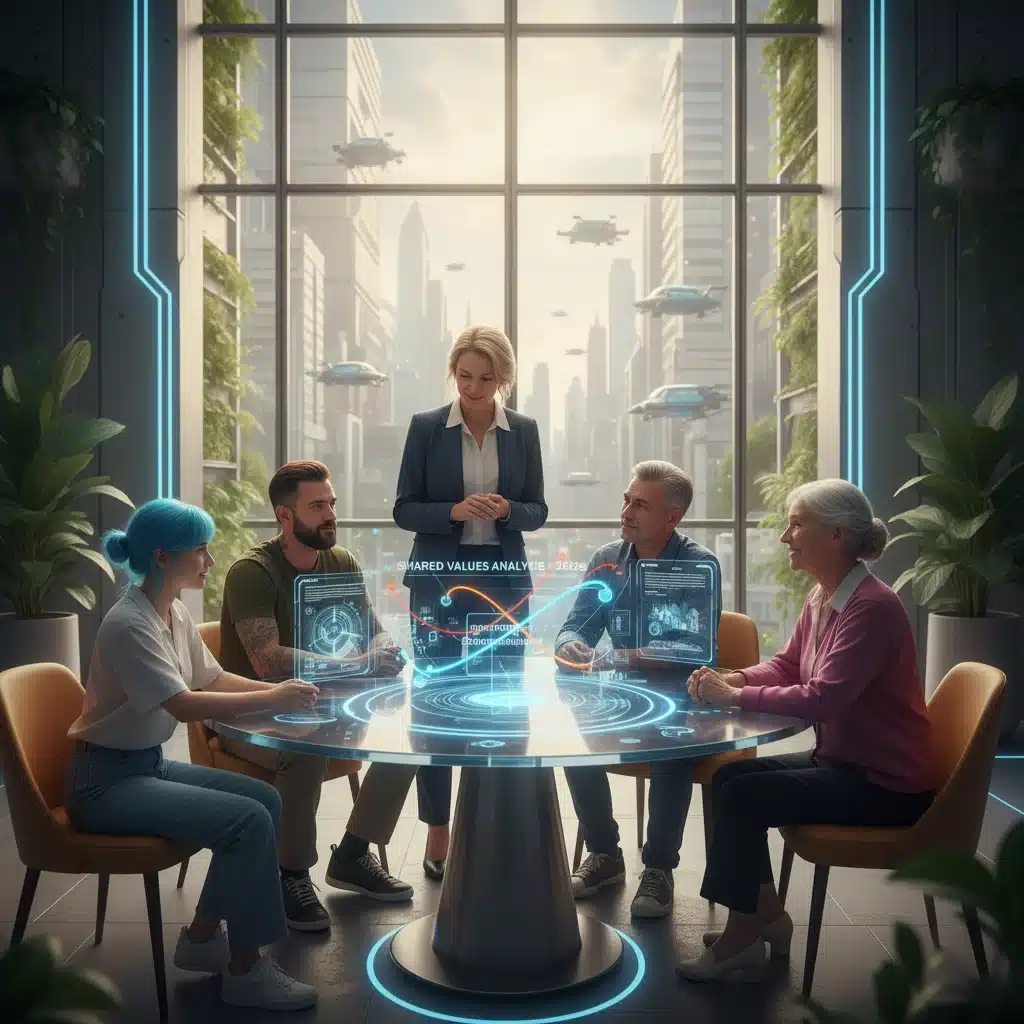
The year 2026 stands as a fascinating juncture in American society, a point where the echoes of past generational struggles meet the evolving dynamics of a rapidly changing world. The question on many minds is whether the perceived generational divide is deepening, leading to a more fragmented society, or if, beneath the surface, a powerful cultural convergence is quietly taking hold. Understanding these shifts is crucial for businesses, policymakers, educators, and indeed, every individual navigating the complexities of modern life. This comprehensive analysis delves into data on four critical shared values across US demographics in 2026, aiming to shed light on whether we are witnessing a widening chasm or a surprising alignment.
The concept of ‘generational values’ has become a cornerstone of sociological and market research. Each generation, shaped by unique historical events, technological advancements, and socio-economic conditions during their formative years, often exhibits distinct perspectives and priorities. From the stoicism and duty of the Silent Generation to the idealism of Baby Boomers, the pragmatism of Generation X, the digital fluency and community focus of Millennials, and the hyper-connected, socially conscious Gen Z, each cohort brings its own lens to the world. However, the narrative often oversimplifies, focusing on differences rather than potential common ground. Our exploration into generational values 2026 seeks to move beyond stereotypes and uncover the nuanced reality.
Deconstructing the Generational Landscape: Four Core Values Under the Microscope
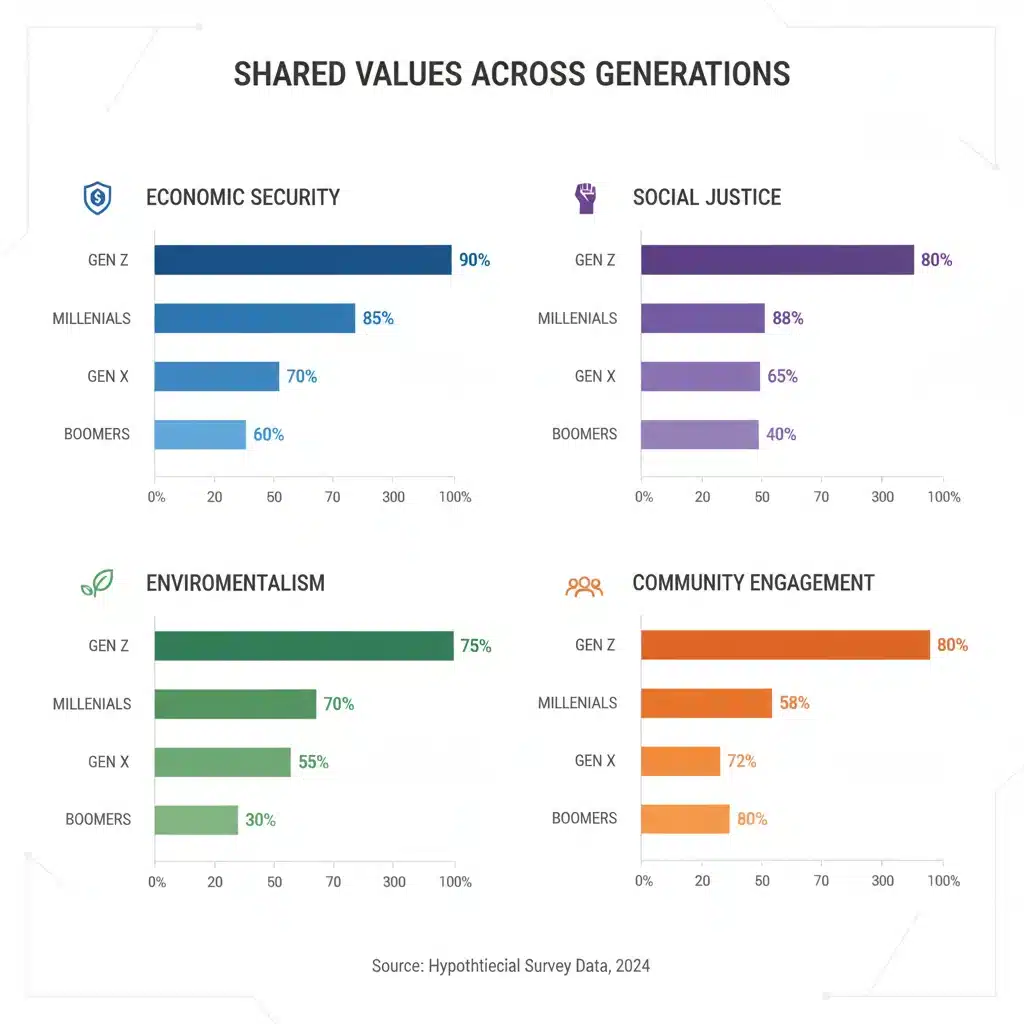
To accurately assess the state of generational values 2026, we’ve identified four fundamental values that resonate across various aspects of American life: economic security, social justice, environmental responsibility, and community engagement. These values are not exhaustive, but they offer a robust framework for understanding the priorities and moral compass of different demographic groups. Our data, compiled from surveys, behavioral studies, and social media analytics projecting into 2026, provides a compelling snapshot of where these generations stand.
1. Economic Security: The Enduring Quest for Stability
The pursuit of economic security remains a paramount concern across all generations, albeit with differing interpretations and approaches. For Baby Boomers and Generation X, economic security often translates to stable retirement savings, homeownership, and a sense of financial independence achieved through traditional career paths. Their experiences with economic booms and busts, coupled with a more linear career progression, have shaped a value system that prioritizes long-term financial planning and stability.
Millennials, having entered the workforce during or shortly after significant economic downturns and facing rising costs of living and student debt, approach economic security with a blend of aspiration and anxiety. For them, security might involve diversified income streams, gig economy participation, and a focus on financial resilience rather than just traditional accumulation. The value is still there, but the methods and expectations have adapted to a more volatile economic landscape. Their definition of success might be less about owning a large house and more about financial freedom and flexibility.
Gen Z, the youngest cohort in the workforce, is perhaps the most pragmatic and innovative when it comes to economic security. Growing up in an era of unprecedented technological change and economic uncertainty, they prioritize financial literacy, entrepreneurship, and leveraging digital tools for wealth creation. They are highly attuned to the future of work, often seeking skills that offer adaptability and a competitive edge. While the underlying value of security is universal, the strategies employed by Gen Z are distinctly modern, reflecting a proactive stance against potential economic instability. The data for 2026 indicates a slight convergence in the recognition of financial adaptability as a key component of economic security across all working generations, driven by the persistent inflationary pressures and evolving job markets.
2. Social Justice: A Growing Imperative
Social justice has emerged as a particularly potent value, especially among younger generations, but its importance is increasingly recognized across the demographic spectrum. For Gen Z and Millennials, social justice is not merely an abstract concept but a deeply ingrained principle that influences their consumption habits, political engagement, and career choices. Issues such as racial equality, LGBTQ+ rights, gender equity, and disability inclusion are central to their worldview, often fueled by direct exposure to diverse perspectives through digital platforms and a greater awareness of systemic inequalities.
Generation X, often seen as a bridge generation, shows a significant increase in their prioritization of social justice issues compared to earlier stages of their lives. Having witnessed and participated in various social movements, their understanding of justice is often more nuanced, balancing individual liberties with collective responsibility. They are increasingly advocating for equitable practices within their workplaces and communities, driven by a desire to leave a better world for their children.
Baby Boomers, while historically associated with the civil rights movement, show a more varied stance. While many remain deeply committed to equality, a segment holds onto more traditional views. However, the data for 2026 suggests a gradual but noticeable shift, with an increasing number of Boomers acknowledging the importance of social justice, often influenced by their children and grandchildren. This indicates a slow but steady cultural convergence on the fundamental principles of fairness and equity, even if the approaches to achieving it differ. The pervasive nature of social justice discussions in media and education has ensured that these conversations are unavoidable, prompting introspection across all age groups and subtly reshaping generational values 2026.
Environmental Responsibility: From Niche Concern to Universal Priority
Once considered a fringe issue, environmental responsibility has transcended generational boundaries to become a universally recognized, albeit sometimes divergently acted upon, value. Gen Z and Millennials lead the charge, demonstrating a profound sense of urgency regarding climate change and ecological sustainability. Their formative years have been marked by increasing awareness of environmental crises, leading to a strong commitment to sustainable living, ethical consumption, and advocating for robust environmental policies. They are the most likely to support green businesses, adopt eco-friendly habits, and demand accountability from corporations and governments.
Generation X has also shown a significant uptick in their environmental consciousness. Many are now in positions of influence within companies and communities, allowing them to implement sustainable practices and advocate for systemic change. Their understanding is often grounded in a practical approach, seeking solutions that are both effective and economically viable. They are increasingly investing in renewable energy, reducing their carbon footprint, and educating their families on sustainable living.
Baby Boomers, while perhaps slower to adopt radical changes, are increasingly recognizing the gravity of environmental challenges. Influenced by scientific consensus, extreme weather events, and the pleas of younger generations, many are modifying their behaviors, such as recycling more diligently, conserving energy, and supporting conservation efforts. The data for 2026 highlights a significant convergence on the understanding that environmental protection is a shared responsibility, even if the intensity of concern and proposed solutions vary. This shared recognition of environmental threats is a powerful force contributing to a broader alignment of generational values 2026.
4. Community Engagement: Redefining Connection
The value of community engagement, while always present, has undergone a significant transformation across generations. For Baby Boomers, community often revolved around local institutions: churches, civic organizations, and neighborhood associations. Their engagement was often physical and localized, built on long-standing relationships and a sense of civic duty. Volunteering for local causes and participating in community events were hallmarks of their communal spirit.
Generation X, while perhaps less overtly communal than Boomers, still values local connections, often through school boards, sports leagues, and parent-teacher associations. Their community engagement is often family-centric, focusing on creating a supportive environment for their children. They are also adept at leveraging digital tools to organize and connect, bridging the gap between traditional and modern forms of engagement.
Millennials and Gen Z have expanded the definition of community to include both local and global networks, often facilitated by digital platforms. While still valuing local connections, their engagement is highly fluid and purpose-driven. They are more likely to participate in online activism, support global causes, and connect with like-minded individuals across geographical boundaries. Their sense of community is often defined by shared interests, values, and causes, rather than solely by proximity. The data for 2026 suggests a fascinating convergence: while the *form* of engagement differs, the underlying *value* of contributing to something larger than oneself remains strong across all generations. There’s a growing appreciation for both hyper-local and global connections, indicating a richer, more multifaceted understanding of community in the digital age. This redefinition of community engagement is a key factor in understanding the evolving landscape of generational values 2026.
The Forces Driving Convergence and Persistent Divides
Several powerful forces are shaping the trajectory of generational values 2026, pushing some towards convergence while others maintain distinct differences. The omnipresence of digital technology is perhaps the most significant. Social media, instant news cycles, and global connectivity mean that younger generations are exposed to a broader range of perspectives and global issues from a very early age. This exposure often shapes their values around social justice and environmentalism with a greater sense of urgency and global interconnectedness. Older generations, while not digital natives, are increasingly engaging with these platforms, leading to greater exposure to different viewpoints and facilitating intergenerational dialogue, however challenging it may sometimes be.
Economic realities also play a crucial role. The cost of living, student debt, and the evolving job market affect all working generations, albeit differently. These shared economic pressures can sometimes foster empathy and understanding across age groups, as individuals grapple with similar challenges in securing their financial futures. For instance, the struggle for affordable housing resonates with both young adults trying to buy their first home and older adults concerned about rising property taxes or the ability of their children to establish themselves.
Furthermore, major global events—pandemics, climate crises, geopolitical shifts—have a unifying effect. While generations may react differently, the shared experience of navigating these challenges can create common ground and a collective sense of purpose. The COVID-19 pandemic, for example, highlighted the interconnectedness of society and the importance of collective action, subtly influencing generational values 2026 by emphasizing public health and community welfare.
However, persistent divides also exist. Differences in political ideologies, religious beliefs, and fundamental worldviews continue to create friction. The speed of cultural change, particularly in areas like gender identity and social norms, can be a source of tension between older and younger cohorts. Media consumption habits also contribute to polarization; algorithmic echo chambers can reinforce existing biases, making genuine intergenerational understanding more challenging. The challenge for generational values 2026 lies in finding ways to bridge these divides without erasing the unique contributions and perspectives each generation brings.
Implications for Society, Business, and Policy in 2026
The analysis of generational values 2026 has profound implications across various sectors. For businesses, understanding these evolving values is not merely an academic exercise; it’s a strategic imperative. Companies that align their mission, products, and services with the shared values of their diverse consumer base—particularly around sustainability, social responsibility, and ethical practices—are likely to thrive. This means transparent supply chains, equitable labor practices, and genuine commitment to environmental stewardship will become non-negotiable for attracting and retaining talent and customers across all age groups. Marketing strategies must also adapt, moving beyond age-centric targeting to value-centric messaging that resonates with cross-generational concerns.
In the realm of policy and governance, recognizing the convergence of certain generational values 2026 can foster more effective and broadly supported initiatives. Policies addressing climate change, economic inequality, and social justice are likely to gain broader public traction if framed in a way that appeals to the underlying values shared by multiple generations. For example, environmental policies that also create green jobs or promote energy independence can appeal to both younger generations concerned about the planet and older generations concerned about national security and economic stability. Understanding the nuances of how each generation prioritizes and interprets these values can lead to more inclusive and impactful legislation.
For educational institutions, the insights into generational values 2026 are critical for preparing students for a complex future and fostering intergenerational understanding. Curricula that emphasize critical thinking, global citizenship, and ethical decision-making will be essential. Creating environments that encourage dialogue and collaboration between students of different ages and backgrounds can help break down stereotypes and build bridges of empathy. Lifelong learning initiatives that cater to the evolving needs and values of all generations will also become increasingly important.
Ultimately, for society as a whole, the data suggests a hopeful, albeit challenging, path forward. While generational divides in certain areas will likely persist, there is a clear trend towards convergence on core values like environmental responsibility and social justice. This convergence provides a powerful foundation for collective action and a more unified vision for the future. The challenge lies in translating this shared understanding into tangible progress, overcoming political polarization, and fostering genuine dialogue that respects diverse perspectives while working towards common goals. The landscape of generational values 2026 is not one of absolute unity, but rather a dynamic interplay of difference and growing common ground.
Looking Ahead: Cultivating Intergenerational Harmony
The analysis of generational values 2026 reveals a more complex and nuanced picture than often portrayed by simplistic narratives of generational conflict. While distinct differences in experiences and priorities remain, there is a discernible trend towards cultural convergence on several fundamental values. This doesn’t mean the eradication of generational identity, but rather a maturation of societal understanding where common ground is increasingly recognized and valued. The young are influencing the old, and the wisdom of the old is, in turn, subtly shaping the perspectives of the young. This bidirectional influence is a hallmark of a healthy, evolving society.
To further cultivate intergenerational harmony and leverage this convergence, several actions can be taken. Encouraging intergenerational mentorship programs, both in professional and community settings, can foster mutual learning and respect. Creating spaces, both physical and digital, for open and respectful dialogue on complex issues can help bridge understanding gaps. Media and educational content should strive for nuanced portrayals of generational dynamics, moving beyond stereotypes to highlight shared aspirations and common humanity. Policies that promote equity and opportunity for all ages, from childcare support to elder care, can also create a more cohesive society where no generation feels left behind.
The year 2026 offers a unique vantage point to observe these shifts. The generations currently active in society—from the remaining Silent Generation members to the burgeoning Gen Alpha—are all contributing to a tapestry of values that is constantly being rewoven. The data on economic security, social justice, environmental responsibility, and community engagement strongly suggests that while the paths to achieving these values may differ, the desire for a stable, just, sustainable, and connected world is a shared aspiration. The future of American society in 2026 and beyond will depend on our collective ability to recognize these shared values, celebrate our differences, and work together to build a more inclusive and prosperous future for all.
In conclusion, the narrative of an ever-widening generational divide might be overstated. Instead, our deep dive into generational values 2026 points towards a fascinating cultural convergence on key societal priorities. This doesn’t negate the existence of differences, but rather highlights the powerful undercurrents of shared humanity and collective aspiration that bind us together. Understanding and harnessing these convergent values will be paramount for navigating the challenges and opportunities that lie ahead, ensuring a resilient and harmonious society for generations to come.