AI Revolutionizes Drug Discovery: US Pharma Giants Accelerate R&D by 40%
The AI Revolution in Drug Discovery: How US Pharma Giants Are Accelerating R&D by 40% Since 2024
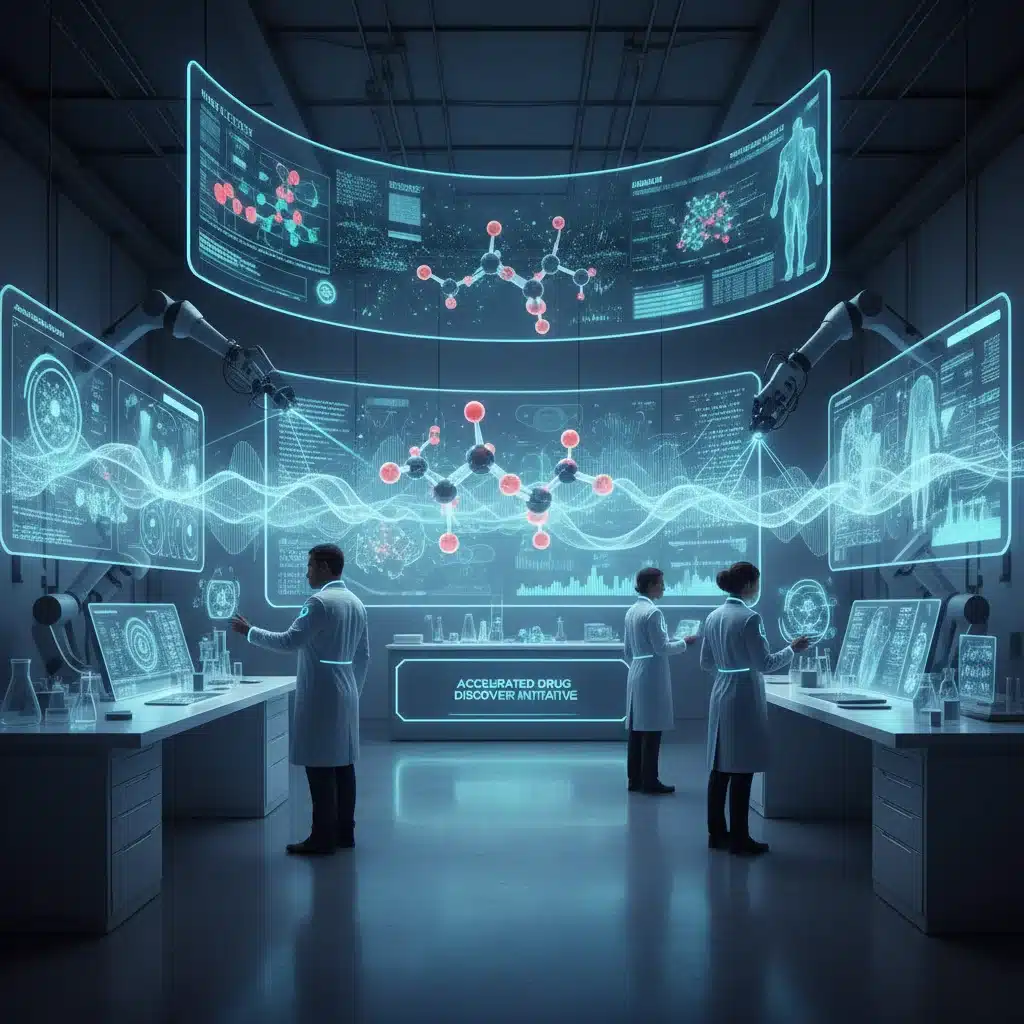
The pharmaceutical industry stands on the precipice of a monumental transformation, largely driven by the relentless advancement of artificial intelligence. For decades, drug discovery has been a notoriously slow, expensive, and high-risk endeavor, often taking over a decade and billions of dollars to bring a single new medicine to market. However, a new era is dawning, one where AI Drug Discovery is not just a buzzword but a tangible force reshaping the landscape of therapeutic development. Since 2024, two prominent US pharmaceutical giants have reported an astonishing 40% acceleration in their Research and Development (R&D) pipelines, a testament to the profound impact of integrating cutting-edge AI technologies.
This unprecedented acceleration is not merely an incremental improvement; it represents a paradigm shift, promising faster access to life-saving drugs, reduced development costs, and a more efficient allocation of resources. This article delves deep into the mechanisms behind this revolution, exploring the specific AI applications, the challenges overcome, and the future implications for global health.
The Traditional Drug Discovery Bottleneck: A Historical Perspective
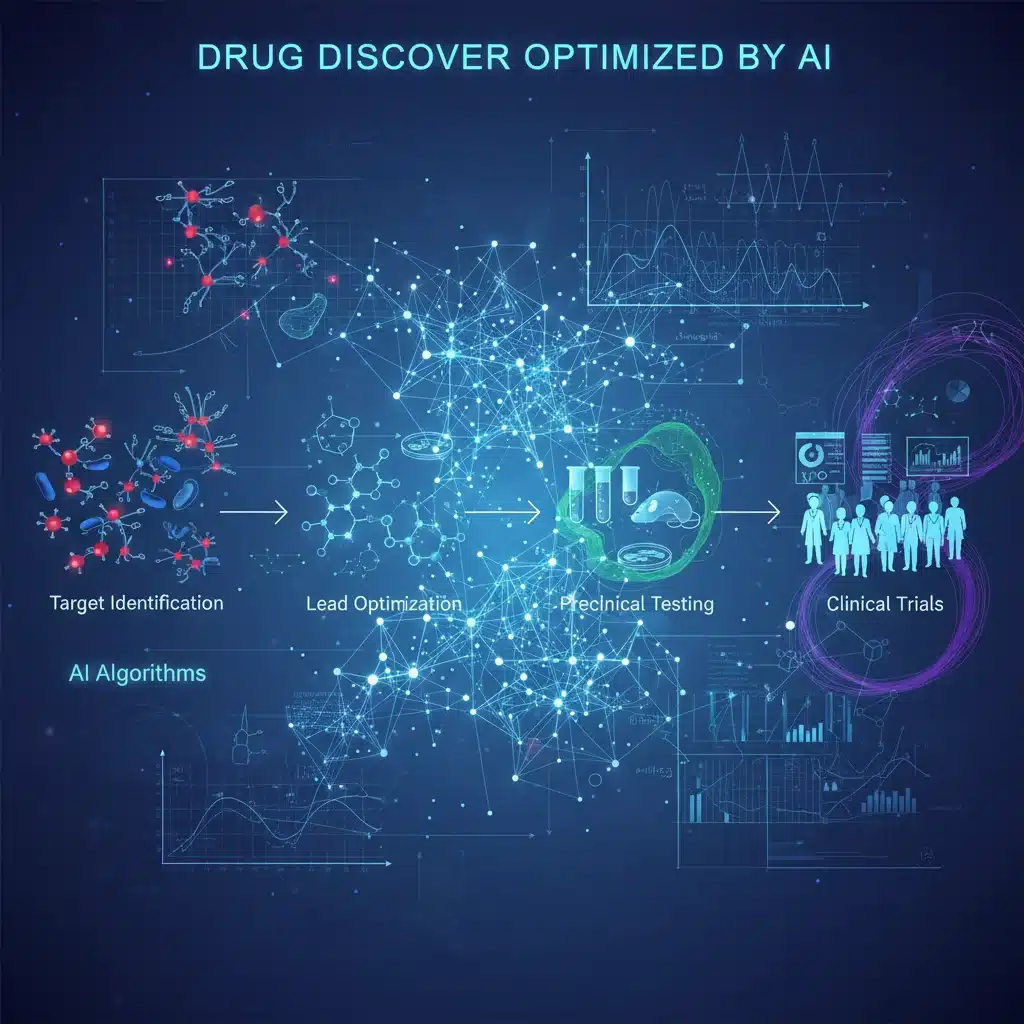
To truly appreciate the magnitude of AI’s impact, it’s essential to understand the inherent complexities and bottlenecks of traditional drug discovery. The process typically involves several arduous stages:
- Target Identification and Validation: Identifying specific biological molecules (targets) implicated in a disease process. This often requires extensive research into disease mechanisms, genomics, and proteomics.
- Lead Discovery and Optimization: Screening vast libraries of chemical compounds to find ‘hits’ that interact with the identified target. These hits are then optimized to improve their potency, selectivity, and drug-like properties, becoming ‘lead compounds’.
- Preclinical Testing: Evaluating the safety and efficacy of lead compounds in laboratory (in vitro) and animal (in vivo) models. This stage assesses toxicity, pharmacokinetics (how the body affects the drug), and pharmacodynamics (how the drug affects the body).
- Clinical Trials: A multi-phase process involving human volunteers to assess safety, dosage, and efficacy. This is the longest and most expensive stage, with high attrition rates.
- Regulatory Approval and Post-Market Surveillance: Submitting comprehensive data to regulatory bodies like the FDA for approval, followed by ongoing monitoring after a drug enters the market.
Each stage is fraught with challenges, from the sheer volume of data to analyze, the high failure rates of candidate drugs, and the significant financial investment required. The average cost to develop a new drug has soared to over $2 billion, with success rates hovering around 10% from preclinical development to market. This arduous journey has long been a barrier to innovation and accessibility, but AI Drug Discovery is now offering powerful solutions.
How AI is Reshaping Each Stage of Drug Discovery
The 40% acceleration reported by leading US pharma companies is a direct result of strategically deploying AI across various stages of their R&D pipeline. Let’s break down the key applications:
1. AI in Target Identification and Validation
Identifying the right biological target is crucial. AI, particularly machine learning algorithms, excels at analyzing massive datasets, including genomic, proteomic, transcriptomic, and clinical data. These algorithms can:
- Predict Disease Pathways: Identify complex biological pathways and networks associated with specific diseases, pinpointing novel targets that might have been overlooked by traditional methods.
- Prioritize Targets: Rank potential targets based on their druggability, relevance to disease, and potential for adverse effects, significantly narrowing down the initial search space.
- Analyze Real-World Data: Integrate electronic health records (EHRs) and other real-world data to identify patient populations that might respond best to certain therapeutic approaches, leading to more precise target selection.
2. Accelerating Lead Discovery and Optimization with AI
This is arguably where AI Drug Discovery has made some of its most dramatic impacts. The ability of AI to rapidly generate, screen, and optimize compounds is a game-changer:
- De Novo Drug Design: Generative AI models (like GANs and VAEs) can design novel chemical structures from scratch, tailored to bind specifically and potently to a target protein. This moves beyond simply screening existing libraries.
- Virtual Screening: AI algorithms can rapidly sift through billions of virtual compounds, predicting their binding affinity to a target much faster and more cost-effectively than high-throughput experimental screening.
- Property Prediction: Machine learning models can accurately predict various physicochemical properties of compounds, such as solubility, permeability, and potential toxicity, even before synthesis. This drastically reduces the number of compounds that need to be synthesized and tested experimentally.
- Retrosynthesis Prediction: AI can suggest optimal synthetic routes for newly designed molecules, making their laboratory creation more efficient.
3. Enhancing Preclinical Development with AI
While experimental work remains critical, AI is providing valuable insights and efficiencies in preclinical stages:
- Toxicity Prediction: AI models trained on vast toxicology datasets can predict potential adverse effects of drug candidates with high accuracy, allowing for early deselection of problematic compounds.
- Pharmacokinetic/Pharmacodynamic (PK/PD) Modeling: AI can build sophisticated models to predict how a drug will behave in the body (absorption, distribution, metabolism, excretion) and its biological effects, optimizing dosing strategies before human trials.
- In Silico Animal Models: Advanced simulations can reduce the reliance on animal testing by predicting drug responses in virtual physiological systems, though this area is still under extensive development.
4. Streamlining Clinical Trials with AI
The clinical trial phase is the longest and most expensive. AI is injecting much-needed efficiency:
- Patient Recruitment: AI can analyze patient data (EHRs, genomic profiles) to identify and recruit eligible participants for trials more rapidly and effectively, reducing enrollment times.
- Trial Design Optimization: Machine learning can optimize trial protocols, including dosage regimens, endpoints, and statistical analysis plans, to maximize the chances of success and minimize costs.
- Real-time Monitoring and Data Analysis: AI tools can continuously monitor patient safety and efficacy data during trials, identifying trends, anomalies, and potential issues much faster than manual review.
- Biomarker Discovery: AI can discover novel biomarkers that predict drug response or disease progression, leading to more stratified patient populations and more successful trials.
The 40% Acceleration: Case Studies from US Pharma Leaders
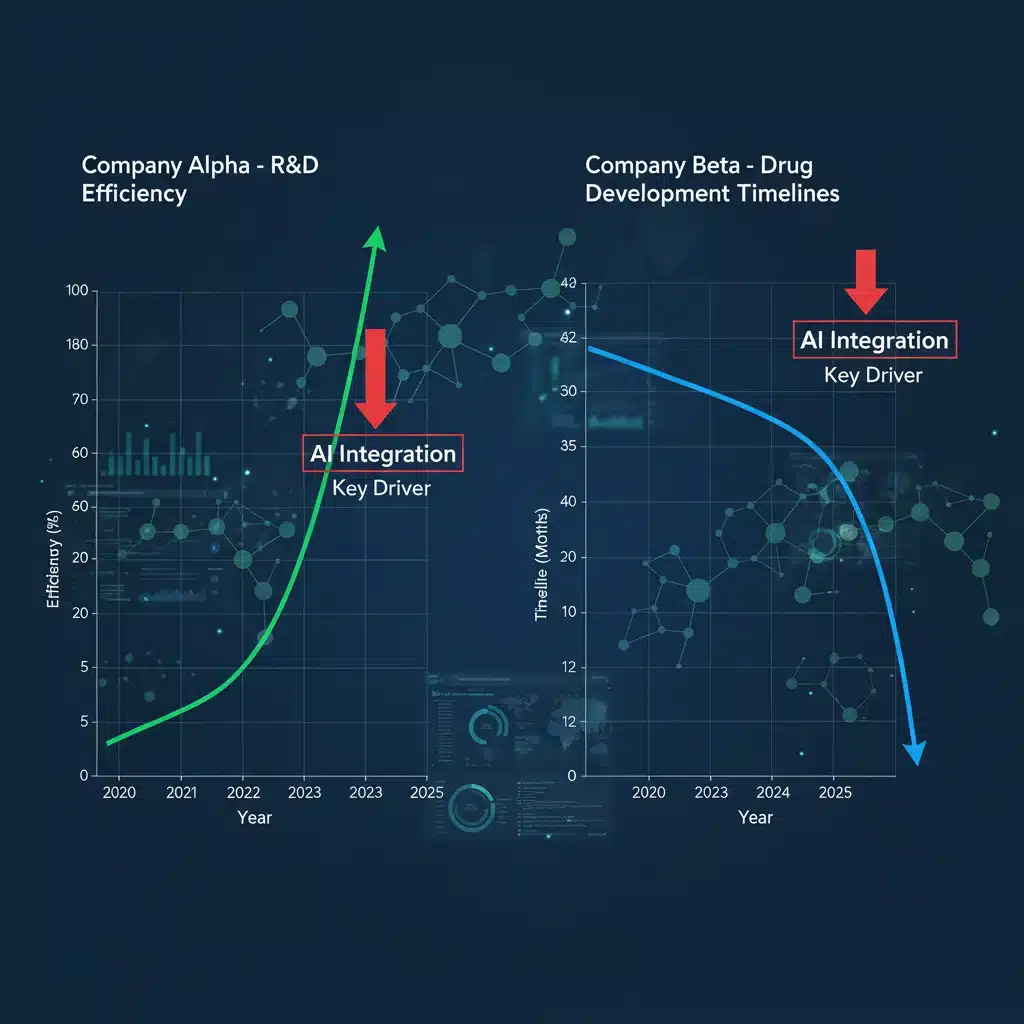
The reported 40% acceleration in R&D since 2024 by two leading US pharmaceutical companies is a significant benchmark. While specific company names are often proprietary due to competitive reasons, the strategies employed are broadly consistent across innovators in the space. These companies have not just adopted AI; they have integrated it systematically into their core operational frameworks.
One such company, let’s call them ‘PharmaCorp A’, focused heavily on generative AI for novel molecule design. By leveraging advanced deep learning architectures, they were able to reduce the time from target identification to lead candidate selection by approximately 60%. This was achieved by:
- Generating millions of novel, synthesizable compounds with desired properties in a fraction of the time it would take human chemists.
- Utilizing AI-driven virtual screening to prioritize compounds with optimal binding affinity and reduced off-target effects.
- Implementing predictive models for ADMET (Absorption, Distribution, Metabolism, Excretion, Toxicity) properties early in the design phase, weeding out problematic molecules before costly synthesis.
The other leader, ‘BioInnovate B’, concentrated its AI efforts on optimizing clinical trial operations and patient stratification. Their 40% acceleration stemmed from:
- Deploying natural language processing (NLP) to rapidly analyze vast amounts of unstructured clinical data from electronic health records, identifying ideal patient cohorts for specific trials.
- Using machine learning to predict patient response to therapies based on genetic and phenotypic data, enabling more focused and smaller trial populations, leading to faster results.
- Implementing AI-powered predictive analytics to forecast potential trial delays and proactively mitigate risks, keeping trials on schedule.
These examples illustrate that the 40% acceleration isn’t attributed to a single AI application but rather a synergistic integration of multiple AI technologies across the entire drug development lifecycle. The cumulative effect of these efficiencies has been transformative, drastically shortening timelines and reducing the financial burden associated with failed compounds.
Key Technologies Powering AI Drug Discovery
The success of AI Drug Discovery relies on a sophisticated stack of technologies:
- Machine Learning (ML): The foundational AI technology, encompassing algorithms like supervised learning, unsupervised learning, and reinforcement learning, used for prediction, classification, and pattern recognition.
- Deep Learning (DL): A subset of ML that uses neural networks with multiple layers (deep neural networks) to learn complex patterns from large datasets. Crucial for image analysis, natural language processing, and generative design.
- Natural Language Processing (NLP): Enables AI systems to understand, interpret, and generate human language. Essential for extracting insights from scientific literature, clinical notes, and patient records.
- Computer Vision: Allows AI to interpret and understand visual information, valuable for analyzing microscopy images, high-throughput screening data, and pathological slides.
- Generative Adversarial Networks (GANs) and Variational Autoencoders (VAEs): Advanced deep learning architectures used for generating novel molecular structures with desired properties.
- Reinforcement Learning (RL): AI agents learn to make decisions by trial and error in an environment, useful for optimizing complex sequences like synthetic pathways or drug dosing.
- Cloud Computing and Big Data Analytics: Provide the necessary infrastructure to store, process, and analyze the enormous datasets required for AI training and deployment.
The convergence of these technologies, coupled with massive computational power, has created an environment where AI can truly thrive in the complex domain of drug discovery.
Challenges and Considerations in AI Drug Discovery
Despite the remarkable progress, the journey of AI Drug Discovery is not without its hurdles:
- Data Quality and Availability: AI models are only as good as the data they are trained on. High-quality, diverse, and well-annotated biological and chemical data are crucial but often scarce or siloed.
- Interpretability and Explainability (XAI): Many advanced AI models, particularly deep learning, operate as ‘black boxes’. Understanding why an AI makes a particular prediction is vital in drug discovery, where safety and mechanism of action are paramount.
- Integration with Experimental Workflows: Seamlessly integrating AI predictions into existing wet-lab and clinical workflows requires significant operational and cultural changes.
- Validation and Regulatory Acceptance: Rigorously validating AI-generated insights and gaining regulatory approval for AI-driven drug candidates will be a continuous challenge.
- Ethical Considerations: The use of patient data, the potential for algorithmic bias, and the implications of AI-driven decisions raise important ethical questions that need careful consideration.
- Talent Gap: A shortage of professionals skilled in both AI/data science and pharmaceutical R&D poses a challenge for effective implementation.
Addressing these challenges requires a collaborative effort between AI researchers, pharmaceutical scientists, regulatory bodies, and ethicists. The 40% acceleration achieved by leading firms suggests that many of these challenges are being actively tackled and overcome.
The Future of Medicine: Beyond the 40% Acceleration
The 40% acceleration in R&D is just the beginning. As AI technologies mature and become more integrated, we can anticipate even more profound transformations in the pharmaceutical industry:
- Hyper-Personalized Medicine: AI will enable the development of drugs tailored to an individual’s genetic makeup, lifestyle, and disease profile, moving beyond the ‘one-size-fits-all’ approach.
- Discovery of Entirely New Drug Modalities: AI may uncover novel therapeutic approaches and drug classes that are currently beyond human intuition or experimental capabilities.
- Accelerated Response to Pandemics: The ability to rapidly identify targets, design compounds, and optimize clinical trials will be critical in responding to future health crises.
- Reduced Drug Costs: By making drug discovery more efficient and less prone to failure, AI has the potential to significantly lower the cost of developing new medicines, ultimately making them more accessible.
- Continuous Drug Optimization: AI could monitor post-market drug performance and suggest continuous improvements or new applications for existing drugs.
The synergy between human expertise and artificial intelligence is creating a powerful engine for innovation. Scientists are no longer bogged down by repetitive tasks or overwhelmed by data; instead, they are empowered by AI to focus on higher-level problem-solving, hypothesis generation, and strategic decision-making.
Conclusion: AI Drug Discovery – A New Dawn for Healthcare
The reports of a 40% acceleration in R&D by two major US pharmaceutical companies since 2024 serve as a powerful testament to the transformative potential of AI Drug Discovery. This isn’t just about speed; it’s about precision, efficiency, and the promise of delivering life-changing therapies to patients faster than ever before. While challenges remain, the rapid pace of innovation in AI, coupled with the pharmaceutical industry’s drive for efficiency, suggests that we are at the dawn of a new era in medicine.
The future will see AI not as a replacement for human scientists but as an indispensable partner, augmenting human intelligence and creativity to unlock new frontiers in health. As more companies embrace and integrate these powerful tools, the 40% acceleration could become the new baseline, leading to a healthier, more resilient global population. The journey of AI in drug discovery has just begun, and its impact will undoubtedly resonate for generations to come.