2026 Housing Market: First-Time Homebuyer’s Essential Guide

Navigating the 2026 Housing Market: A Time-Sensitive Guide for First-Time Homebuyers in the United States
The dream of homeownership remains a cornerstone of the American ethos, a symbol of stability, personal achievement, and a cornerstone for building generational wealth. However, for many first-time homebuyers, especially as we look towards the 2026 housing market, this dream can often feel elusive, shrouded in complexity and uncertainty. The real estate landscape is a dynamic entity, constantly shifting under the influence of economic factors, demographic changes, and policy adjustments. Understanding these forces is paramount for anyone looking to make their first foray into property ownership.
As we edge closer to 2026, prospective buyers are grappling with questions about affordability, interest rates, inventory levels, and the overall trajectory of the market. Will prices continue their upward climb, or will a much-anticipated correction finally materialize? What role will inflation play, and how will federal reserve policies impact borrowing costs? These are not trivial concerns; they are fundamental to crafting a successful homebuying strategy.
This comprehensive guide is meticulously crafted for first-time homebuyers in the United States, offering a forward-looking perspective on the 2026 housing market. Our aim is to demystify the complexities, provide actionable insights, and equip you with the knowledge needed to navigate this crucial period with confidence. We will delve into projected trends, discuss the critical factors influencing the market, and outline a strategic roadmap to help you achieve your homeownership goals.
From understanding economic indicators and mortgage rate forecasts to exploring various financing options and mastering the art of negotiation, every aspect of your homebuying journey will be addressed. Whether you’re just starting to save for a down payment or actively searching for properties, this guide will serve as your indispensable companion, ensuring you are well-prepared for the opportunities and challenges that the 2026 housing market presents.
Let’s embark on this journey together, transforming uncertainty into clarity and turning your homeownership aspirations into a tangible reality.
Understanding the Current Landscape Leading to the 2026 Housing Market
Before we can accurately project the state of the 2026 housing market, it’s essential to understand the forces that have shaped the recent past and present. The period following the COVID-19 pandemic saw an unprecedented surge in housing demand, fueled by historically low interest rates, a desire for more space, and a significant shift towards remote work. This demand, coupled with persistent supply shortages, led to rapid appreciation in home values across the United States.
Key Factors Influencing the Market
- Interest Rates: The Federal Reserve’s aggressive rate hikes in response to inflation significantly impacted mortgage rates. While higher rates cooled demand, they also increased the cost of borrowing, posing challenges for affordability. The trajectory of these rates will be a dominant theme leading into 2026.
- Inflation: Persistent inflation has eroded purchasing power and increased the cost of construction, further contributing to housing price pressures. The Fed’s success in bringing inflation under control will have a direct bearing on future interest rate decisions and, consequently, housing affordability.
- Supply and Demand: The fundamental imbalance between the number of available homes for sale and the number of eager buyers has been a long-standing issue. While construction has picked up, it has struggled to keep pace with demographic shifts and evolving housing needs.
- Demographics: The millennial generation, the largest demographic cohort, is increasingly entering their prime homebuying years. This sustained demand from a large population segment will continue to exert upward pressure on the 2026 housing market.
- Economic Growth and Employment: A strong job market and robust economic growth typically support housing demand. Conversely, economic slowdowns or recessions can dampen buyer confidence and lead to a softening of the market.
Recent Trends and Their Implications
The latter half of the 2020s has seen a recalibration. While home prices remain elevated in many areas, the pace of appreciation has slowed. Some markets have even experienced modest price declines. This cooling off period, driven largely by higher mortgage rates, offers a glimmer of hope for first-time buyers who were previously priced out. However, inventory levels remain stubbornly low in many desirable locations, indicating that a significant buyer’s market is unlikely to emerge universally.
For first-time homebuyers, this means that while the frenzied bidding wars of previous years might be less common, competition for well-priced, desirable homes will still be present. The key will be to differentiate between a healthy market adjustment and a significant downturn, and to understand how these trends will specifically evolve into the 2026 housing market.
Forecasting the 2026 Housing Market: What to Expect
Predicting the future is always challenging, especially in complex systems like the real estate market. However, by analyzing current trends, economic projections, and expert opinions, we can form a reasonable outlook for the 2026 housing market.
Interest Rates: A Central Pillar
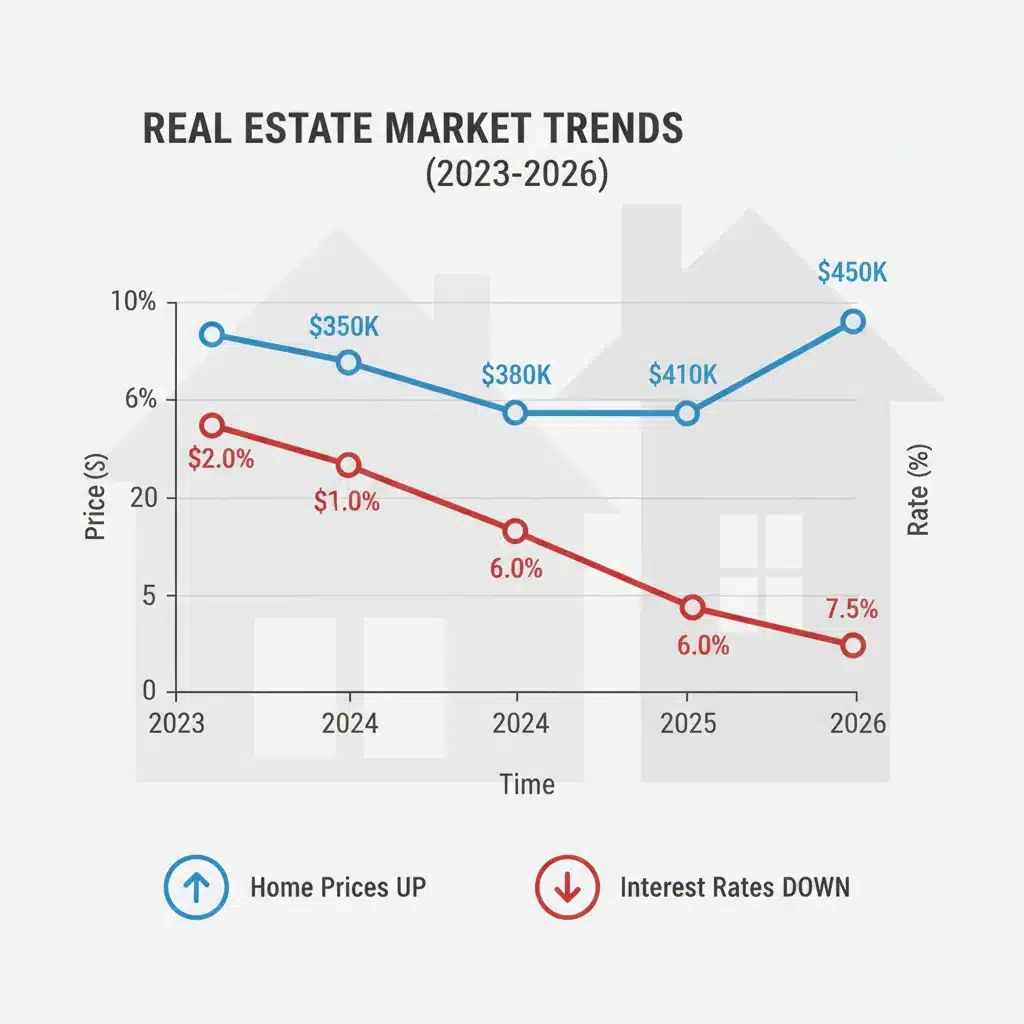
Many economists anticipate that by 2026, interest rates will likely stabilize, and potentially even see a slight decline from their recent peaks, assuming inflation continues to moderate. However, it’s crucial to understand that a return to the historically low rates of the pandemic era is improbable. Instead, we are more likely to see rates settle into a “new normal” that is higher than the immediate post-2008 period but still manageable for qualified buyers. This stabilization will bring much-needed predictability to the market.
Home Prices: Continued Appreciation, but Slower
While some regions might experience minor corrections, a widespread, significant crash in home prices across the US by 2026 is generally not anticipated. The underlying demand, coupled with persistent supply constraints, suggests that overall, home values will continue to appreciate, albeit at a more sustainable, single-digit annual rate. This slower appreciation will be beneficial for first-time buyers, allowing incomes to catch up somewhat and making the entry point slightly more accessible over time.
Inventory Levels: A Persistent Challenge
Despite increased construction efforts, a substantial surge in housing inventory nationwide by 2026 is unlikely. Supply chain issues, labor shortages, and regulatory hurdles continue to impede rapid construction. Additionally, many existing homeowners, locked into lower mortgage rates, may be reluctant to sell, further constraining the supply of resale homes. This means that competition, particularly for starter homes, will remain a factor in many markets within the 2026 housing market.
Affordability: The Enduring Hurdle
Affordability will remain a significant concern for first-time homebuyers in the 2026 housing market. While slower price growth and potentially stable interest rates might offer some relief, the cumulative effect of years of rapid appreciation means that entry-level homes will still command substantial prices. Income growth will need to keep pace to truly improve affordability. Buyers will need to be strategic and creative in their approach to financing and location selection.
Strategic Roadmap for First-Time Homebuyers in the 2026 Housing Market
Given the projected landscape, first-time homebuyers need a well-defined strategy to succeed in the 2026 housing market. This isn’t just about saving for a down payment; it’s about meticulous planning, financial discipline, and informed decision-making.
1. Financial Preparation: The Foundation of Your Dream
- Strengthen Your Credit Score: A strong credit score (typically 740+) is crucial for securing the best mortgage rates. Start monitoring your credit reports now, dispute any inaccuracies, and pay all bills on time.
- Save Aggressively for a Down Payment: While some loans require as little as 3-5% down, a larger down payment reduces your monthly payments, interest paid over the life of the loan, and can eliminate Private Mortgage Insurance (PMI). Aim for at least 10-20% if possible. Consider high-yield savings accounts or low-risk investments to grow your savings.
- Build an Emergency Fund: Beyond the down payment, you’ll need funds for closing costs (2-5% of the loan amount), moving expenses, and unexpected home repairs. A robust emergency fund (3-6 months of living expenses) is non-negotiable for new homeowners.
- Get Pre-Approved, Not Just Pre-Qualified: A pre-approval involves a thorough review of your finances by a lender, giving you a firm commitment for a loan amount. This makes your offer more attractive to sellers in a competitive 2026 housing market.
- Understand Your Debt-to-Income Ratio (DTI): Lenders scrutinize your DTI. Aim for a DTI below 43%, ideally lower, to improve your chances of loan approval and better terms. Pay down high-interest debt where possible.
2. Research and Education: Knowledge is Power
- Understand Local Markets: The 2026 housing market will not be monolithic. Research specific neighborhoods and cities you’re interested in. Look at local job growth, school districts, property tax rates, and future development plans.
- Follow Economic Indicators: Keep an eye on inflation reports, Federal Reserve announcements, and employment data. These will provide clues about the direction of interest rates and overall market health.
- Learn About Different Loan Programs: Don’t assume a conventional loan is your only option. Explore FHA loans (low down payment), VA loans (for veterans, no down payment), USDA loans (rural areas), and local first-time homebuyer programs that offer grants or down payment assistance.
- Factor in Total Cost of Ownership: Beyond the mortgage payment, budget for property taxes, homeowner’s insurance, utilities, maintenance, and potential HOA fees. These can significantly impact your monthly expenses.
3. Strategic Home Search and Offer Making
- Prioritize Needs vs. Wants: Create a realistic list of must-haves and nice-to-haves. Be prepared to compromise, especially in a market with limited inventory.
- Work with a Reputable Real Estate Agent: A buyer’s agent who specializes in first-time homebuyers and has deep local market knowledge is invaluable. They can help you navigate negotiations, understand contracts, and identify suitable properties.
- Be Prepared to Act Quickly (but Wisely): Desirable properties in the 2026 housing market might still attract multiple offers. Have your pre-approval letter ready, and be prepared to make a competitive offer if you find the right home. However, never waive critical contingencies (like inspection) without careful consideration.
- Consider “Hidden Gems”: Look beyond perfectly staged homes. Properties that need minor cosmetic updates can often be purchased at a lower price, allowing you to build equity over time.
4. Leveraging Technology and Resources
- Online Listing Platforms: Utilize Zillow, Redfin, Realtor.com, and local MLS websites to track listings and market trends.
- Mortgage Calculators: Use online tools to estimate monthly payments, factoring in different interest rates, down payments, and property taxes.
- First-Time Homebuyer Programs: Many states and cities offer specific programs designed to assist first-time buyers with down payment assistance, closing cost grants, or favorable loan terms. Research what’s available in your target area.
Potential Challenges and How to Overcome Them
Even with thorough preparation, the 2026 housing market will present its share of challenges for first-time homebuyers. Recognizing these obstacles beforehand allows you to develop proactive strategies.
Challenge 1: Persistent Affordability Issues
As discussed, high home prices relative to median incomes will likely remain a hurdle. Even with stabilizing interest rates, the cumulative cost of homeownership can be daunting.
- Solution: Expand Your Search Radius: Be open to looking at properties in slightly less competitive neighborhoods or even adjacent towns where prices might be more accessible. Commute times, school districts, and amenities should all be weighed.
- Consider Smaller Homes or Condos: A starter home doesn’t have to be your forever home. A smaller property or a condominium can be a more affordable entry point into the market, allowing you to build equity for a future upgrade.
- Explore “House Hacking”: If feasible, consider buying a multi-unit property and living in one unit while renting out the others. This can significantly offset your mortgage payments.
- Leverage Down Payment Assistance Programs: Don’t overlook federal, state, and local programs specifically designed to help first-time buyers with the upfront costs.
Challenge 2: Limited Inventory and Competition
While not as fierce as peak pandemic levels, limited housing stock will likely continue to create competition, especially for well-maintained, reasonably priced homes.
- Solution: Be Decisive and Prepared: Have your finances in order, pre-approval in hand, and be ready to submit a strong offer quickly when the right property emerges.
- Work with a Proactive Agent: A good agent might have access to off-market listings or hear about properties before they officially hit the MLS, giving you an advantage.
- Focus on “Good Bones”: Don’t be deterred by outdated aesthetics. Cosmetic changes are often less expensive than structural issues. Look for properties with solid foundations, roofs, and HVAC systems.
Challenge 3: Rising Property Taxes and Insurance Costs
As home values increase, so do property taxes. Additionally, climate change and other factors are driving up homeowner’s insurance premiums in many regions.
- Solution: Research Local Tax Rates: Understand the property tax assessment process in your target area and factor these costs into your budget.
- Shop Around for Insurance: Don’t just go with the first quote. Get multiple insurance quotes to find the best coverage at the most competitive price. Consider bundling home and auto insurance for discounts.
- Escrow Accounts: Most lenders will require you to pay property taxes and insurance into an escrow account monthly, ensuring these significant costs are covered. Be aware of potential increases in these escrow payments over time.

The Importance of Long-Term Perspective
Buying a home, especially your first, is one of the most significant financial decisions you’ll ever make. It’s crucial to approach the 2026 housing market with a long-term perspective.
- Don’t Try to Time the Market: While understanding market cycles is important, trying to perfectly “time the bottom” is often a fruitless endeavor. Focus on your personal financial readiness and finding a home that meets your needs.
- Building Equity: Over time, homeownership allows you to build equity through mortgage principal payments and property appreciation. This equity can be a powerful wealth-building tool.
- Inflation Hedge: Real estate often serves as a hedge against inflation. As the cost of living rises, so too does the value of your asset.
- Forced Savings: Your monthly mortgage payment acts as a form of forced savings, contributing to your net worth.
Conclusion: Your Path to Homeownership in 2026
The 2026 housing market, while presenting its unique set of challenges, also offers distinct opportunities for well-prepared first-time homebuyers. The days of hyper-low interest rates and runaway price growth may be behind us, giving way to a more stable, albeit still competitive, environment. Success in this market hinges on proactive financial planning, diligent research, and a strategic approach to your home search.
By focusing on strengthening your financial position, thoroughly understanding the local markets you’re interested in, and working with experienced professionals, you can navigate the complexities of homeownership with confidence. Remember that your first home is often a stepping stone, a crucial first step on your journey to building wealth and securing your future.
Don’t be discouraged by the headlines or the magnitude of the task. Break down the process into manageable steps, stay informed, and remain persistent. The dream of owning a home in the United States is well within your reach in 2026, provided you arm yourself with the right knowledge and a strategic mindset. Start preparing today, and you’ll be well on your way to unlocking the door to your new home.