AR in Healthcare: 4 Breakthrough Applications by 2027
Augmented Reality in Healthcare: 4 Breakthrough Applications Expected to Go Mainstream by 2027 in the US
The convergence of cutting-edge technology and medical science is ushering in an era of unprecedented innovation, and at the forefront of this revolution is Augmented Reality (AR). Far from being a mere sci-fi concept, AR is rapidly evolving into a practical, indispensable tool that promises to redefine how healthcare is delivered, learned, and experienced. By overlaying digital information onto the real world, AR enhances human perception and interaction, offering profound benefits across a spectrum of medical disciplines. The United States, a global leader in medical innovation, is particularly ripe for the widespread adoption of these transformative technologies. We are not just talking about incremental improvements; we are on the cusp of a paradigm shift where AR will move from niche applications to mainstream integration within the next five years. This article will delve into four breakthrough AR Healthcare Applications that are poised to become commonplace by 2027, fundamentally altering the landscape of medicine.
1. Enhanced Surgical Precision and Navigation
One of the most impactful areas where AR is making significant strides is in surgical procedures. The demand for greater precision, reduced invasiveness, and improved patient outcomes drives continuous innovation in surgical techniques. Traditional surgery relies heavily on a surgeon’s skill, experience, and the interpretation of 2D images from CT scans or MRIs. While highly effective, this method can sometimes lack the real-time, three-dimensional context that AR can provide. By 2027, AR is expected to become an integral part of many operating rooms across the US, offering surgeons unparalleled insights and guidance during complex procedures. This is a crucial area for AR Healthcare Applications.
Real-time Anatomical Overlays
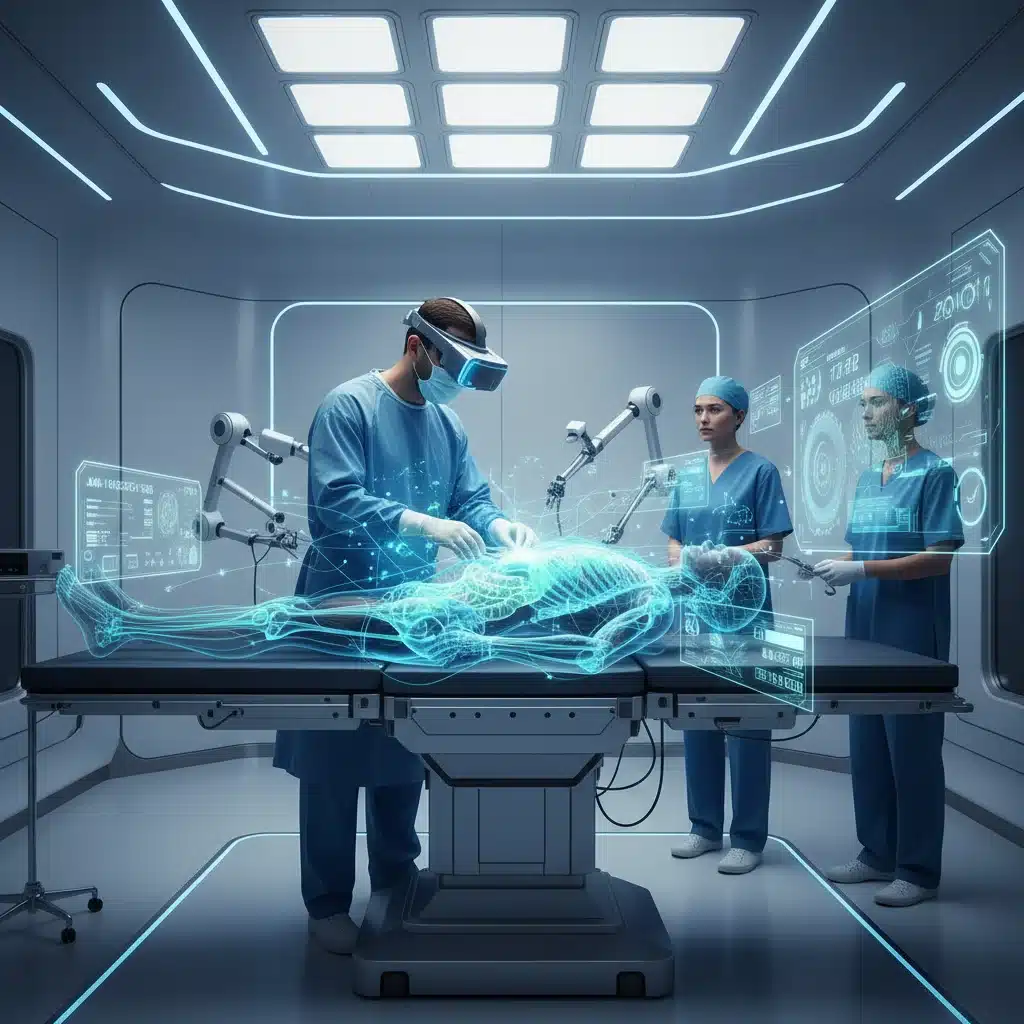
Imagine a surgeon wearing an AR headset that projects a patient’s internal anatomy directly onto their body during an operation. This isn’t science fiction; it’s becoming a reality. AR systems can take pre-operative imaging data (like MRI or CT scans) and create a precise 3D holographic model. This model is then accurately aligned and superimposed onto the patient’s body in real-time, allowing the surgeon to “see through” tissues and visualize vital organs, blood vessels, and nerves beneath the surface. This capability is particularly beneficial in delicate surgeries such as neurosurgery, orthopedic surgery, and tumor resections, where even a millimeter’s deviation can have significant consequences. The ability to visualize tumor margins with unprecedented clarity, for instance, can lead to more complete resections and lower recurrence rates.
Guided Instrument Placement
Beyond anatomical visualization, AR can guide the precise placement of surgical instruments. For procedures requiring extreme accuracy, such as spinal fusions or dental implant placements, AR headsets can display virtual guides or trajectories directly in the surgeon’s field of view. These guides ensure that instruments are inserted at the correct angle, depth, and position, minimizing the risk of errors and complications. This not only enhances patient safety but also reduces the learning curve for surgeons performing new or complex procedures. The integration of haptic feedback with AR could further refine this guidance, providing tactile sensations that indicate correct or incorrect instrument positioning.
Minimally Invasive Surgery (MIS) Enhancement
Minimally invasive surgeries, while beneficial for patients due to smaller incisions and faster recovery times, often present challenges for surgeons who must operate through small ports using endoscopic cameras. AR can transform MIS by providing a more intuitive and comprehensive view of the surgical field. Instead of looking at a separate 2D monitor, surgeons can overlay endoscopic views and other vital information directly onto their real-world perception of the patient. This creates a more immersive and spatially accurate surgical experience, potentially leading to shorter operating times and improved outcomes. The reduction in cognitive load for surgeons is a significant advantage, allowing them to focus more on the task at hand.
Improved Collaboration and Training
AR also facilitates better collaboration among surgical teams. A senior surgeon can remotely guide a less experienced colleague by drawing annotations or highlighting areas of interest that appear in the junior surgeon’s AR headset. This real-time, interactive guidance is invaluable for training and for accessing expert opinions during critical moments. Furthermore, surgical residents can practice complex procedures in a highly realistic yet safe environment, rehearsing steps and anticipating challenges with the aid of AR overlays. This aspect of AR Healthcare Applications is revolutionary for skill development.
2. Revolutionizing Medical Education and Training
Traditional medical education relies heavily on textbooks, cadaver labs, and clinical rotations. While foundational, these methods have limitations in scalability, accessibility, and interactivity. AR is set to bridge these gaps, offering dynamic, immersive, and highly effective training experiences that will become standard practice in medical schools and hospitals by 2027. The shift towards more experiential learning is a key driver for AR adoption in this sector.
Interactive Anatomy and Physiology Lessons
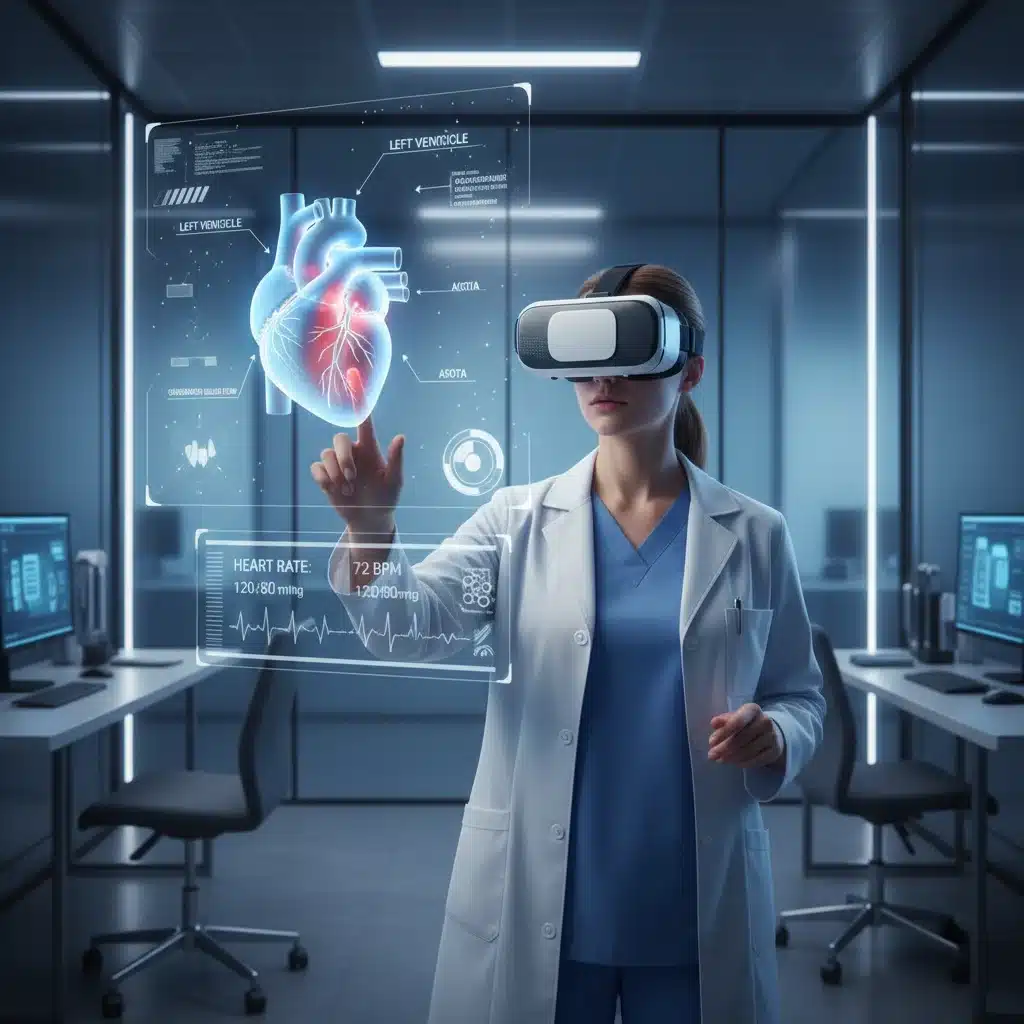
Imagine medical students dissecting a virtual cadaver that can be manipulated, scaled, and annotated in real-time. AR allows students to explore the human body in three dimensions, layer by layer, without the limitations of physical specimens. They can visualize complex physiological processes, such as blood flow through the heart or nerve impulses, as dynamic holograms. This interactive learning environment fosters a deeper understanding of anatomical relationships and functional mechanisms, moving beyond rote memorization to true comprehension. Students can repeat these “dissections” as many times as needed, gaining confidence and precision.
Realistic Simulation and Procedure Training
Performing delicate procedures for the first time can be daunting. AR provides a safe, controlled environment for medical students and residents to practice a wide array of procedures, from inserting IVs to performing complex surgeries. AR applications can simulate realistic patient responses, complications, and anatomical variations, allowing trainees to hone their skills without risk to actual patients. The system can provide immediate feedback, highlighting errors and suggesting improvements, leading to faster skill acquisition and greater confidence. This type of repetitive, high-fidelity practice is invaluable for developing muscle memory and critical decision-making skills under pressure. The cost-effectiveness of virtual simulations compared to physical training models also makes AR an attractive investment for educational institutions.
Remote Training and Collaboration
AR facilitates remote training, enabling experts to guide students or practitioners from different geographical locations. A specialist can project instructions, diagrams, or even their own hand movements into a trainee’s AR field of view, providing personalized guidance regardless of distance. This is particularly beneficial for underserved areas or for sharing specialized knowledge across institutions. The ability to collaborate in a shared virtual space, analyzing complex cases or planning interventions, enhances team-based learning and fosters a global medical community. This expands the reach of high-quality medical education significantly.
Patient Communication and Education
AR isn’t just for medical professionals; it can also be a powerful tool for patient education. Doctors can use AR to show patients interactive 3D models of their conditions, explain treatment plans, or demonstrate how medical devices work. Visualizing their specific anatomy and the impact of a disease or treatment can help patients better understand their health, leading to improved adherence to treatment plans and greater satisfaction. For instance, a patient preparing for knee surgery could see an AR overlay of their knee, visualizing the damage and how the surgical repair will be performed. This transparency empowers patients and builds trust.
3. Advanced Diagnostics and Remote Assistance
The ability to accurately diagnose conditions and provide timely medical assistance, especially in remote or emergency situations, is critical. AR is emerging as a game-changer in this domain, offering tools that enhance diagnostic capabilities and enable effective remote support, significantly improving access to care and reducing diagnostic errors. By 2027, these AR Healthcare Applications will be commonplace in ambulances, rural clinics, and even home care settings.
Real-time Data Visualization for Paramedics and First Responders
In emergency situations, every second counts. Paramedics equipped with AR glasses can receive critical patient data – such as vital signs, medical history, and recommended protocols – overlaid directly onto their field of view as they attend to a patient. This immediate access to information allows for quicker, more informed decisions and can significantly improve patient outcomes. Furthermore, AR can guide first responders through complex procedures like intubation or administering specific medications, ensuring adherence to best practices even under high-stress conditions. The ability to instantly connect with an emergency room physician via AR for visual guidance is a powerful asset.
Remote Expert Consultation and Telemedicine
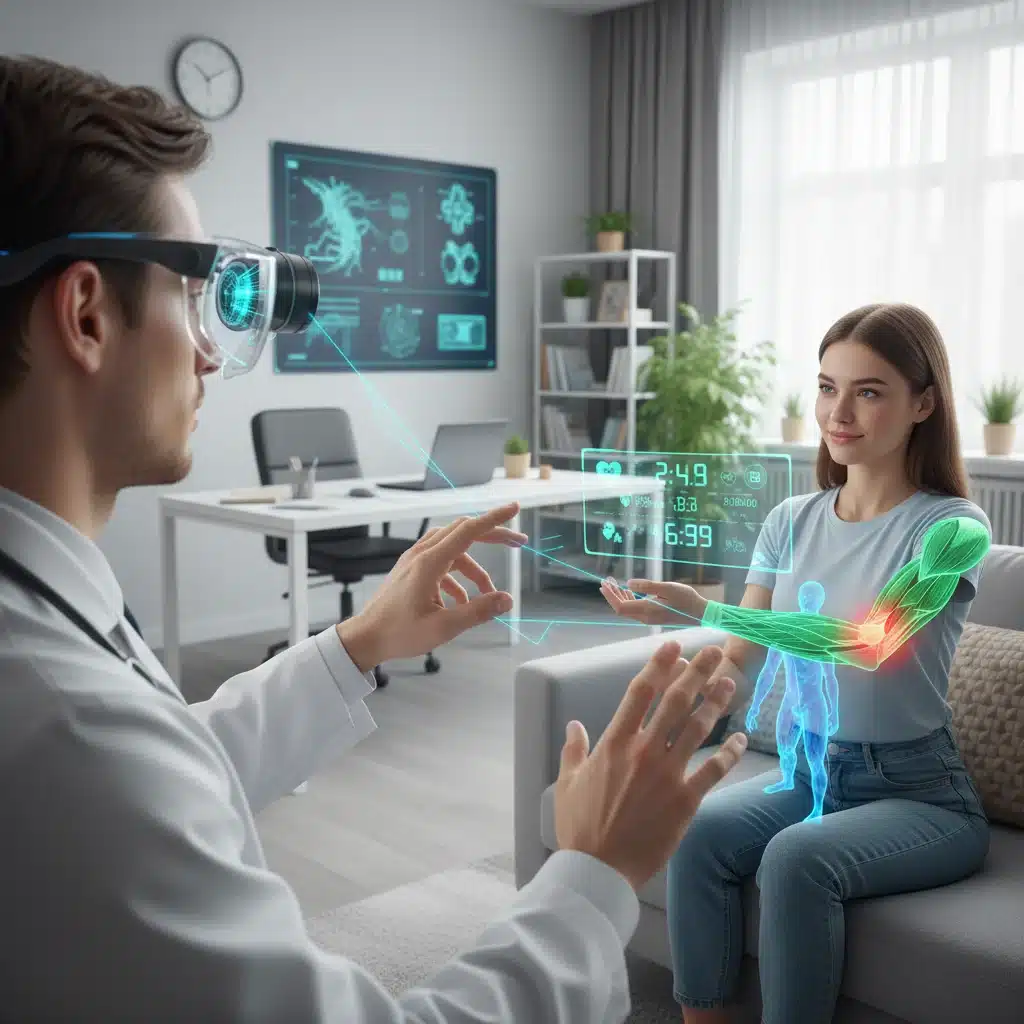
Telemedicine has seen a surge in adoption, but AR takes it to the next level. Doctors in rural areas or battlefield medics can connect with specialists anywhere in the world and receive real-time visual guidance. The specialist can see exactly what the remote practitioner sees, annotate the view with instructions, highlight areas of concern, or project relevant diagnostic imagery. This eliminates geographical barriers to expert care, allowing patients in underserved regions to benefit from specialized medical opinions without having to travel. For example, a general practitioner could use AR to consult with a dermatologist, showing them a skin lesion with high fidelity and receiving immediate expert advice.
Enhanced Imaging and Biometric Data Interpretation
AR can augment diagnostic imaging by providing interactive, multi-layered views of patient data. Radiologists could use AR to manipulate 3D models derived from MRI or CT scans, identifying anomalies with greater precision. For clinicians, AR devices can overlay biometric data – such as heart rate, blood pressure, and oxygen saturation – directly onto a patient’s body, providing a comprehensive and intuitive overview of their condition without constantly glancing at separate monitors. This integrated visualization can help in quicker identification of trends and potential issues, leading to more proactive interventions. This is a significant advancement for AR Healthcare Applications in diagnosis.
Assisted Medical Device Maintenance and Repair
Beyond direct patient care, AR can play a vital role in maintaining critical medical equipment. Technicians can use AR headsets to receive step-by-step instructions, diagrams, and troubleshooting guides overlaid onto the actual machinery. This reduces errors, speeds up repair times, and minimizes equipment downtime, which is crucial in a busy hospital environment. Remote experts can also guide on-site technicians through complex repairs, ensuring that specialized equipment remains operational and safe for patient use.
4. Personalized Patient Rehabilitation and Therapy
Recovery from injury, surgery, or chronic conditions often requires extensive rehabilitation and therapy. Traditional methods can sometimes be monotonous, difficult to track, and lack the engagement needed for consistent patient adherence. AR offers innovative solutions to make rehabilitation more interactive, personalized, and effective, fostering greater patient motivation and better recovery outcomes. By 2027, AR will be a staple in physical therapy clinics and home-based rehabilitation programs.
Gamified Rehabilitation Exercises
One of the biggest challenges in rehabilitation is keeping patients engaged and motivated to perform repetitive exercises. AR can transform these exercises into engaging games or interactive scenarios. For instance, a patient recovering from a stroke might use AR to “catch” virtual objects by moving their affected arm, or a patient with knee surgery might “walk” through a virtual garden, encouraging a full range of motion. These gamified experiences provide immediate visual feedback, track progress, and make therapy feel less like a chore and more like an enjoyable activity. The sense of accomplishment derived from these virtual achievements can significantly boost patient morale and adherence.
Real-time Biofeedback and Performance Tracking
AR systems can provide patients with real-time feedback on their performance during exercises. For example, an AR overlay could show a physical therapy patient if they are performing an exercise with the correct posture, range of motion, or force. This immediate feedback allows patients to self-correct and perform exercises more effectively, accelerating their recovery. Therapists can monitor progress remotely, adjusting exercise plans based on objective data collected by the AR system. This data-driven approach ensures that therapy is always optimized for the individual patient’s needs and progress. This is a powerful application of AR Healthcare Applications.
Cognitive Rehabilitation and Mental Health Support
AR is not limited to physical therapy; it also holds immense potential for cognitive rehabilitation and mental health. Patients recovering from traumatic brain injuries or those with cognitive impairments can use AR applications to practice memory tasks, problem-solving, and attention-building exercises in an engaging and customizable environment. For mental health, AR can create calming virtual environments for anxiety reduction, guide mindfulness exercises, or even facilitate exposure therapy for phobias in a controlled setting. The ability to personalize these experiences to each patient’s specific needs and comfort level makes AR a powerful therapeutic tool.
Home-based Therapy and Remote Monitoring
AR enables effective home-based therapy, reducing the need for frequent clinic visits and making rehabilitation more accessible. Patients can perform prescribed exercises at home with AR guidance, and therapists can remotely monitor their progress, making adjustments as needed. This is particularly beneficial for patients with mobility issues, those in rural areas, or individuals who prefer the comfort and convenience of their own homes. The integration of AR with wearable sensors can provide a comprehensive picture of a patient’s activity levels and physiological responses, allowing for highly personalized and responsive care plans.
Challenges and Considerations for Mainstream Adoption
While the potential of AR in healthcare is immense, its widespread adoption by 2027 is contingent on addressing several key challenges:
- Cost: AR hardware and software development are currently expensive. As technology matures and economies of scale take effect, costs are expected to decrease, making AR more accessible to a broader range of healthcare providers.
- Regulatory Approval: Medical AR devices and software often fall under stringent regulatory scrutiny (e.g., FDA in the US). Navigating these approval processes can be time-consuming and complex, but clearer guidelines are emerging.
- Integration with Existing Systems: Seamless integration of AR solutions with electronic health records (EHRs) and other hospital IT infrastructure is crucial for efficient workflow and data management.
- User Experience and Training: Healthcare professionals will require adequate training to effectively utilize AR tools. User-friendly interfaces and intuitive designs will be key to successful adoption.
- Data Security and Privacy: Handling sensitive patient data within AR environments necessitates robust security protocols and strict adherence to privacy regulations like HIPAA.
- Ethical Considerations: As AR becomes more integrated, ethical questions regarding data ownership, algorithmic bias, and the impact on human interaction in care delivery will need careful consideration.
Despite these hurdles, the rapid pace of technological advancement and the clear benefits offered by AR are strong indicators that these challenges will be overcome. Investment in AR healthcare startups is booming, and major tech companies are increasingly focusing on medical applications, signaling a strong market trajectory.
The Future is Augmented
The journey of Augmented Reality from a futuristic concept to a practical medical tool is well underway. By 2027, the US healthcare system will witness the mainstream integration of AR in ways that fundamentally improve surgical precision, revolutionize medical education, enhance diagnostic capabilities, and personalize patient rehabilitation. These four breakthrough AR Healthcare Applications represent just the tip of the iceberg, with ongoing research and development promising even more transformative uses in the years to come. As AR technology becomes more sophisticated, affordable, and seamlessly integrated into clinical workflows, it will not only enhance the capabilities of healthcare professionals but also empower patients, ultimately leading to a healthier, more connected, and more efficient healthcare ecosystem. The future of medicine is not just digital; it is augmented, and the next few years will see this vision become a tangible reality for millions.